
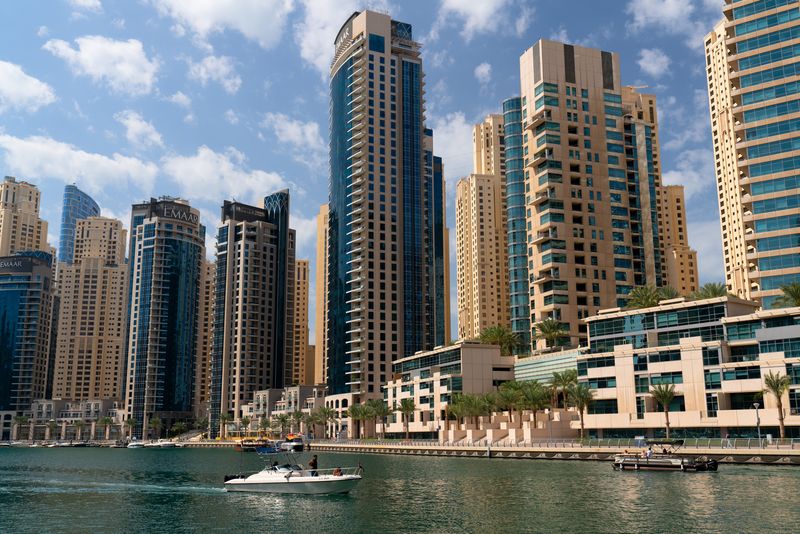
Dubai’s commercial real estate market has posted a striking show of resilience in the first half of 2026, with transaction value climbing 8.5 per cent year-on-year to AED 65.23 billion even as the wider region grappled with escalating geopolitical tensions, according to an analysis by ANAROCK Middle East.
Deal volumes rose nearly 13 per cent to 6,487 transactions, up from 5,754 in the same period last year. The office segment emerged as the standout performer, with transaction value nearly tripling — up 199 per cent to AED 15.81 billion — while average office prices surged 85 per cent to AED 3,202 per square foot, reflecting acute demand for Grade A space against constrained supply in key business districts.
Retail assets logged similarly sharp gains, with volumes up 56 per cent and value more than doubling — up 174 per cent — on the back of a resurgent consumer economy. Average retail prices climbed 54 per cent to AED 3,486 per square foot.
The land segment was the lone drag, with transactions down 29 per cent and value down 9 per cent, as investor capital rotated away from land banking toward income-generating office and retail assets.
Quarter-wise, Q1 2026 set a record for the market, with transaction value up over 40 per cent year-on-year despite mounting regional tensions through the period. Q2 saw a natural sequential moderation — volumes down about 22 per cent — though pricing held firm, with the average rate per square foot still up 34 per cent year-on-year, underscoring sustained appetite for prime assets even as overall activity cooled.
Industry voices echo the optimism reflected in the data. Rizwan Sajan, Founder and Chairman of Danube Group, said the fundamentals underpinning Dubai’s property market remain firmly intact, pointing to healthy demand across both residential and commercial segments. He cited Danube Properties’ own pipeline — 11 project handovers in 11 months — as evidence of the market’s underlying momentum, and attributed the city’s continued draw to its economic fundamentals, investor confidence and global connectivity. Sajan added that the present climate offers investors a window to identify quality assets with a long-term view, rather than a reason for caution.
That view aligns with ANAROCK’s own reading of the numbers: that Dubai’s tax advantages, freehold ownership regime for foreign buyers and the expanding Golden Visa scheme are likely to keep commercial real estate on a growth trajectory through the rest of 2026, even if near-term volumes continue to track swings in regional sentiment.