
When Henry Wise was a cadet at Lexington’s Virginia Military Institute, he began developing his core craft: writing. Today, the author wears many hats—Virginian, Mississippian, professor, poet, novelist, and photographer. He also teaches American literature, poetry, and a class at VMI called Frontier American Literature, which examines the evolution of fiction and how it treats the idea of the American frontier.
Wise gained acclaim with his debut novel Holy City (Atlantic Monthly Press, 2024), the story of private detective Will Seems in Southern Virginia. Now, Seems returns in Wise’s latest work, Promised Land, published on Sept. 1. A missing-person case unravels the past and makes characters confront the present, with the fictionalized Snakefoot Swamp setting the scene in southside Virginia. The novel is a lesson in character development and prose, which isn’t surprising given Wise’s predilection for poetry.
Read on for my conversation with Henry Wise, and immerse yourself in the world he built.

Gabriela de Camargo Gonçalves: When I start reading a book, especially one that I’m going to be writing about, I like to go in as blind as I possibly can so I’m not influenced by others’ comments. Once I finished yours, I wrote my questions up first, and then I researched what other people were saying about it, and I realized, “Whoa, we all had the same thoughts.” Can you tell me about what it was like creating this book? Of course, you wrote Holy City before this, but how did you make Promised Land its own thing and carry that throughout the story?
Henry Wise: Yeah, that’s a great question. It was really organic. I didn’t know when I started writing Holy City that there would be a Snakefoot Swamp area. And I love it when the writing surprises me. I love it not just for shock value, but when it unfolds and starts to become like a living thing. Because until that moment, it’s all a series of ideas that you’re putting down. But I try to stay open and almost think of it as like hopping on a train or something. You just go where it’s gonna take you. You’re not in full control.
This Snakefoot Swamp region is largely inspired by the Great Dismal Swamp, which has a very rich history. I’ve always been fascinated by these liminal, kind of nascent places where boundaries break down, and you’re not quite sure what’s dry land and what’s water. That works for me symbolically because you’re dealing with stagnation, a breakdown, and, in a way, morality or people trying to start over. And it may or may not work.
Swamps are kind of stereotypical of the South, but water, since the beginning of literature, has been symbolic. I love bodies of water and how they serve as not just a background, but as a character, something with an agency of its own, potentially. It really captivated me, and I thought, “You know, I’d really love to spend a book exploring this place.” Like, who’s living in there? Why are they there? And so that was the starting point for Promised Land and how it evolved, but it was organic. It wasn’t planned. II love the name Snakefoot too, because there’s just nothing right about it.
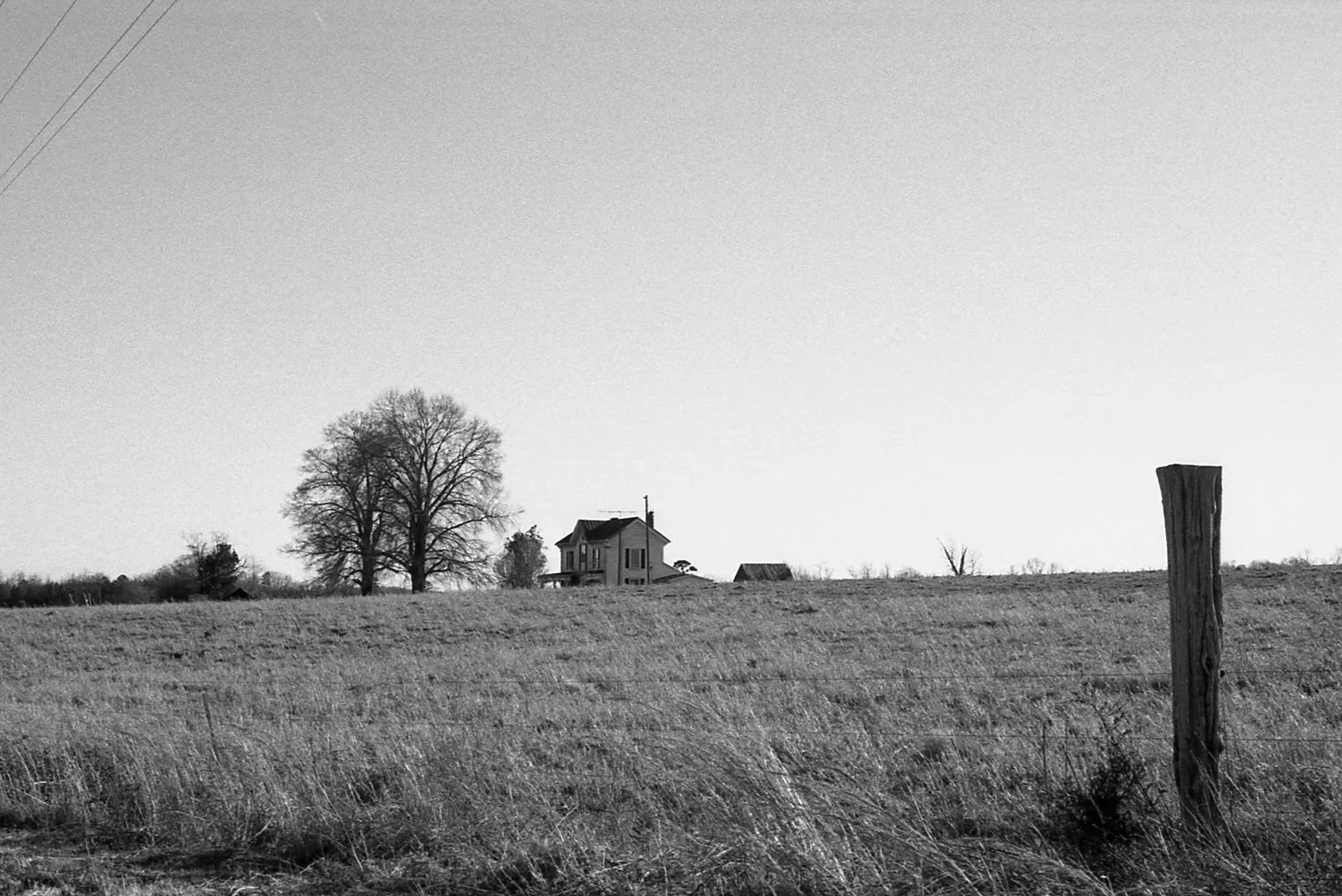
G.C.G.: You’re also a photographer. I saw your work on your site and thought, “This is how I pictured the town in the book.” How do you merge your different media?
H.W.: I think they’re all coming from the same creative spring. The way I think about photography is that there’s a story behind a photograph, but you aren’t telling that story. You’re just capturing a moment. In a novel or a short story or even a poem, it’s almost like stepping into the world of a photograph and looking out and looking at it a different way and describing it.
With poetry, fiction, and photography, it all comes from the same hunger to document and shape something uniquely. Or maybe that thing that you see out there, anybody could take a picture of it. But the angle or vision I have for it is unique. So the thing is the same, but it’s how we see it. And I think a photograph can be really interesting in the way that it gives you a sense of how the photographer is seeing it.


G.C.G.: You went to VMI, and when I think of a military school, I don’t necessarily immediately correlate it with poetry. How was it going there as a poet?
H.W.: Well, in some ways it’s the best place to get interested in writing because you see a lot of people under pressure all the time, and you see life isn’t all that interesting when everybody’s got it together. At VMI, you’re sleep-deprived, you’re busy, you’ve got all this stuff to do, and there’s no hiding. People’s characteristics come out.
A lot of people think of a military environment as a place where people are sort of robotic, but I find the opposite to be true. I find the sense of humor really unique. And also, you can’t distinguish yourself by what you wear, where you come from, or how wealthy you are. Nobody knows. Because you’re in uniform. So you have to actually distinguish yourself through your personality and through what you do. In the rest of the world, we distinguish ourselves; we state who we are through what we wear, what we buy, and all this stuff we put out there. But at a place like VMI, and I expect in the military as well, that’s kind of muted, so you have to distinguish yourself in different ways. I just find that interesting. It’s an interesting place to study characters. What makes it really tough is that you don’t have much time. And I found it really hard. I fell in love with writing there, but I found it really frustrating.
G.C.G.: Do you have any literary heroes that you look up to?
H.W.: So many. I don’t read as much contemporary fiction as I probably should. Faulkner, Willa Cather, James Joyce, Zora Neale Hurston, Richard Wright.
G.C.G.: What about poetry?
H.W.: Gary Snyder is one of my favorites. I just love how you’re never surprised by what he’s going to say because he is so spontaneous. Langston Hughes—I love it when we get to teaching the Harlem Renaissance. Seamus Heaney, the Irish poet. Larry Levis.
G.C.G.: Wow! I have a full want-to-read list now. For someone who just stumbles upon this article and wants to know more about Promised Land, what can they expect?
H.W.: Expect an immersive experience into a landscape that maybe you’re familiar with—Virginia—but maybe not. One of the best compliments I’ve gotten has been from people from the Southside or southeastern Virginia, and they give me a thumbs-up and say, “You got it.” Like, the spirit of it.
An immersive experience that doesn’t offer easy answers. But I hope the characters will feel real. I hope that it haunts you, and that you feel like you got mud on your shoes.
This article is a Virginia Living digital exclusive.