
Key Points
-
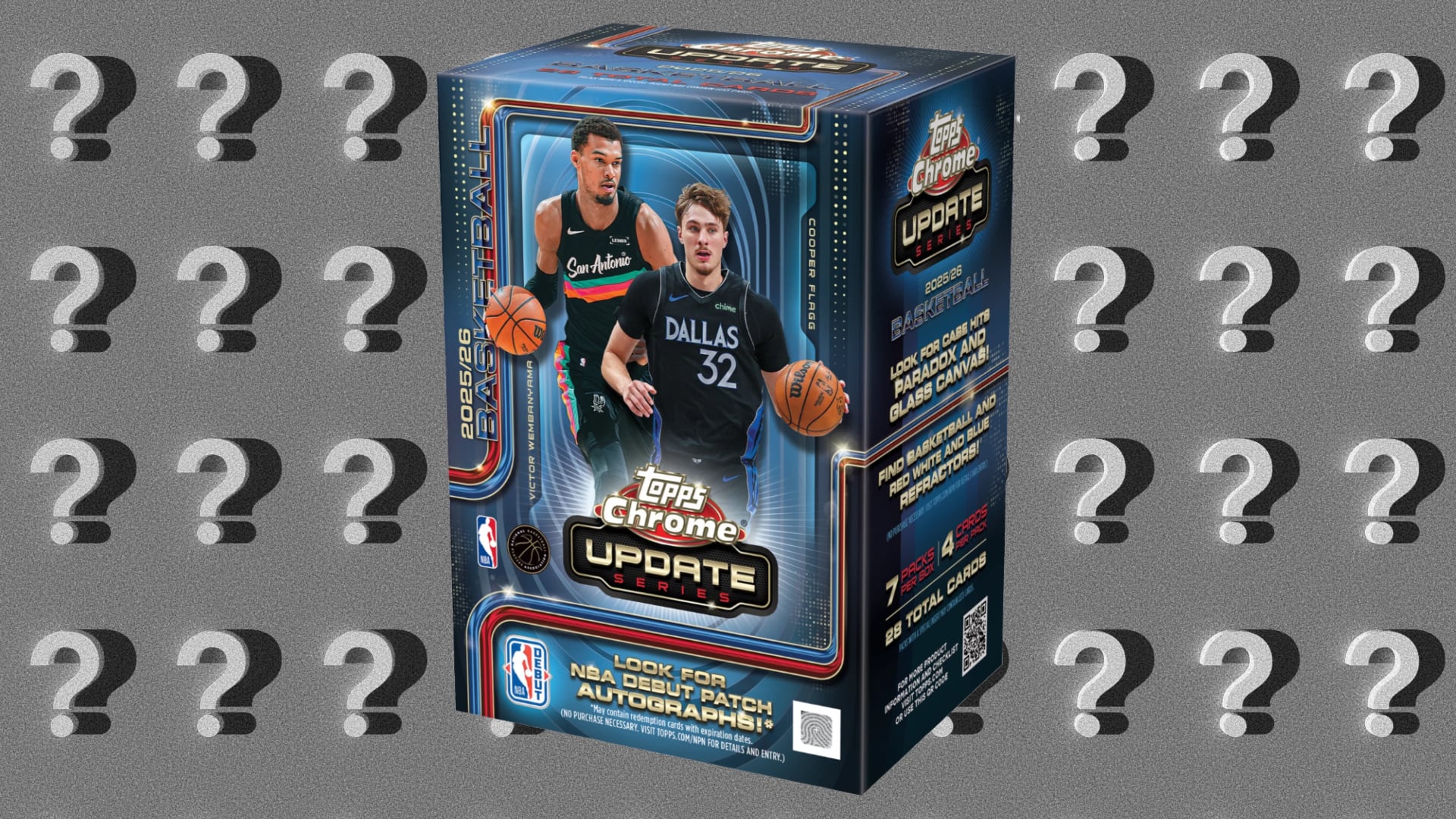
Topps will ship Friday’s Chrome Update Basketball Mega Box pre-order with the factory seal fully removed
-
This follows months of frustration from collectors after sold-out drops and sky-high eBay listings
-
Removing the seal is meant to discourage resellers from buying the boxes just to flip them
Card manufacturers have tried plenty of tricks to keep products in the hands of actual collectors: purchase limits, verified accounts, raffles, questionnaires, retinal scanning. Topps is trying something stranger this week. For Friday’s Chrome Update Basketball Mega Box pre-order, boxes will ship with the factory seal already broken. The cards inside are untouched, Topps says, but the box itself will look like something someone already opened. It’s a strange middle ground between sealed and single, aimed squarely at resellers who buy wax with no intention of ever cracking it themselves. Our take? This is a nothingburger, and it’s much closer to a PR move than a serious attempt to curb scalping.
Topps Breaks the Seal
Topps confirmed the change on social media Wednesday, framing it as a response to overwhelming demand for the product’s first pre-order earlier in the week. Removing the seal, the company said, discourages buyers from flipping the box unopened while still letting the cards inside reach whoever eventually opens it.
Nothing about the contents changes. The player checklist, the parallels, the autograph odds all stay identical to a normal box. What changes is whether the box can be marketed and sold as sealed, mint, factory-fresh: language resellers lean on to justify a premium price.
Without that plastic, collectors have no guarantee that the cards haven’t been rifled through and the big hits pre-pilfered by a reseller, store employee, or delivery driver. This appears to be the first time a major card manufacturer has intentionally shipped a retail-facing product pre-broken, rather than relying on purchase limits or account verification to slow scalpers down.
Whatever happens with Friday’s drop, resist the urge to draw big conclusions from it. If eBay listings for these boxes come in lower than a typical Chrome Update Mega Box run (and they probably will) that tells us something about this one drop, not about pre-broken seals as a category.
A single test, run under an unusual amount of public attention, with resellers and casual collectors both aware they’re being watched, isn’t a controlled experiment. Topps would need to repeat this across several releases before anyone could confidently say broken seals significantly change consumer behavior long-term.
Resellers Lose, Box Breakers Don’t
The policy also has an uneven target. It hits one specific type of reseller: someone who buys a sealed box purely to flip it sealed, banking on another buyer wanting the unopened experience. It does nothing to box breakers, the increasingly organized side of the hobby where sellers open boxes live on stream and sell individual cards or “spots” to buyers before a single pack gets torn. Breakers were always going to open the product, so a missing seal costs them nothing.
That distinction lines up with where Topps has been putting its time and money. The company has spent the last couple of years working more closely with breakers rather than against them, treating that corner of the secondary market as a partner, especially if that partner can be used to promote its other businesses. This also includes allegations that Topps has intentionally (and unethically) allocated better boxes to breakers they have relationships with, although this is unconfirmed.
None of this changes the deeper math. Products resell for a profit when they’re underproduced relative to demand, and collectors keep chasing drops precisely because sellouts and secondary market heat make the next release feel urgent. That dynamic is good for Topps’ bottom line, and it’s not a boat they’re willing to rock.
As Topps continues to allocate more and more of their stock to box breakers and away from retail customers, resellers and collectors are increasingly brought into competition. It’s easy to blame a scalper when you miss a drop, but consider how many boxes Topps diverted from stores to be sent directly to box breakers functioning as the company’s de facto advertising wing.
Bottom Line
While retailers like Target have recently been experimenting with removing seals to combat scalpers, we don’t think Topps will adopt this release strategy at any significant scale. Big box stores, hobby shops, anywhere with walk-in traffic depends on that shrink-wrapped presentation to signal a product is untouched and worth full price. That leaves pre-broken seals as a tactic Topps can only realistically deploy for direct-to-consumer drops through its own website, a small fraction of where this product actually sells. Even if they like the results from Friday’s test, we don’t expect this to make any major ripples in the market.
This is an interesting experiment worth watching, but not one to take too seriously yet. Expect Topps to run more unsealed drops occasionally going forward, maybe a handful a year, while the overwhelming majority of Chrome product ships exactly as it always has: sealed, tightly allocated, and gone fast.