
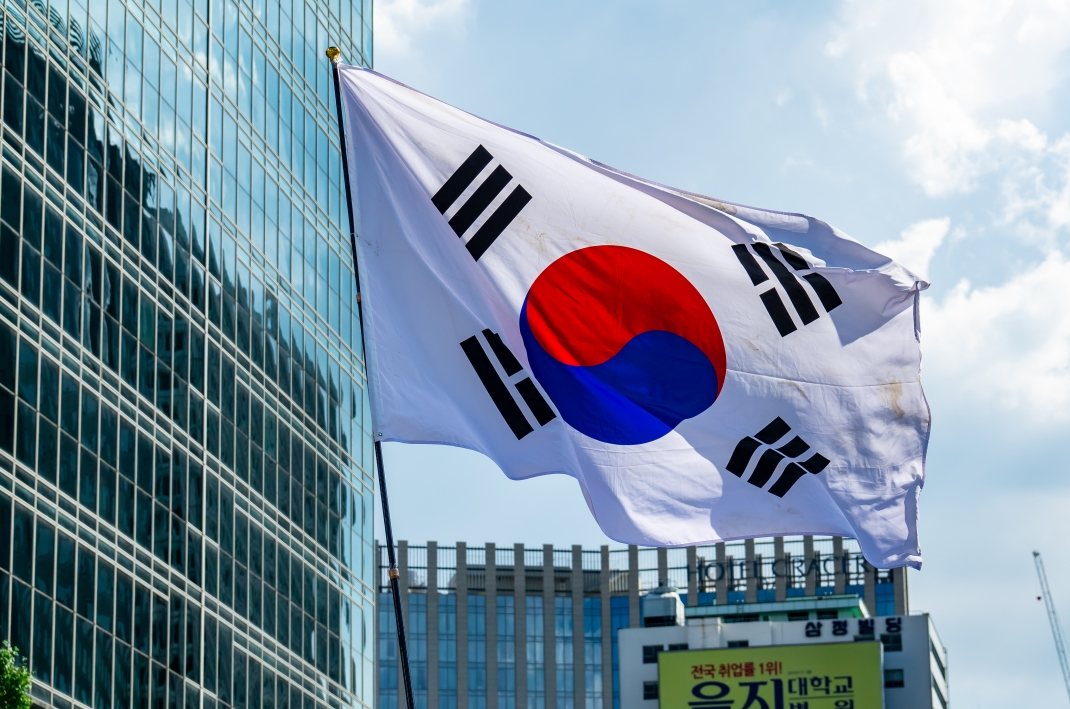
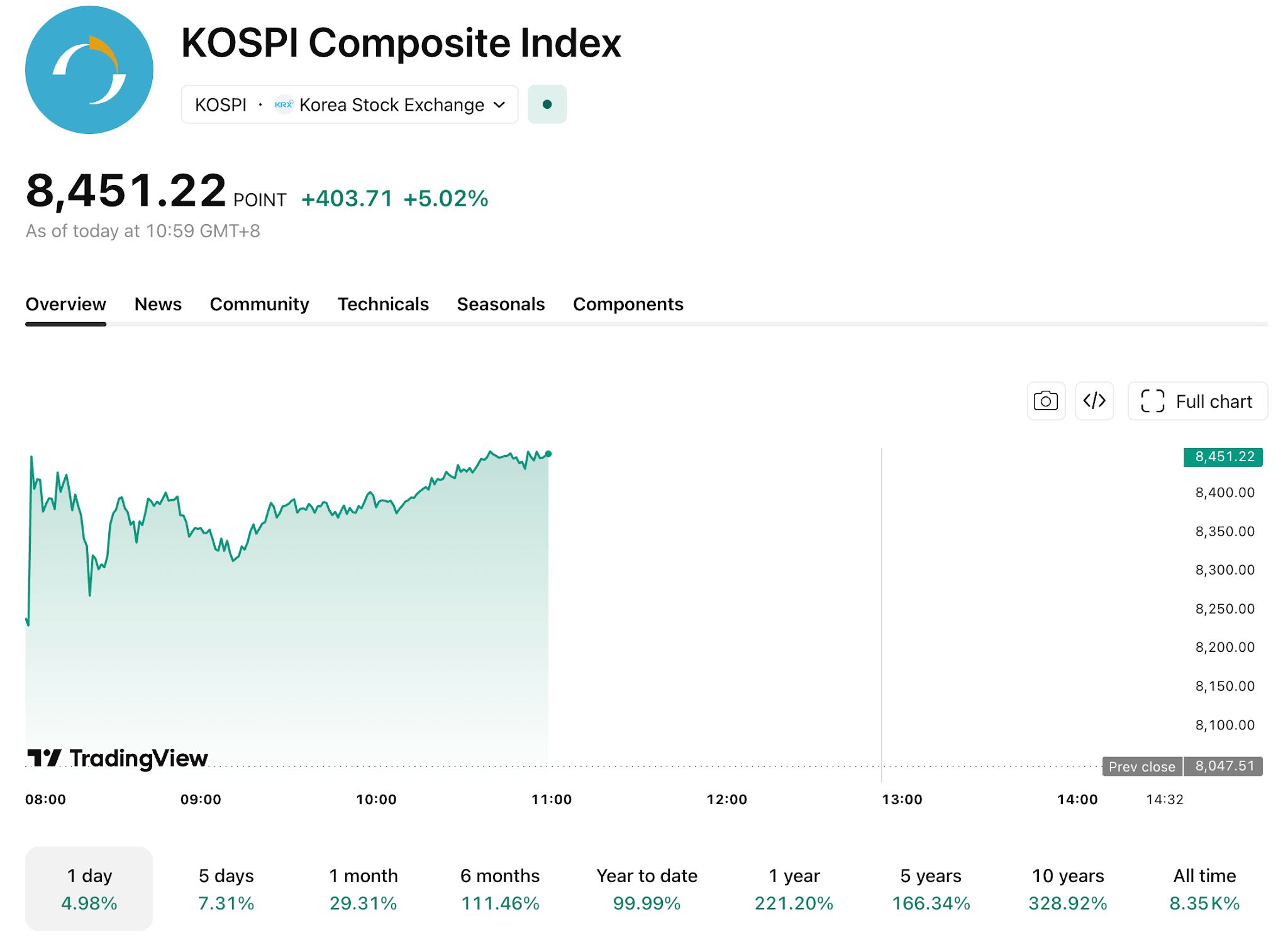
TradingKey – During the Asian trading session on May 27, Japanese and South Korean stock markets rose significantly in morning trade, driven by an overnight surge in the U.S. semiconductor sector. South Korea’s KOSPI index hit an intraday record high, while the KOSPI 200 futures index jumped more than 5%, triggering a circuit breaker and a five-minute suspension of program trading.
[Source: TradingView]
As of 11:30 a.m. Tokyo time, the Nikkei 225 Index rose 1.26% to 65,816.62, breaking above the 66,000 level for the first time during intraday trading. South Korea’s KOSPI Index stood at 8,431.23, up over 4.5%, after earlier climbing more than 5% to touch an intraday record high of 8,457.09.
The semiconductor sector was the core driver of the rally in both markets. The Philadelphia Semiconductor Index surged 5.53% overnight, as Micron Technology ( MU) soared 19.29%, with its market capitalization surpassing $1 trillion for the first time. Boosted by this, South Korea’s SK Hynix jumped over 13% and Samsung Electronics rose more than 7%, with both stocks reaching all-time highs.
In the Japanese market, Kioxia opened up more than 7% and ended the morning session with a 1.02% gain. Sumitomo Electric rose over 4% at the open and finished up 2.68%. Mitsui Mining & Smelting opened more than 5% higher but later pared gains to close the morning session flat.
Sector performance was divergent. While non-ferrous metals and semiconductors strengthened in Japan, real estate and bank stocks declined. In South Korea, the battery sector weakened against the trend, with LG Energy Solution falling more than 2%.
Falling oil prices also supported market sentiment. International crude oil futures edged lower overnight on expectations of easing tensions between the U.S. and Iran, benefiting energy-import-dependent economies like South Korea and Japan.
The sharp rally in Japanese and South Korean equities was primarily driven by the spillover effect from the U.S. semiconductor rally. As a core supplier of High Bandwidth Memory (HBM), SK Hynix’s stock price gains mirrored those of Micron across markets, indicating that global capital is adjusting expectations and that the pace of this semiconductor upswing may be more aggressive than anticipated.
Meanwhile, Japan’s financial and real estate sectors, along with South Korea’s automotive battery sector, failed to follow the rally and even weakened against the trend as the indexes climbed sharply. This suggests that the morning gains were not a result of a broad-based increase in systemic risk appetite, but rather a structural migration of capital highly concentrated in the semiconductor supply chain.
Looking ahead, focus will be on whether the U.S. semiconductor rally can be sustained and if the overnight surge has already priced in short-term expectations. Overall, chip stocks remain the bellwether for short-term sentiment in the Japanese and South Korean markets, but the clear divergence between sectors warns investors to be wary of risks stemming from over-concentrated positions.