
The entire Pattern Day Trader (PDT) rule is set to be abolished (not just the $25,000 minimum equity requirement removed) 45 days after FINRA publishes its Regulatory Notice, with an 18-month phase-in period for full broker adoption, marking one of the most significant regulatory shifts in U.S. retail trading history. This monumental change, overseen by the SEC (approved on April 14, 2026) and FINRA, opens up day trading to a wider audience of American investors who were previously locked out due to capital constraints. Whether you’re a financial beginner or an individual investor with some experience, this article serves as your essential guide to understanding and preparing for the new trading landscape in the U.S. market.
Key Takeaway
● The entire PDT rule (including the $25,000 minimum equity requirement) is abolished, replaced by a risk-based intraday margin framework, effective 45 days after FINRA’s Regulatory Notice release (with 18-month broker phase-in).
● This regulatory change democratizes trading, enabling investors with smaller accounts to execute frequent trades without restrictions.
● While the removal eliminates barriers, traders must adopt disciplined risk management to avoid over-leveraging and significant losses.
● Preparation is crucial—develop trading strategies, practice in demo accounts, and choose brokers with real-time risk monitoring and intraday margin compliance tools.
Understanding the Pattern Day Trader (PDT) Rule as It Was
The Pattern Day Trader rule has been a defining feature of U.S. securities regulation since its implementation in 2001. Under this rule, FINRA classified any investor who executes four or more day trades within a five-business-day period in a margin account as a “pattern day trader.”
Once flagged as a pattern day trader, U.S. investors were required to maintain a minimum of $25,000 in equity in their brokerage account at all times. Falling below this threshold meant traders could not execute any day trades until their account balance was restored above the minimum. This rule applied specifically to margin accounts at U.S. broker-dealers and was designed to protect inexperienced traders from the amplified risks of frequent intraday trading.
For many American retail investors, this $25,000 barrier represented a significant obstacle to participating in day trading strategies, effectively creating a two-tiered system based on account size rather than skill or knowledge.
The Big Change: PDT Rule Abolished, $25K Minimum Eliminated
The PDT rule is fully abolished (not just the $25,000 minimum removed), replaced by a risk-based intraday margin system, and will take effect 45 days after FINRA publishes its Regulatory Notice, with brokerage firms allowed an 18-month transition period to upgrade systems. This means American investors will no longer be classified as pattern day traders, nor required to maintain a specific account balance to engage in frequent day trading activities in their margin accounts.
The rule change reflects a broader shift in how U.S. regulators view retail investor participation in the markets. While the original PDT rule was implemented to protect traders, regulators have recognized that the financial landscape has evolved dramatically over the past two decades.
Why Regulators Are Removing the $25K PDT Minimum
Several factors have driven U.S. regulators to reconsider this long-standing requirement:
-
The Rise of American Retail Investors: The past several years have seen unprecedented growth in retail trading participation across the United States. Events like the 2021 meme stock phenomenon demonstrated that everyday Americans are increasingly engaged in the markets and seeking equal access to trading opportunities.
-
Push for Equitable Market Access: Critics have long argued that the $25,000 minimum created an unfair barrier that disproportionately affected younger investors and those from lower-income backgrounds. U.S. regulators have responded to calls for more democratic market participation.
-
Technological Advancements: Modern U.S. brokerage platforms now offer sophisticated risk management tools, real-time alerts, and educational resources that weren’t available when the original rule was enacted. These technological improvements help protect traders in ways the $25,000 minimum was originally designed to accomplish.
-
Commission-Free Trading Environment: The elimination of trading commissions by major U.S. brokerages has fundamentally changed the economics of frequent trading, making the original rationale for the PDT rule less relevant in today’s market.
-
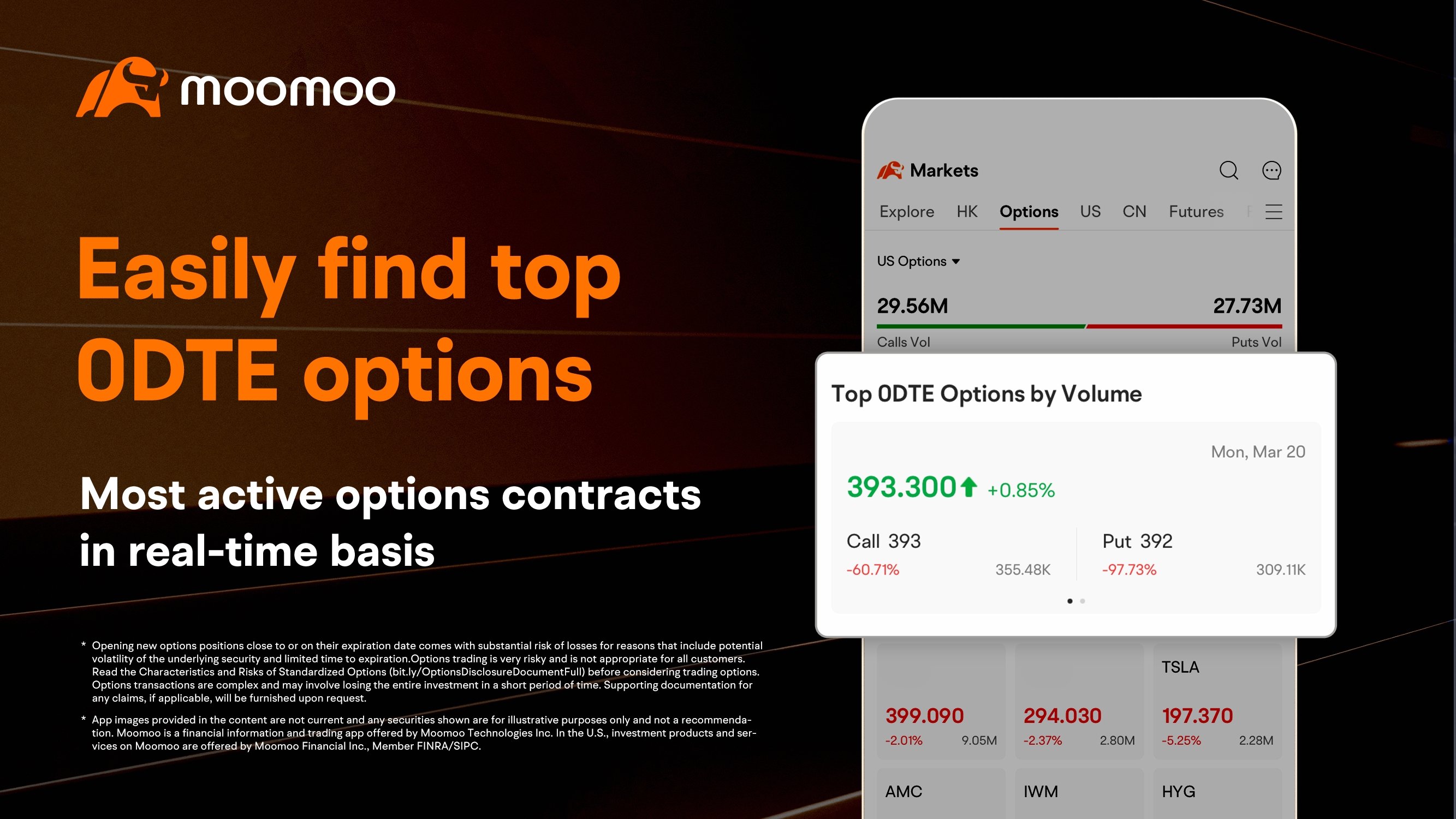
New Coverage for 0DTE Options: The new framework also addresses zero-days-to-expiration (0DTE) options, a product not considered when the 2001 PDT rule was created.
How the Abolition of PDT Rule Unlocks Your Trading Potential
The elimination of the PDT rule and its $25,000 barrier democratizes day trading for American investors, creating new opportunities regardless of your starting capital. This regulatory change levels the playing field and empowers a new generation of U.S. traders.
Day Trading with a Small Account Is Now a Reality
For aspiring traders with accounts under $25,000, this rule change is transformative. You can now execute day trading strategies without PDT classification or trade count restrictions. Whether you’re starting with $5,000 or $15,000, you’ll have the same trading flexibility as investors with larger accounts.
This means American investors can:
• React to intraday market movements without counting their remaining day trades
• Execute multiple round-trip trades in a single session when opportunities arise
• Build their trading skills with real capital without artificial restrictions
Gaining Strategic Flexibility, Regardless of Account Size
The benefits extend to all U.S. traders, not just those with smaller accounts. Investors with larger portfolios will also enjoy enhanced flexibility. Previously, even well-capitalized traders had to meticulously track their day trade count to avoid falling under the $25,000 threshold during a market drawdown.
Now, American investors can focus entirely on market analysis and strategy execution rather than regulatory compliance calculations. This freedom allows for more responsive trading decisions aligned with market conditions rather than arbitrary account balance requirements.
New Risks: Navigating Day Trading Under the Risk-Based Intraday Margin Framework
As a responsible consideration for all U.S. investors, it’s essential to understand that the PDT rule, while restrictive, also functioned as a protective barrier. Its full abolition replaces fixed capital guards with dynamic intraday margin requirements, so traders must take personal responsibility for implementing the discipline and risk management required by the new system.
The Danger of Over-Leveraging a Small Trading Account
The single greatest risk in the post-PDT, risk-based margin environment is the temptation to use excessive margin or leverage on a small capital base. U.S. margin accounts typically allow traders to borrow funds to increase their buying power, but this amplifies both gains and losses.
Example: A trader with a $5,000 account using 4:1 intraday margin could control $20,000 worth of securities. A 5% adverse move would result in a $1,000 loss—20% of their entire account—in a single trade. Several such losses in one day could devastate the account.
Understanding margin requirements and the risks of leverage is crucial for any American investor entering the day trading arena. Beyond leverage, a common pitfall in options trading is miscalculating the true break-even point. A trader might see a stock’s price rise and assume their call option is profitable, only to find the premium cost has eroded their gains. To mitigate this risk, it is vital to know the exact price the underlying asset must reach for your position to become profitable. Tools designed for this purpose can make every trade more transparent. For example, moomoo’s Options Analysis feature automatically calculates the break-even point, maximum potential profit, and maximum loss for any contract you select from the options chain. This allows you to evaluate the risk-reward profile before committing capital, ensuring the trade aligns with your expectations. Register for a moomoo account today to use the Options Analysis feature and gain a clearer understanding of your profit and loss boundaries.
Why a Disciplined Trading Plan Is More Critical Than Ever
The removal of the PDT rule (and its replacement with intraday margin rules) makes a formal trading plan non-negotiable. Before placing a single trade, you should have documented:
• Entry and exit criteria: Specific conditions that must be met before entering or exiting a position
• Position sizing rules: How much capital to allocate to each trade based on your total account size
• Maximum daily loss limits: A predetermined point at which you stop trading for the day to prevent emotional decision-making
• Risk-reward requirements: Minimum acceptable ratios before taking any trade
This disciplined approach replaces the external guardrails the PDT rule previously provided.
New Regulatory Penalties: Failure to Meet Intraday Margin Requirements
Accounts that repeatedly fail to cover intraday margin deficits within five business days will face a 90-day restriction on opening/increasing short positions or debit balances.
How to Prepare for Day Trading After the PDT Rule Abolition
With the new rule taking effect 45 days after FINRA’s Regulatory Notice, American investors have time to build the necessary skills and choose the right tools for success. Here’s a step-by-step framework to prepare for this new era of U.S. trading.
Step 1: Master Core Risk Management Principles
Before the rule change takes effect, focus on non-negotiable risk management techniques:The 1% Rule: Never risk more than 1% of your total account on a single trade. For a $10,000 account, this means your maximum loss per trade should be $100. This approach ensures that even a string of losing trades won’t devastate your capital.
Consistent Stop-Loss Usage: Always use stop-loss orders to define your maximum acceptable loss before entering a trade. U.S. brokerages offer various stop-loss types, including trailing stops that can help lock in profits while limiting downside.
Position Sizing: Calculate your position size based on your stop-loss distance and maximum risk amount, not on how much buying power you have available.
Step 2: Develop and Test a Day Trading Strategy
Choose a day trading strategy that fits your risk tolerance, personality, and available time:
• Scalping: Making numerous small profits on minor price movements throughout the day
• Momentum Trading: Capitalizing on stocks showing strong directional movement with high volume
• Range Trading: Buying at support levels and selling at resistance in stocks trading within defined ranges
Each strategy has different requirements for attention, speed, and risk tolerance. Select one that aligns with your lifestyle and practice it consistently rather than jumping between approaches.
Step 3: Practice in a Real-Time Demo Environment
Before committing real capital in the post-PDT, risk-based margin environment, U.S. investors should extensively use paper trading or demo accounts. This allows you to:
• Test your chosen strategy with zero financial risk
• Build the discipline needed for consistent execution
• Understand how your emotions respond to winning and losing trades
• Familiarize yourself with your trading platform’s features and execution speed
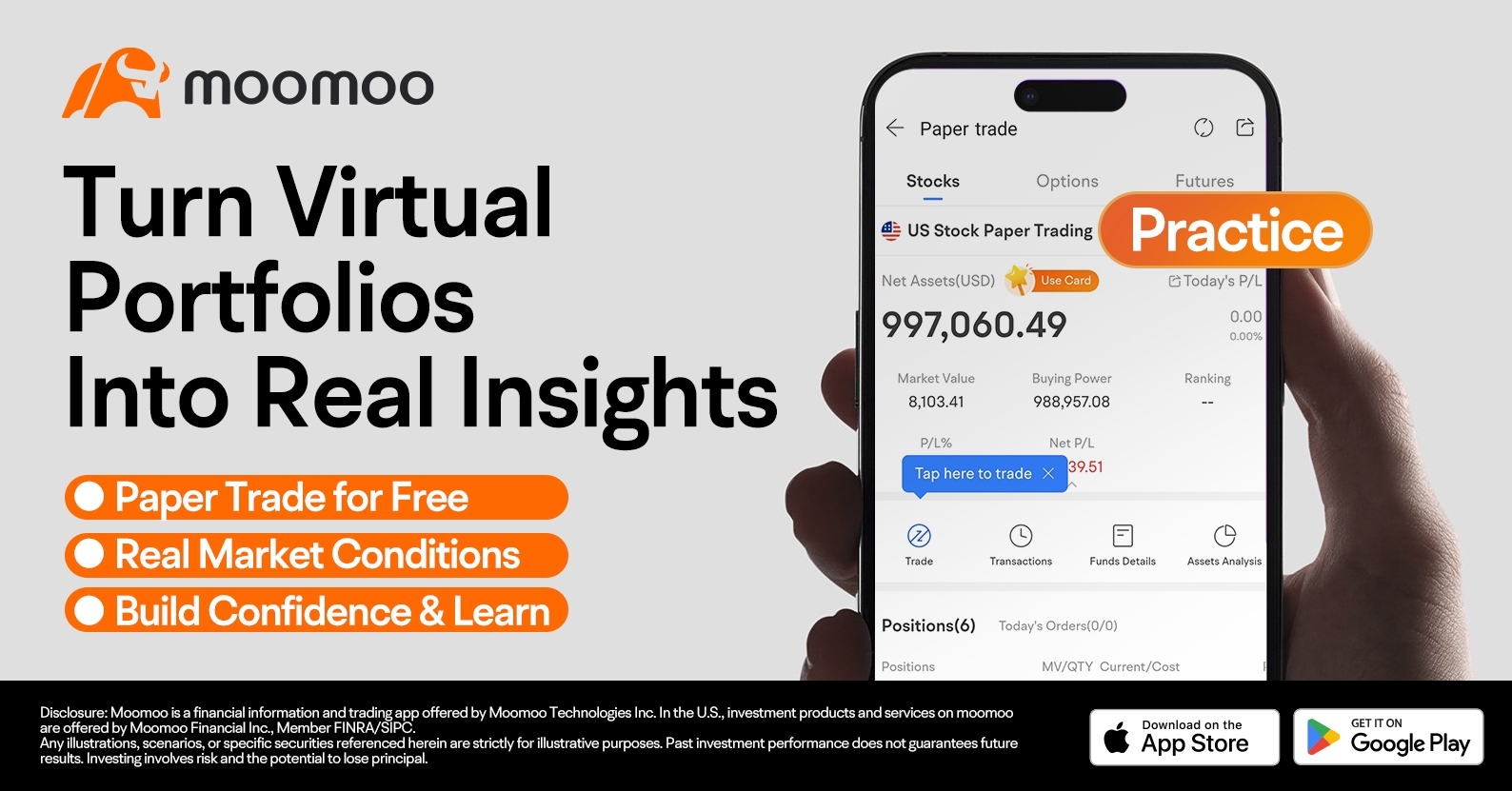
To truly master new strategies, especially complex ones like options spreads, a dedicated practice environment is invaluable. Many traders worry about losing money while learning, which can hinder their development. Moomoo’s paper trading account provides $1,000,000 in virtual funds, allowing you to practice buying and selling in a live market environment with real-time data but without real-world financial consequences. This lets you test different strike prices and expirations, observe how profit and loss fluctuate with market moves, and refine your approach to risk management, helping to build confidence and competence before you trade with actual capital. Sign up on moomoo to open a paper trading account and start honing your strategies in a risk-free setting.
Step 4: Select the Right Broker for a Post-PDT World
With the PDT rule abolished, choosing the right U.S. brokerage platform becomes even more critical. Look for these essential features:
-
Low-Cost Trading: Commission-free stock and ETF trading preserves your capital for actual investments rather than transaction costs.
-
Fast and Reliable Execution: In day trading, milliseconds matter. Ensure your broker offers robust infrastructure for quick order fills.
-
Advanced Charting Tools: Technical analysis is fundamental to most day trading strategies. Look for platforms with comprehensive charting capabilities and multiple technical indicators.
-
Real-Time Intraday Margin Monitoring: Brokers must offer real-time or end-of-day risk checks to comply with new margin rules.
-
Robust Risk Management Features: Customizable alerts, various stop-loss order types, and real-time position monitoring help you maintain discipline.
-
Cash Management Options: Features like cash sweep programs help ensure your uninvested funds continue working for you, even when you’re not actively trading.
-
Educational Resources: Especially for newer traders, access to educational content and market analysis can accelerate your learning curve.
Beyond general low costs, traders should consider the specific fee structures for the products they trade most. For active options traders, commissions and per-contract fees can significantly erode profits, especially for strategies that involve frequent adjustments or scaling in and out of positions. Trading on a platform with $0 commission and $0 contract fees for options, like moomoo, removes this cost pressure. This means you can execute your strategy with greater flexibility, knowing that transaction costs won’t diminish your potential returns, allowing more of your gains to stay in your account. Download moomoo to explore the advantages of trading options with $0 commission and contract fees.
Conclusion
The full abolition of the PDT rule (including the $25,000 minimum) represents a landmark event for American retail investors. For the first time in over two decades, U.S. traders of all account sizes will have equal access to day trading strategies under a risk-based intraday margin system without arbitrary capital requirements or PDT classification.
However, this new freedom comes with significant responsibility. The protective barrier that prevented undercapitalized traders from rapid losses is replaced by dynamic margin requirements. Success in this new environment requires:
• Education: Understanding market mechanics, technical analysis, and trading psychology
• Disciplined Strategy: Developing and consistently following a tested trading plan
• Rigorous Risk Management: Implementing strict rules to protect your capital
The months leading up to the new rule’s effective date (45 days after FINRA’s Regulatory Notice) offer American investors a valuable window to prepare. Use this time wisely to build your skills, test your strategies, and select the right tools for success.
Ready to prepare for this new era of U.S. trading? Open an account or start practicing with a demo account today to be fully prepared to seize the opportunities when the PDT abolition and new intraday margin rules take effect. The playing field is about to be leveled—make sure you’re ready to compete.
FAQs about PDT Rule Removal
Is the removal of the PDT rule’s $25,000 minimum in June 2026 a confirmed change?
No—this is incorrect. The SEC officially approved FINRA’s proposal to ABOLISH THE ENTIRE PDT RULE (not just the $25,000 minimum) on April 14, 2026. The new rule takes effect 45 days after FINRA publishes its Regulatory Notice, with an 18-month phase-in period for brokers to fully implement systems. Margin account investors will no longer face PDT classification or the $25k balance requirement.
After the $25k day trading minimum is removed in June 2026, what new rules will replace the PDT rule?
The entire PDT rule is abolished, not just the $25k minimum removed. It is replaced by a risk-based intraday margin framework under FINRA Rule 4210. Brokers must implement real-time or end-of-day risk checks tied to position exposure; accounts failing intraday margin requirements repeatedly face 90-day trading restrictions. The responsibility shifts to traders to manage intraday margin compliance.
How can I start day trading with a small account once the $25k minimum is removed by the PDT rules in 2026?
The PDT rule is fully abolished (not just the $25k minimum lifted). To start small-account day trading: master risk management (1% rule, stop-losses); test strategies in demo accounts; choose brokers with real-time intraday margin tools. Success depends on discipline under the new risk-based margin system.
What are the biggest risks of day trading after the PDT rules’ $25k minimum is removed?
The PDT rule is fully abolished, replaced by intraday margin requirements. The top risks are mismanaging intraday leverage/margin and emotional trading. Repeated failure to meet margin obligations triggers 90-day trading restrictions.
Does the removal of the PDT rule’s $25k minimum apply to cash accounts as well?
No, this change is specific to margin accounts. The Pattern Day Trader (PDT) rule has always been a regulation for margin trading. Day trading in a cash account operates under different rules, primarily related to settled funds. In a cash account, you can only trade with money that has fully settled, which prevents the kind of rapid, leveraged trading the PDT rule was designed to address. Therefore, the abolition of the PDT rule and removal of the $25k minimum will not change cash account day trading rules.
What steps should I take to prepare for day trading before the PDT rules remove the $25k minimum in June 2026?
Prepare for the FULL ABOLITION of the PDT rule (effective 45 days after FINRA’s Regulatory Notice). Master risk management, test strategies in demo accounts, and select brokers with real-time intraday margin monitoring systems to comply with the new risk-based framework.