
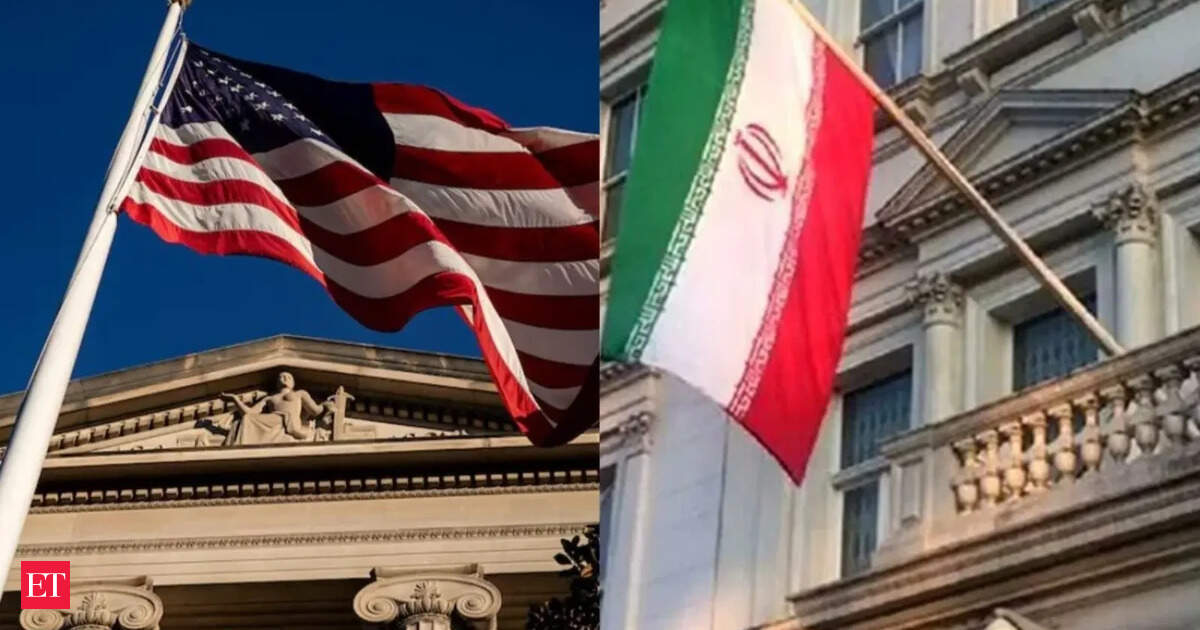
Instead of a clean win for the US, it appears to sit on a tense balance between military pressure, sanctions relief and large-scale financial concessions. As the signing ceremony in Switzerland approaches, the central question is not just about uranium limits or regional de-escalation but also whether peace is being purchased with cash, frozen assets and credit lines that Trump once condemned under Barack Obama’s Iran policy. Trump has often said how “pallets of cash” were transferred to Iran as part of the deal. Also, will billions transferred in opaque ways work better than bombs?
Iran’s nuclear programme has advanced significantly since the collapse of Obama’s 2015 Joint Comprehensive Plan of Action (JCPOA), widely known as the Iran Nuclear Deal, after the US withdrawal from the deal during Trump’s first term. Uranium enrichment levels climbed close to weapons-grade thresholds, and diplomatic trust eroded further through cycles of strikes, retaliation and sanctions. Trump, due to his staunch opposition to the Obama deal, is now under pressure to deliver a deal he can sell as being better than Obama’s. This pressure might land him in a strange economics where he himself not only tries to buy peace with billions of dollars but might also fail to get what he aimed for even after making upfront hefty payments to Iran.
From battlefield to bargaining table
Despite military pressure, including last year’s US and Israeli strikes that damaged parts of Iran’s nuclear infrastructure, the strategy did not produce political capitulation. Instead, Iran’s regime remained intact and, according to several analyses, politically emboldened. That outcome has shifted the negotiating logic. Military force alone did not bring Iran to the table on Washington’s terms, and economic incentives are now filling that gap. Even after significant damage to Iran’s nuclear infrastructure and leadership networks, the Islamic Republic did not collapse or change its core position. So military pressure alone failed to produce a decisive political outcome.
Also read | India’s new telecom war may unfold at the roadside

While sanctions and strikes degraded parts of Iran’s infrastructure, they failed to produce the kind of political collapse needed to force capitulation. Iran, meanwhile, leveraged survival under pressure as a form of political legitimacy at home and a negotiating asset abroad. The resilience of its nuclear programme after repeated strikes has reinforced the perception in Iran that endurance yields diplomatic advantage. Even hardline voices in the US acknowledged that military pressure alone cannot resolve the nuclear question without parallel diplomacy.
The debate therefore shifted toward what combination of coercion and incentives can stabilise the situation without triggering further escalation. In this context, economic concessions are increasingly viewed not as rewards but as transactional tools embedded in a broader containment strategy. This allows the US to justify financial measures as part of enforcement rather than appeasement.For Iran, sequencing remains the key issue, with demands for upfront access to assets ties directly to political credibility of any agreement. Without such guarantees, negotiations would remain under risk
The financial architecture of the deal
As per various reports based on information from sources, the emerging framework of the deal centers on unfreezing Iranian assets held abroad and structuring early financial access during negotiations. According to Iran’s Mehr news agency, the memorandum includes the release of $24 billion in frozen Iranian funds over a 60-day negotiation period. Half of that, about $12 billion, would be made available before formal talks begin.
Also read | One worry wanes, but India already stares at another
A Reuters report claimed that the United Arab Emirates has already facilitated multi-billion dollar releases of Iranian funds through indirect channels. Sources cited figures ranging from $10 billion to $20 billion, though the UAE has denied any formal transfer.
Alongside this, unverified reporting suggests a possible $300 billion reconstruction fund tied to post-conflict rebuilding. If such a mechanism materialises, it would represent one of the largest economic commitments ever associated with a Middle East peace process.
Supporters would argue these funds would be multilateral and routed through third countries, not direct US payments. Critics would say the structure still effectively mirrors sanctions relief arrangements once denounced by Trump during the Obama era. The political sensitivity comes from Trump’s past criticism of the 2015 JCPOA, which he framed as a giveaway to Iran involving sanctions relief and asset releases. That legacy now complicates how any new agreement is presented domestically in the US.
Beyond the headline figures, the structure of the deal suggests an attempt to route financial flows through intermediaries to reduce direct political exposure for Washington. This includes proposals involving energy revenues from oil sales to China being partially released under sanctions waivers rather than formal unfreezing. Such mechanisms allow both sides to claim adherence to their political red lines while still enabling liquidity to flow into Iran’s economy.
A recent WSJ report said Trump could find ways to spin the issue of unfreezing Iranian assets so it does not appear that he is giving out money to Iran to buy peace. One possibility could be a credit line from Qatar, collateralised by the Iranian revenue sitting in the country, while another option for the Trump administration would be to provide sanctions waivers for the oil that Iran sells to China.
However, analysts warn that this kind of financial engineering increases opacity and makes enforcement of compliance more difficult. The absence of a fully transparent framework has already led to conflicting reports about the scale and timing of transfers. This divergence is evident in various media reports, each citing different totals and conditions.
The Obama-era comparison continues to shape perceptions, particularly the debate over whether sanctions relief constitutes payment or restitution of existing assets. Supporters of engagement would argue that without economic incentives, Iran has historically shown little willingness to accept long-term nuclear constraints. Critics would counter that such incentives risk creating a cycle where concessions are demanded repeatedly without durable structural change. Ultimately, it will be hotly debated whether Iran is being paid or accessing its own funds.
Can billions do what bombs failed to?
The Trump administration faces a narrowing set of options as negotiations move toward a signing ceremony. One path is to maintain a hard line and delay or limit financial concessions to preserve leverage during nuclear talks. The other is to accept structured economic relief for Iran in order to unlock a broader settlement and reduce regional risk.
Iran’s negotiating position has made immediate access to frozen assets a central demand, framed as proof of trust and good faith. For Washington, releasing funds too early risks losing leverage before the most technical phase of the agreement begins. For Iran, delayed access would signal bad faith and undermine domestic political support for any compromise. The result is a structural deadlock in which money functions simultaneously as leverage and as a precondition for talks.
This reflects a broader shift from military coercion toward economic bargaining as the primary tool of diplomacy. Despite years of sanctions and strikes, Iran has not fundamentally altered its core strategic posture. The final question would be whether this deal represents genuine peace or simply a managed pause financed through economic concessions. Either way, the outcome would suggest that bombs alone did not decide the conflict. Instead, the decisive factor may be billions in financial relief.
The US position has increasingly relied on shaping outcomes through indirect economic pressure such as a naval blockade rather than direct military escalation. Iran’s leadership, however, continues to see economic relief as a matter of sovereignty and resistance rather than concession. The divergence in narratives has become a defining feature of the negotiations, with each side presenting incompatible interpretations of the same provisions.
Domestic political constraints in Washington continue to shape how far any administration can go in offering financial concessions. In parallel, Iran’s internal politics makes it difficult for negotiators to accept delays in asset access without appearing weak. That dynamic has led to repeated cycles of escalation and partial de-escalation over the course of the conflict. While both sides publicly claim progress, the underlying disagreement over sequencing and financial access remains unresolved.
The deal therefore functions less as a final settlement and more as a managed framework for continued negotiation. Such frameworks are often fragile because they depend on sustained political will and mutual trust. In the absence of either, financial arrangements risk becoming temporary stopgaps rather than durable solutions. Given the possibility of opaque financial transactions as claimed by various reports based on leaked information, erosion of trust or Israel’s aggressive responses in Lebanon might jeopardise the new diplomacy based on billions too after bombs failed to bring Iran to the table.