
Close Menu
Aspire Market Guides
  • Home
  • Alternative Investments
  • Cryptocurrency
  • Economics
  • Equity Investments
  • Mutual Funds
  • Real Estate
  • Trading
What's Hot

Had You Parked $10,000 in This Vanguard ETF When Warren Buffett Recommended It in 2014, Here’s How Much You’d Have Today

June 23, 2026

Bitcoin ETF Outflows Hit $8 Billion: Why Institutions Are Retreating From Crypto in Summer 2026

June 23, 2026

Private equity’s new vibe check – Financial Times

June 23, 2026
Facebook X (Twitter) Instagram
Trending:
  • Had You Parked $10,000 in This Vanguard ETF When Warren Buffett Recommended It in 2014, Here’s How Much You’d Have Today
  • Bitcoin ETF Outflows Hit $8 Billion: Why Institutions Are Retreating From Crypto in Summer 2026
  • Private equity’s new vibe check – Financial Times
  • M&A advisors support private equity investment in Minerva Virtual Academy
  • NFT Collectors Call Wall Street Bulls’ “Golden Elon” the Mona Lisa of NFTs After 300x Value Surge
  • Australian regulator clarifies merger waiver requirements for private equity firms | MLex
  • The rise and rise of stablecoins
  • Panthers swing big in blockbuster trade with Senators for Brady Tkachuk
  • Silver (XAGUSD) Moved Sharply on Jun 23: Inventories, the Dollar, or Geopolitics?
  • Vietnamese media navigate economics of journalism in digital age
Tuesday, June 23
Facebook X (Twitter) Instagram
Aspire Market Guides
  • Home
  • Alternative Investments
  • Cryptocurrency
  • Economics
  • Equity Investments
  • Mutual Funds
  • Real Estate
  • Trading
Aspire Market Guides
Home»Economics»Why More Data Centers Might Mean Cheaper Electricity | American Enterprise Institute
Economics

Why More Data Centers Might Mean Cheaper Electricity | American Enterprise Institute

By CharlotteJune 22, 20263 Mins Read
Share
Facebook Twitter Pinterest Email Copy Link


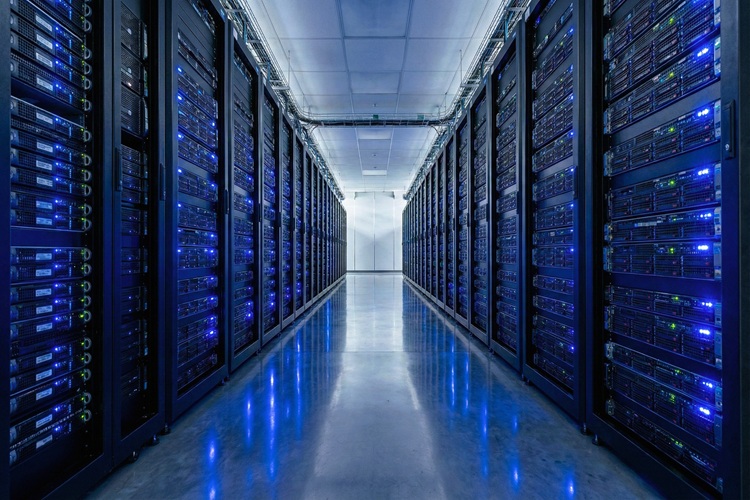
Economics is full of counterintuitive insights. Rent control can make housing less affordable. Business failures can strengthen an economy. And, yes, higher demand can sometimes lower prices. That’s a possibility worth remembering in the ongoing debates over data centers and electricity bills.

It sure seems like we’re going to build a whole lot more data centers in this country—at least, that’s what Wall Street is expecting. JPMorgan just raised its forecast for data-center capacity growth to 138 gigawatts through 2030, up from 122 gigawatts in its forecast last November. The bank also said it expects $5.5 trillion in AI-related capex through 2030, up from its previous forecast of $5.1 trillion.

If nothing else, that expansion likely means a lot more controversy over how data centers are affecting electricity prices. Yet one shouldn’t automatically assume that massive electricity consumption by these warehouse-sized supercomputers means higher electricity prices for most folks. In the new pre-print paper “Have Data Centers Raised Your Electric Bill? Causal Evidence from the United States,” researchers Asa Watten, John Bistline, and Geoff Blanford explain that they find “patterns of economies of scale for transmission, distribution, and generation costs as well as within and across retail customer classes.” 

Higher electricity demand can lead to lower prices because electricity systems have huge fixed costs. If new demand persists, those costs can then be spread across more kilowatt-hours. And if utilities build new capacity to serve that demand, the new, more efficient supply of energy may be cheaper to generate than older plants and grid assets. 

Watten-Bistline-Blanford found the following: 

We estimate that data centers caused average retail electricity rates to fall modestly in the United States from 2015 to 2024 using an instrumental variables approach. Despite prevailing sentiment, the finding is consistent with economic reasoning: existing large power system fixed costs, economies of scale in transmission and distribution, and declining unit costs for generation imply that durable demand growth lowers average prices. We find patterns of economies of scale for transmission, distribution, and generation costs as well as within and across retail customer classes. 

No guarantees going forward, of course. Maybe expected demand doesn’t come through. Or maybe current supply constraints continue or even worsen:

Several supply constraints are currently impacting the U.S. electric sector: orders on new natural gas turbines are backlogged, which is bidding up their prices; persistent supply-chain issues limit the availability of transformers and other electrical equipment; high tariffs on photovoltaic arrays from China have increased the price of solar in the United States; and aggressive executive action has stalled federal approvals for wind and solar projects while they are litigated in courts. Each of these constraints make new generation capacity investments more expensive than they would be otherwise and possibly more expensive than incumbent supply in some instances. 

Or perhaps the sheer size of the AI infrastructure buildout leaves “open the question of whether the system can continue to expand quickly enough to accommodate concurrent growth in data center demand and end-use electrification without triggering the supply constraints discussed above.” Maybe extrapolating from the recent past is a doomed endeavor given the tsunami of investment pouring into the sector. The paper notes that data centers used about 4.5 percent of U.S. electricity in 2024 and are projected to account for 9 percent to 17 percent by 2030.

Certainly a role for policy here to make sure high electricity prices don’t undermine the emerging AI revolution.


Source link

Related Posts

Economics

Vietnamese media navigate economics of journalism in digital age

June 23, 2026
Economics

New perspectives on charity and the mixed economy of healthcare

June 23, 2026
Economics

CUET 2026 Economics Paper Analysis: Good Attempts & Student Review

June 22, 2026
Economics

$752 To $1,156: United Airlines Says Mixed-Cabin Labeling Caused Pricing Confusion, Not Age

June 22, 2026
Economics

Factors affecting recent food price inflation in the United States – Adjemian – 2024 – Applied Economic Perspectives and Policy

June 22, 2026
Economics

What Microeconomics Gets Wrong About Gender

June 22, 2026
Add A Comment
Leave A Reply Cancel Reply

Editors Picks

Had You Parked $10,000 in This Vanguard ETF When Warren Buffett Recommended It in 2014, Here’s How Much You’d Have Today

June 23, 2026

Bitcoin ETF Outflows Hit $8 Billion: Why Institutions Are Retreating From Crypto in Summer 2026

June 23, 2026

Private equity’s new vibe check – Financial Times

June 23, 2026

M&A advisors support private equity investment in Minerva Virtual Academy

June 23, 2026
SUBSCRIBE TO OUR NEWSLETTER

Get our latest downloads and information first. Complete the form below to subscribe to our weekly newsletter.


I consent to being contacted via telephone and/or email and I consent to my data being stored in accordance with European GDPR regulations and agree to the terms of use and privacy policy.

Featured

Canada clears $4 billion sunrise pipeline as first big test of faster approvals

April 27, 2026

Don’t Blame AI for College-Grad Unemployment

June 3, 2026

‘The banks will not accept it’: Dimon escalates battle over stablecoin rewards in CLARITY Act debate

May 29, 2026
Monthly Featured

Singapore: Reed Smith APAC funds head to join Simmons

May 7, 2026

Jesse McCartney lists LA home for $2.79M

April 11, 2026

Impact of US Inflation on the Indian Economy and Stock Market

April 16, 2026
Latest Posts

Had You Parked $10,000 in This Vanguard ETF When Warren Buffett Recommended It in 2014, Here’s How Much You’d Have Today

June 23, 2026

Bitcoin ETF Outflows Hit $8 Billion: Why Institutions Are Retreating From Crypto in Summer 2026

June 23, 2026

Private equity’s new vibe check – Financial Times

June 23, 2026
SUBSCRIBE TO OUR NEWSLETTER

Get our latest downloads and information first. Complete the form below to subscribe to our weekly newsletter.


I consent to being contacted via telephone and/or email and I consent to my data being stored in accordance with European GDPR regulations and agree to the terms of use and privacy policy.

© 2026 Aspire Market Guides.
  • Contact us
  • Privacy Policy
  • Terms and Conditions

Type above and press Enter to search. Press Esc to cancel.

SUBSCRIBE TO OUR NEWSLETTER

Get our latest downloads and information first.

Complete the form below to subscribe to our weekly newsletter.


I consent to being contacted via telephone and/or email and I consent to my data being stored in accordance with European GDPR regulations and agree to the terms of use and privacy policy.