
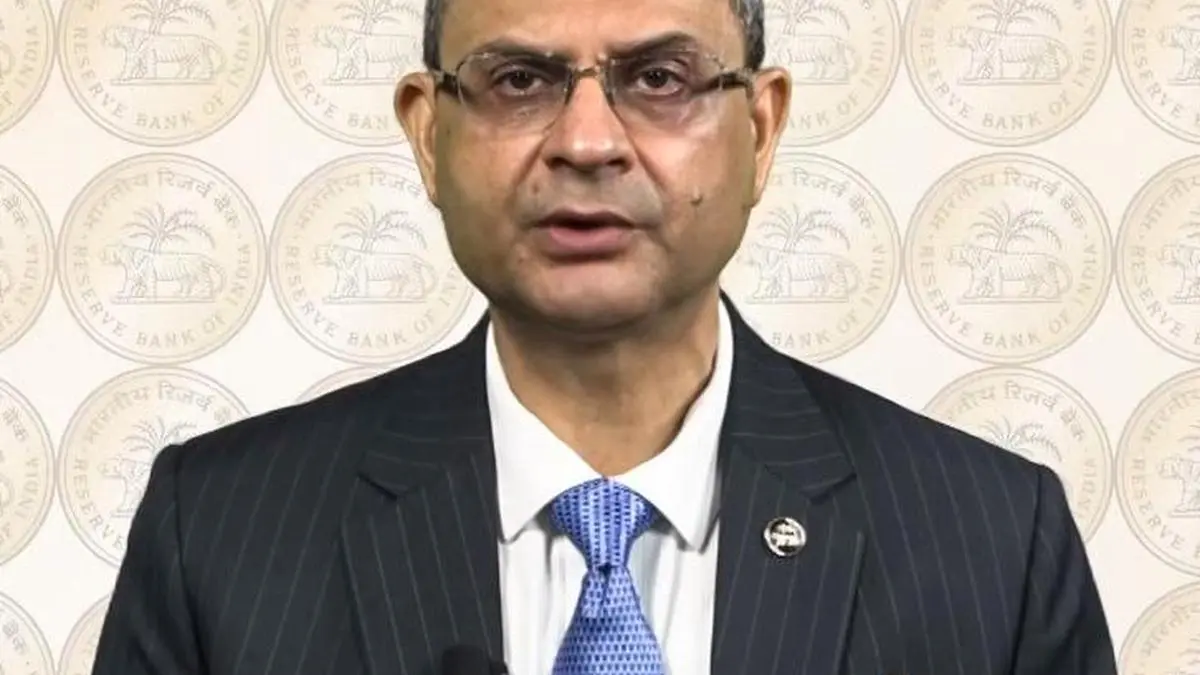
The latest monetary policy reflects confidence in India’s economic resilience despite inflationary and global challenges. RBI Governor Sanjay Malhotra reiterated the central bank’s commitment to bring inflation back to its target over the medium term while remaining data-dependent in its policy approach. He emphasised on India’s strong growth prospects, a resilient external sector and the stability of our financial system.
Markets viewed the policy as dovish. With inflation expected to remain above target, is the RBI comfortable with negative real rates?
We are neither dovish nor hawkish. We feel this is the right policy rate for the given growth-inflation dynamics. Our target is headline inflation, not core inflation. We will continue to be guided by headline inflation, and endeavour to bring it in line with the target over the medium term. We monitor core inflation to assess underlying price pressures, but would not like to bring volatility into the policy repo rate.
Could the RBI change its policy stance in the coming months if inflation remains elevated?
We will remain data-dependent and focused on our primary objective of maintaining price stability. We will continue to assess the inflation path, its composition and where it settles before taking any policy action.
What could trigger a change in RBI’s monetary policy stance?
Significant changes in the inflation-growth outlook, particularly if inflation remains persistently above target or growth weakens considerably, could prompt a revision in policy stance.
Do recent geopolitical tensions and tariff uncertainties pose a risk to India’s external sector?
India’s macroeconomic fundamentals are very strong, and we expect our external position to remain robust. FDI should continue to be supported by reforms, while the impact of tariffs may not be as high as the headline numbers suggest because of exemptions and rerouting.
Is FY27 GDP growth of 7 per cent still possible?
Our growth estimate of 6.7 per cent is based on the current outlook, and the risks are evenly balanced. There is a possibility that growth may be 7 per cent or more.
Has monetary policy transmission been completed?
Transmission has moderated to about 80 basis points on the lending side from around 90 basis points earlier. I would say it is more or less complete.
What changes are being proposed regarding loan interest rate calculations?
No major changes are planned. The focus is on greater transparency, consumer protection and rationalisation of existing regulations for regulated entities.
Despite strong FCNR(B) inflows, why hasn’t the rupee appreciated significantly?
The underlying fundamentals of the Indian economy are very strong. It is quite possible that the rupee may strengthen further. Our policy has always been that markets determine the level of the rupee. We intervene only in case of excessive volatility, and will ensure the rupee’s trajectory remains orderly without self-fulfilling expectations.
With surplus liquidity and the swap window, do you expect banks to pass on benefits to borrowers?
Liquidity may remain in surplus only for the very short term and may peak around September. It is not extraordinarily high and should get absorbed through normal requirements such as currency in circulation, reserve requirements and maturing forwards. It will help only at the margins.
Has the FCNR(B) scheme achieved its objectives?
Yes, as of now, it has ticked all the boxes. The flows have been robust and have further strengthened India’s already comfortable external position.
Will the RBI close the FCNR(B) deposit scheme before the September deadline if inflows remain strong?
We have received robust FCNR(B) flows. As of now, there is no proposal under consideration to close the scheme prematurely. We expect healthy inflows going forward.
What is the status of the NBFC upper layer list?
We would like to clarify that the NBFC upper layer framework is now principle-based. Entities that meet the prescribed criteria will continue to remain in the upper layer. The updated list is expected to be released soon, but the underlying status of eligible NBFCs remains unchanged. Classification will continue to be determined based on the established principles and criteria.
Are banks adequately protected against rising cyber security threats?
The IT systems of our major banks and regulated entities are quite strong and robust. Banks have put in place checks and balances, while the RBI regularly supervises and monitors vulnerabilities to ensure systems become more secure and resilient.
What is the status of the RBI’s CBDC and Unified Lending Interface (ULI)?
Deputy Governor Rohit Jain: Both CBDC and ULI are making good progress and are already being used. We are working with banks and State governments to expand use cases and expect wider adoption going forward.
When will polymer currency notes be introduced?
Polymer notes improve durability and lifespan, especially for lower denomination notes. We will first test them under Indian conditions before scaling up. If everything goes according to plan, we are targeting circulation from the beginning of the next financial year.