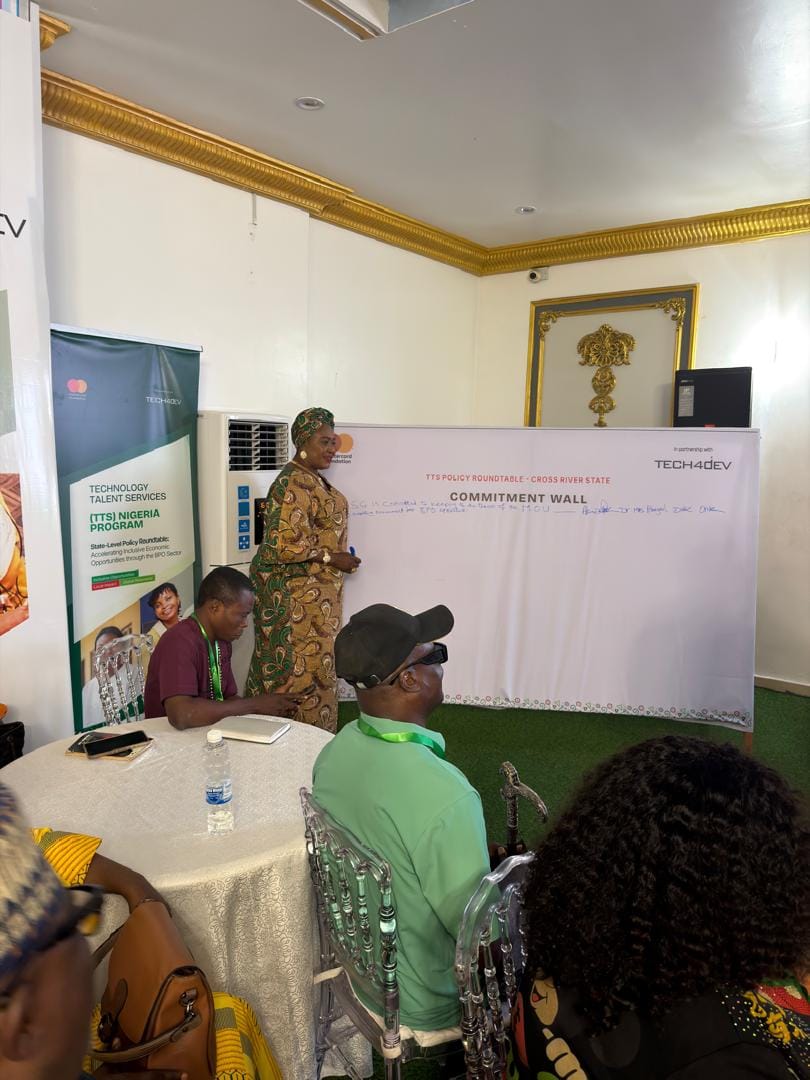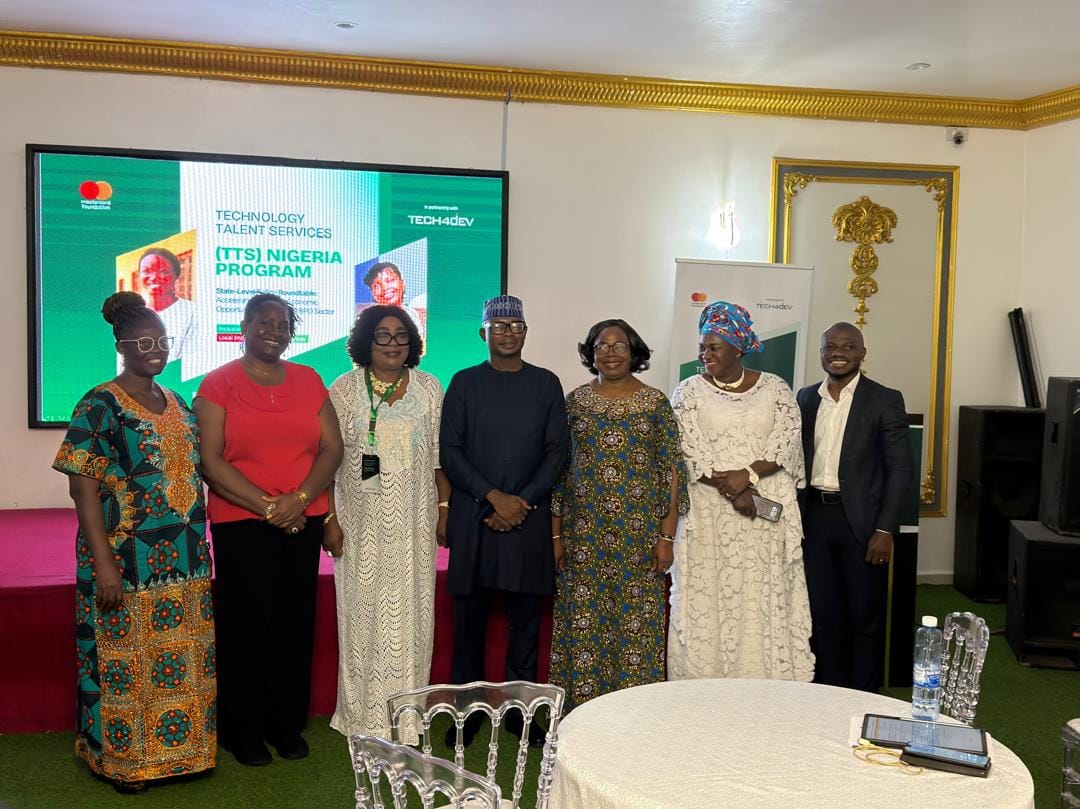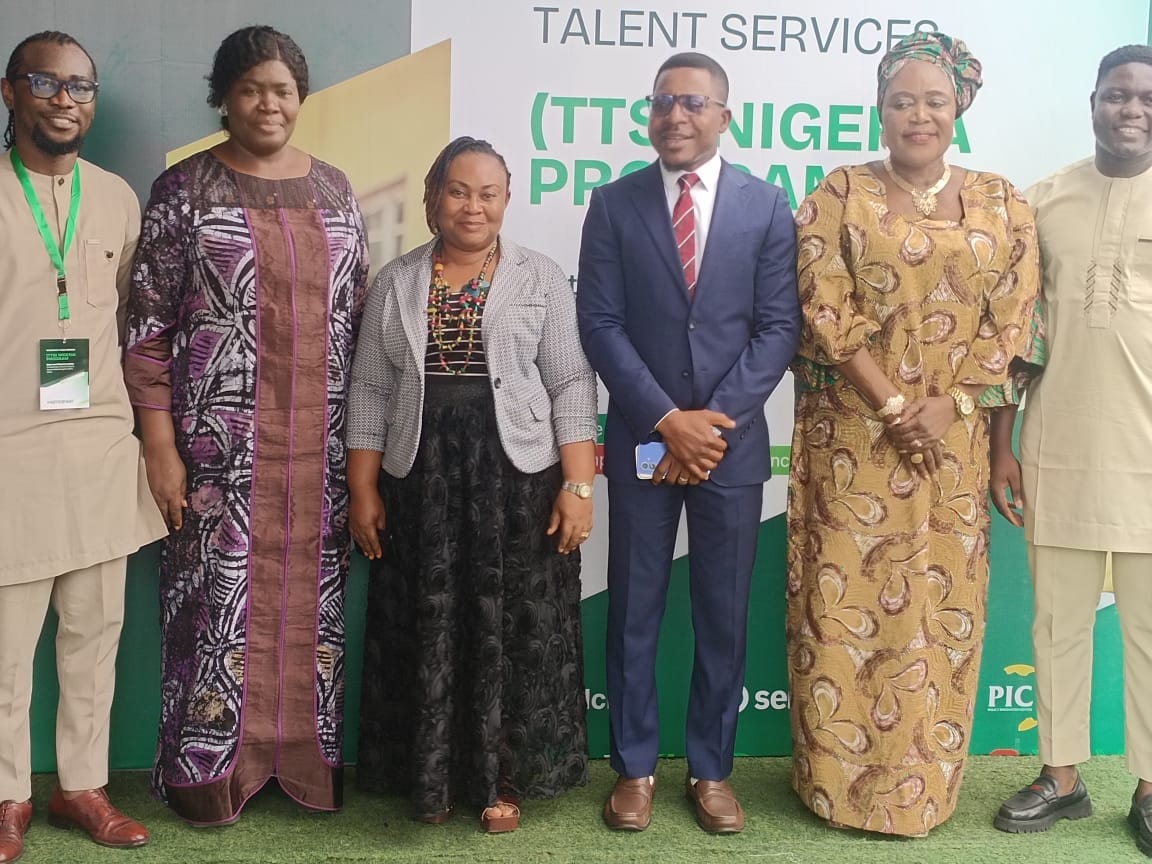
The Cross River State Government, through the Ministry of Commerce, has successfully completed a State Business Process Outsourcing Policy roundtable aimed at diversifying its economy and creating formal digital jobs for youths in the State.
The roundtable which was organized recently Calabar was in partnership with the Technology Talent Service (TTS) Nigeria Programme, a consortium supported by the Mastercard Foundation, Tech4Development, Policy Innovation Centre, Univelcity and Semicolon.
The dialogue gathered government officials, industry leaders and development partners to build an inclusive Business Process Outsourcing (BPO) ecosystem for the State
Government and its economic projections.
Giving the opening remarks, the Honourable Commissioner for Commerce, Dr. Abigail Orok Duke, noted that the State’s emerging status provides a solid baseline for rapid growth.
“The goal of this policy framework is to turn our readiness into immediate investment and jobs by closing investor-critical gaps, leveraging existing assets and ensuring our youth are job-ready for international and domestic buyers,” she stated.
Also speaking, the Commissioner for Finance, Dr. Michael Odere, emphasized that the initiative aligns directly with the administration’s youth technology development agenda, which has already engaged over 400 young residents of the State in digital skills programs.
He highlighted Cross River’s readiness to tap into the global BPO market, projected to reach $696 billion by 2033. With over 350,000 post-secondary educated residents and 1.93 million workers currently in informal employment.
Dr. Odere further explained that the BPO sector offers a sustainable pathway to transition local talent into structured, high-value digital roles.
Presenting findings from the Technology Talent Service Nigeria State Readiness Index programme, facilitators revealed that Cross River ranks 9th out of 15 assessed states in Nigeria with a 55.5% Readiness Score.
During the event, stakeholders co-created and validated a 9-Pillar BPO Policy Architecture covering talent development, digital infrastructure, investor incentives, regulatory standards and inclusive hiring mandates.
Four primary commitments established at the roundtable include: Targeted Investor Incentives, State BPO Support Desk, Public Procurement Clauses and Strategic Partnership Execution.
The event concluded with a joint commitment between the State Government, private operators and development partners to finalize the executive policy document for State approval, thereby clearing the path for immediate implementation.
OBASEOYI BASSEY