
They were found during a series of organised metal detecting rallies on a series of fields near Colby.
At a hearing at Norfolk Coroner’s Court, Johanna Thompson, the area coroner, declared the items treasure.
The finds were described as a significant early medieval hoard and include coins linked to the Merovingian kingdom, the Byzantine empire and early continental Europe.
The treasure hearing first opened on March 26, 2026, but was adjourned until April 22 to allow further documentation to be gathered.
At the resumed hearing, the court was told 13 had been found between January 23 and October 9, 2022, during a series of organised metal detecting rallies on fields belonging to the same farm.
A further coin was later discovered on March 31, 2024.

All of the coins were found by different people taking part in the rallies. One of the finders, Mr Stedman, was present in court for the hearing.
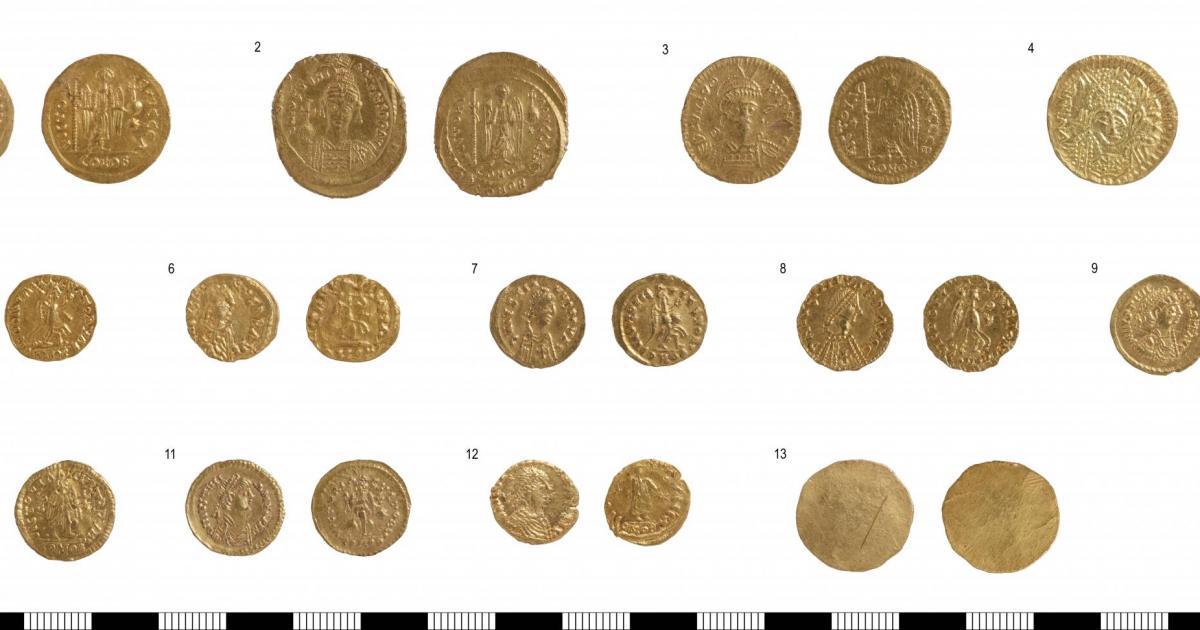
A report prepared by experts at the British Museum set out the age, origin and composition of the coins while an image of the finds was displayed.
The report concluded the coins dated from in or after AD530 and fell within the early medieval period.
Experts identified the hoard as containing two Byzantine solidi, two pseudo-imperial Merovingian solidi, nine Merovingian tremisses and one irregular gold solidus.
The Merovingian dynasty ruled large parts of what is now France and neighbouring regions between the fifth and eighth centuries, while Byzantine coins originated from the eastern Roman empire centred on Constantinople.
The presence of such coins in Norfolk offers a glimpse into long-distance trade, wealth and movement of precious objects during the so-called Dark Ages.
Treasure hearings are held to determine whether objects meet the legal definition of treasure under the Treasure Act.
In broad terms, items at least 300 years old containing a significant proportion of precious metal can qualify.
The court heard the coins met the criteria because two or more coins from the same find contained at least 10pc precious metal.
Helen Geake, Norfolk’s finds liaison officer, provided evidence regarding the discovery and handling of the coins.
After considering the expert evidence, Ms Thompson said she was satisfied the legal test had been met.

She told the hearing: “Having considered this evidence, I am content to note that this is treasure and I declare it is treasure.”
The ruling means museums will now have the opportunity to express an interest in acquiring the hoard, with the coins independently valued and any reward normally shared between the landowner and finders.
Norfolk has long been regarded as one of Britain’s richest counties for archaeological discoveries, with its farmland regularly yielding Roman, Saxon and medieval artefacts.
But experts say the Colby discovery is especially striking because of the number of gold coins involved and their rarity.
The coins will now enter the next stage of the treasure process, which could ultimately see the historic hoard preserved for the public in a museum collection.