
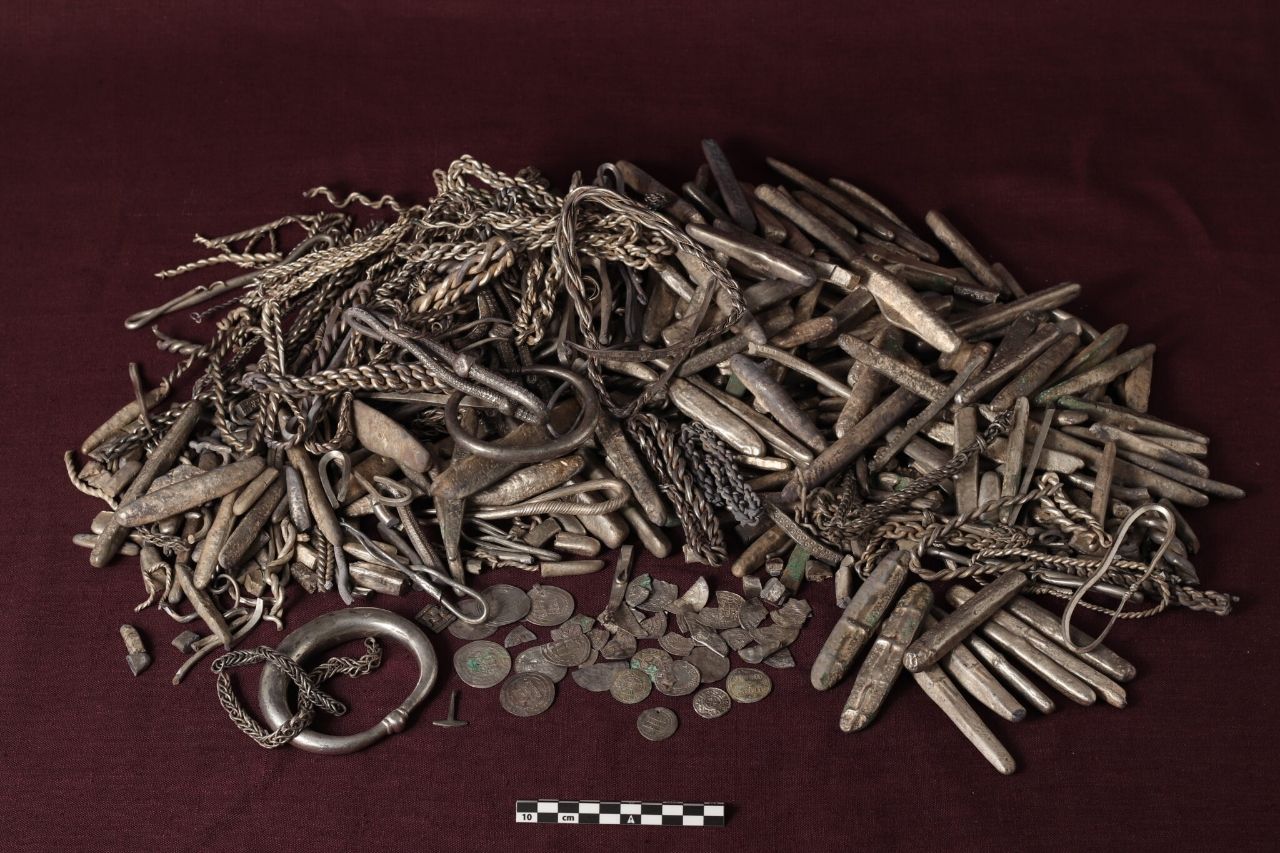
A routine garden project in Rebild has led to the largest known Viking Age silver hoard ever found in Denmark. The hoard contains 18.5 kilograms of silver, almost three times the weight of the previous record holder.

The find was made while a homeowner prepared the ground for a new terrace. After about half an hour of digging, the finder struck something with a garden fork. The sound first suggested old metal or wire. More digging by hand revealed jewelry, coins and silver bars.
The hoard dates to the 10th century and contains about 700 objects and fragments. These include many silver bars, bracelets, 47 complete coins and coin fragments, a small Thor’s hammer, and pieces of cut-up silver objects.
About 320 objects, weighing 6.4 kilograms, were still inside the original clay pot. The rest lay in the soil around the vessel. The finder’s name has not been made public.
The hoard is almost three times larger than the Terslev Hoard, previously Denmark’s largest known Viking Age silver hoard. The Terslev find contained about 6.5 kilograms of silver.
A major clue to the hoard’s purpose lies in the way its silver was stored. Coins form only a small part of the total weight. Most of the silver consists of bars, jewelry and cut pieces.
During the Viking Age, silver often served as both wealth and a means of payment. Its value depended heavily on weight and purity. People cut bracelets and other objects into smaller pieces, melted silver down, or divided bars when making payments.

The Rebild hoard contains many bars and silver pieces grouped around certain weight ranges. Some bracelet parts show similar patterns. This suggests the silver was arranged as a measured store of wealth rather than gathered at random.
The coins also point to wide trade and travel links. The hoard contains both Arabic dirhams and Anglo-Saxon pennies. Two pennies were struck under Edward the Elder, who ruled England from 899 to 924. Their presence gives a key date for the hoard, since the deposit must postdate their arrival in circulation.
The Arabic dirhams came from the Islamic world and often carry marks linked to places and dates of minting. Many were cut into smaller pieces, matching the use of silver by weight seen elsewhere in the hoard.
One silver bar carries a short runic inscription. The marks might read “hutu.” The inscription could represent a name, an owner’s mark, or another meaningful sign. Its exact meaning is still unclear.
Rebild has produced other major Viking Age finds. In 1971, archaeologists found the Rebild Hoard in the same area. It contained about four kilograms of silver, including bars, cut jewelry and small silver pieces.
Another recent find adds gold to the area’s record. The Rold Hoard consists of six intact Viking Age gold arm rings weighing 762.5 grams in total. Together, the finds point to a region with substantial stores of precious metal during the Viking Age.
The new hoard also raises questions about where and why someone buried such a large amount of silver. The find spot now lies within a modern built-up area, so a large archaeological excavation isn’t possible. The hoard might have been buried near a settlement, beside a route used for travel, or in a secluded place.
The silver hoard is now being submitted for official danefæ assessment at the National Museum. Under Danish law, declared danefæ belongs to the state.
Nordjyske Museer hopes to display the hoard at the Viking Museum Fyrkat in the future. The museum also hopes to show the silver alongside the six gold arm rings from the Rold Hoard.
Together, these finds would offer a rare view of wealth, trade and silver use in Viking Age northern Denmark. The Rebild hoard links the region to networks reaching England, the North Sea, the Baltic region and the Islamic world farther east.
More information: Nordjyske Museer