
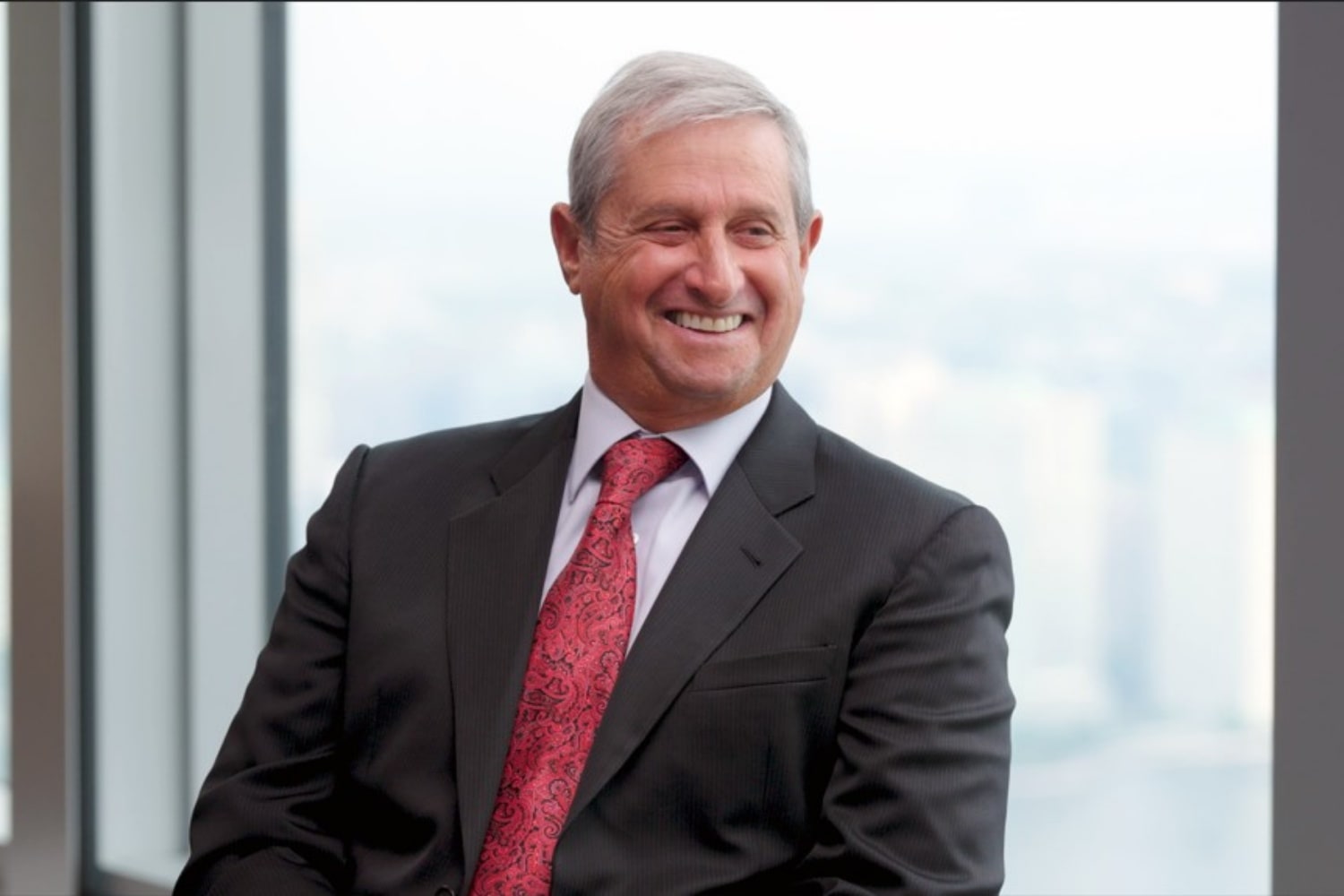
Rich Friedman: I never imagined the PE industry would evolve into what it is. This is industrialized. There are hundreds and hundreds of them.
Alison Mass: Thousands. Thousands.
Rich Friedman: Thousands. The crisis today in the PE industry is exits. It’s not operating performance.
Everything’s slowed. Let’s put it that way. But it’s an incredible business to be able to go search, find, and then manage and create. And the question is: is that still doable in the world? And my answer would be, yeah.
Alison Mass: Welcome to Goldman Sachs Exchanges: Great Investors. Today, I sit down with Rich Friedman, the chairman of Goldman Sachs Asset Management, and one of the foremost leaders in alternative investing. Well, welcome to Great Investors, Rich. It’s so great to have you here.
Rich Friedman: Thanks, Alison. This is really a treat for me.
Alison Mass: So, today, I’m interviewing you for Great Investors podcast. But before we begin that and talk about the investment environment, I want to go back to your start at Goldman Sachs, which is 45 years ago. Tell us about your first day. What was that like? Do you remember?
Rich Friedman: You know, I do remember. I remember we were at 55 Broad Street. Most people think we were at 85 Broad Street. But, you know, I’m dating myself. But I think I was on the eighth floor. And it was a small area. And there were about 25 to 30 people in the group. And the funny thing is, one of the people I saw as I was walking in was this guy named Joel Beckman. He was someone I grew up with in Riverdale. It was a very low-key, very welcoming place. And I didn’t feel, you know, so anxious walking in there because I knew someone. And it seemed like a place you could sort of, like, assimilate into.
Alison Mass: So, what was it like to work at the firm in the ‘80s? What was that first, you know, 10 years like?
Rich Friedman: Well, it varied a lot over 10 years, but certainly the early years– well first of all, the day I joined the firm, Salomon Brothers was sold to Phibro.
Alison Mass: Wow.
Rich Friedman: Now, I didn’t say wow because I didn’t really know that much about Goldman Sachs or Salomon Brothers, but it was a little bit of a wow that literally, you know, you’re joining Goldman Sachs. And then you hear that one of its principal competitors were sold. And I think it was sold for like $800 million. It sounded like a lot of money back then, but obviously not so much today.
But, I’d say that we got going relatively quickly. The group I joined was a group that did private financings, credit debt financings, lease financings. And so, they were projects. It wasn’t advisory. So, what was happening was I was being assigned, you know, to work on different things.
Early on in my career though, I was starting to get assigned to work on some of these early-stage buyouts where we were like a financial advisor to help raise the debt. I had a little experience because in between my years at business school, I worked for Citibank in their asset-based lending area. So, I learned about asset-based financings for receivables, for inventory, and the earliest of days of bootstrap LBO people. So, you know, I was one of the only ones who had that kind of experience.
So, when we started to get a few assignments in this, you know, I was chosen to get involved with it, which was, you know, which to me was very interesting. You know, I would say that I got assigned very quickly to, you know– we were progressing fast into the LBO world back then. It wasn’t called private equity.
I ended up being assigned to getting involved with a fair amount of media transactions. And it wasn’t because I knew anything about it other than I watched TV and read the newspapers. But I became an expert having worked on some of the early recaps in the media industry in the early ‘80s. Multimedia’s recapitalization that Jack Kent Cooke came after; the Harte-Hanks. So, there were companies that I was involved with early on that were media-related but were transactional, which really fit, you know, sort of my skill base at the time.
Alison Mass: And you eventually got your ‘battlefield promotion,’ as you call it. Tell us about that story.
Rich Friedman: So, the battlefield promotion was something because this was in the middle of the first recession that we were living through, which was in 1989, 1990. And it felt pretty severe at the time, and this is from the S&L crisis that really caused this. And I had become partner in 1990. And I was like slated to raise a new buyout fund.
And then I met this individual named Hank Paulson, who became my new mentor, who they said, “This is who you’re going to report to.” Because at that point, we were all in investment banking. There was no concept of a merchant bank. And it was the beginning pathway on to the creation of what we refer to as the Principal Investment Area when we raised our first GS Capital Partners Fund in 1992.
Alison Mass: Yeah, and the rest is history.
Rich Friedman: And I’m still alive to tell the story.
Alison Mass: That’s fascinating. What a great experience.
Rich Friedman: I’ll tell you a funny thing about it is that, you know, again, it was just like 20 of us, maybe even less at the time. Think about what’s going on. So, we sat there and we said, “Well, what should we call ourselves?” And we had some pretty creative people there in terms of promotion, like, we should be the Principal Investment Area. We can’t be principal investment group. That’s not going to be a good acronym. And then we said, “Maybe we should be the principal investment division.” And so, I took that up to Steve Friedman. He basically says, “Yeah, Rich, I don’t really think you’re ready to become a division of Goldman Sachs.” But we had a lot of fun.
And, you know, we created the business. So, we created the Principal Investment Area, which today still has what I’ll call brand value in the marketplace.
Alison Mass: That is extraordinary. So, you’ve talked about mentorship. It was a big part of why you decided to take the initial risk and build up a team at the firm in media and communications. How did you lean on your mentors throughout your career? And in what ways did they help guide you?
Rich Friedman: It’s a good question because I never thought of them as mentors, but they were. And so, it was a smaller place back then. And if you distinguished yourselves in ways you could get identified. So, early on I was identified by one individual. And he was the one who asked me to, you know, build and create the media and communications banking business in 1987. And I was really reticent about that because this was a client-service business. You know, at that point, I’m 33, 34 years old, not even. And I’m like, wait a minute. My clients are the CFOs and CEOs of these big companies like ABC, Cap Cities. These people in their 50s or 60s. I don’t think I could be successful, you know, covering them and this isn’t what my strength is.
And, you know, but he convinced me that ultimately this would be a stretch assignment. And that, you know, it wasn’t going to last forever, but I would learn a lot of things. And so, he said, you know, “Do it.” So, I came back and got excited, you know, and did it.
At each of these sorts of stages in my career, it was a little bit of fate. I wasn’t looking for anyone. And our mentoring program and support programs at the firm now, we didn’t have them back then.
And what I learned, Alison, early on in the creation of, you know, the merchant bank was, it was a fragile business model for the firm. It wasn’t central to the firm’s advisory and trading businesses. And there was some long history of, I’ll use the word mistakes. And that for this to be successful, I really did need a big brother. You know, watching what we were doing, advising what we’re doing, and protecting.
And that was critical in the early days to create this.
So, it was important to me at every next stage, even as a very, let’s call it, rising senior partner at the firm, I needed support from the Executive Office.
Alison Mass: So it did take four or five decades to really build the merchant bank into what we know it as today. And you did it in a very deliberate way. So, what were some of the milestones along the way as you built the merchant bank?
Rich Friedman: So, the first milestone, obviously, was raising GSCP-1. That was a billion-dollar fund in 1992. And at that point, there were only five firms that had billion-dollar funds. So, that was a signature thing at that point.
And then we had some signature deals. Like buying in a 28.5% stake in Polo Ralph Lauren. And some other deals that we did became branded deals for us. And then we built a private equity business through the mid-1990s. Just, you know, basically getting bigger, raising a bigger fund, nothing too special.
And in the late 1990s, I came up with the idea that we should raise a subordinated debt fund. And it was really, the first thought was, it’s really for European deals. Because Europe didn’t have the ability to raise subordinated debt for their buyouts. That was sort of what the initial idea was. And there was just no private subordinated debt industry at that point in time. So, we raised the fund. And we actually ended up having both US and European deals because we were just, if you will, competing with the US public markets for deals. But that was a step forward in the creation of a credit business inside, you know, the private equity business.
Alison Mass: And that was the business that Muneer Satter led for you.
Rich Friedman: Correct. And then, you know, you’ll laugh at this because you can see it. As we got into the tech, you know, growth bubble, if you want to call it, in the 2000 era. I won’t say who, but a message came from the EO that, “Rich, we want to see more opportunities in all of these, you know, tech opportunities. And you have to build a team to do it.”
And they could tell that we were resisting it because a big part of, you know, my thinking and my team’s thinking is, let’s stick to what we’re good at. And tech is a little bit of, you know, for us, we didn’t have the people. It just seemed like it was, you know, a roll of the dice. But, you know, we said, okay, if that’s what they want.
So, we started to focus on, you know, tech deals. And a lot of the initial funding was really done on balance sheet and with employee funds. So, you know, we were dabbling in it. We had like a matrix. We could put $3 million in something, $6 million in something, $9 million in something. And it was just like these were bets. Now, we didn’t know that looking back in time, that we could, at one point, own 13% of Alibaba when it was being formed. And if you went back a decade earlier, we owned 10% of Qualcomm.
So, the firm was pretty phenomenal in bringing opportunities, you know, to us. But that was our entry into tech and growth. And that has had its ups and downs and ups and downs. But nonetheless, you know, we’re a big growth investor today. But that was sort of a seminal thing moving into that.
Then I’d say we took a big leap in 2005 by raising a $5 billion fund. And that’s when, you know, the whole PE industry was sort of– that was like the Renaissance period where we were doing deals, as you know, every other week. You know, I think we did $200 billion of buyouts in an 18-month period. It was a crazy period. And it challenged our discipline, if you will, because, you know, it was the first time in history where the public markets were saying, “We want you, private equity, to buy us.” And the valuations were not that crazy. So, you know, basically this went on until obviously, you know, the bubble burst. But that was a crazy period.
Now, coming out of that period was a big thing, which was we raised the senior debt fund. And we raised a real estate debt fund. And these were distressed funds to take over the opportunities that were presenting themselves. I never imagined in my career, Alison, that I’d be running a senior debt fund in the merchant bank. It’s like, really? LIBOR plus two and a half plus fees? And you know, but that sort of like filled in that matrix of the portfolio of what businesses are you in.
You know, Tom Connolly was running it. We made equity-like returns in that senior debt vehicle for that first phase.
Alison Mass: I remember that.
Rich Friedman: You know? And then it was like pieces to the puzzle. Then we raised our first infrastructure fund, you know, right around the same time. So, it happened over time. It wasn’t like it happened all at once. And this was sort of like the PE business kept growing while these new businesses were being added. But we did it at a pace that made sense. And then we did them, let’s call it, opportunistically in relation to what the market was then presenting, you know, ourselves with.
I always felt we needed the quality people to run them. And we needed to be able to invest them. It wasn’t a matter of, could we raise the money? It’s could we responsibly invest the money? And that’s sort of probably why we did it on a slower fashion than maybe we otherwise could. But in these businesses that I’ve referenced, we were first. So, I feel really good about that. The fact that, you know, others have gone past us on the credit side. But, you know, we’re still, you know, top five, let’s say, you know, in the credit business. But we were alone. We were top. You know, we were top.
Alison Mass: Speaking of being first, we were also the first in Asia.
Rich Friedman: Yes.
Alison Mass: And overseas investing became a cornerstone, right, of the merchant banking business. What initially prompted you and your team to start looking at Asia, at China, at other overseas investments?
Rich Friedman: When I, you know, got my responsibilities in 1992, we immediately built out a few niche funds in Europe. And we had a banking business in Europe. So, we had some semblance of a business in Europe to be able to do some deals. The Asia part was, you know, that was different. And I remember that, you know, I took a small, you know, green beret group. We jumped on planes and we went over to China. And it was like, where are we? What are we doing here?
None of us had ever been there before. So, these were the first trips. But these were some of the smarter investors we had in my group to try to scope out, is there stuff that we can do?
So, of course, we’re there, like, you know, coming up with, like, ad hoc ideas about all these bicycles. “Hey, I don’t see anyone with a bicycle helmet. Maybe we should invest in bicycle helmets.” So, in the earliest of days, I’d say, we had a skeletal crew of people on the ground. And banking was sort of just getting going. But we did feel as if we had an edge because, as you said, there was nobody else there.
And what I found over time is the Chinese welcomed Goldman Sachs. And we built a Chinese team. You know? We built a team. It was mostly based in Hong Kong, but eventually we had some based in Shanghai. But we had nationals who were Western trained, and we felt also had the DNA of a Goldman Sachs person, which is, you know, not an easy thing to do. And, you know, Stephanie Hui, who now runs the business, I remember the first day she joined. And that was 25, 26 years ago. And she understood what the mission was.
But, you know, we built a dedicated team. And we had sort of a targeted focus. And it took a while before we got ourselves to doing a fair amount of investing there. And it built over time.
You know, so the China strategy built over time, and we developed more and more relationships. You know, eventually, you know, we had that seminal deal. And that was the investment in ICBC. And that was something that no other, you know, US bank or investment bank had the opportunity to do. It was a strategic investment. But the firm made an investment. Our funds made an investment. There was a commercial relationship that was established between Goldman Sachs and ICBC.
It was a very big investment in the privatization, if you will, of the Chinese banks. I think that was probably a seminal moment in us establishing ourselves as constructive investors in China. That helped establish ourselves there.
The deal industry has always been like one deal leads to three others. And I think that’s sort of what happened. But the key thing for me was why I always needed the person at the helm there that I could trust. So, at first, I had Henry Cornell and then I had Stephanie Hui. Andrew Wolff, and then Stephanie Hui. So, I had three great investors who I could have a lot of confidence in because when you go to sleep at night, you know, you’re in New York and they’re in Hong Kong and they’re there and, you know, they’re the ones really sort of doing the on the ground, you know, stuff. So, we had great leadership there, and it’s continued.
Alison Mass: So, getting back to your career history, you built the principal investing business into a juggernaut. And was there a guiding philosophy as you built up the book and your team?
Rich Friedman: Was there a guiding philosophy? Yes, I’ll say there were a number of guiding, you know, sort of tenets that we had to have. The first is this business had to work inside Goldman Sachs. And that it wasn’t a subsidiary of Goldman Sachs. It was a division of Goldman Sachs. And that we needed to have what I’ll call is the excellence, the success, and the connectivity no different than the other parts of the firm. We needed to be in that patchwork of being part of the firm.
So, I made sure that along the way we had a lot of connections there. We had good relationships with banking.
Alison Mass: Also learned to partner with our most important clients.
Rich Friedman: Totally. So, we needed to have a strategy with our client base. And partnering and not competing on a regular basis, because certainly we competed in the marketplace. But not to be in every auction ever created. So, we needed to have a business strategy that was consistent with the firm’s strategy consistent with, you know, the PEs clients that we had and other clients we had. So, there’s a little bit of it’s not just the PE firms that could be upset. It could be the other corporates.
In terms of the team and the business, Alison, I always believe we needed to be meaningful. The team that, you know, that we built was first-class people. And, you know, there would be jokes that, you know, these were really above average astronauts or whatever. You know? And these are really smart people, successful people, a number who came from banking and other areas. They wanted to be in a firm where, you know, they felt like they were part of the firm. So this had to be meaningful, scale wise, and it had to be one in which we made a difference. That if we were, you know, doing well in our funds but nobody in the firm knew what’s going on, that wasn’t going to do it for, I think, a large majority of our people. So, we kept our people for, I think, pretty long periods of time. We had good retention. So, that was important.
Most important was we had to have good returns. You don’t have good returns. Forget it.
Alison Mass: Nothing else matters.
Rich Friedman: Nothing else matters. So, you know, the investment process needed to be as high quality as we could make it. It couldn’t be, you know, ‘Rich’s investment portfolio.’ It couldn’t be ever I made all the calls and that was it. It needed to have the integrity and the real essence of, you know, realizing that we’re dead – if we don’t have good investment results, we have nothing. None of that other stuff will matter if we don’t have good investment results. So, the investment process was always the lifeblood of what we did.
And we also made this so that it was, you know, we had so much of the employees’ capital invested. So, there’s a little bit of, you know, it’s like the employees cared.
Alison Mass: Like we’re all rooting for you.
Rich Friedman: Exactly. We’re rooting for us. We’re supportive. You know, we want to see good returns. And we’re part of the essence. So, we needed to have this as part of the, you know, the tripod. And there were other things we needed to do. But we needed to be part of the essence of Goldman Sachs. Especially as we got bigger.
Alison Mass: You’ve run a lot of Investment Committee meetings in your career. And you once told me that it’s okay to disagree, but you can’t be disagreeable. So, what does that mean?
Rich Friedman: So, it means a lot to me. I’ll say it this way. We run a very, and we still do, a very what I’ll call honest investment committee process, which means people speak up. And I don’t care how young of a partner you are or whatever, it’s a forum to come in and give your reviews and give your ideas.
We have to have decorum. But I don’t want to silence the input because we have so many smart people here.
So, it seemed to me that we want debate. We want people to say, “This doesn’t make any sense to me. Explain to me why. You know, how does this really work?” And do it in an open fashion.
That’s where I adopted this phrase, and you know, I’ll copyright it, is it’s okay to disagree. You can disagree. And you can disagree with force. But you can’t be disagreeable. You can’t be in there acting like a jerk and creating that kind of negative, you know, vibes in the room because that’s going to then spiral. Because then others will do the same.
Alison Mass: Right.
Rich Friedman: And I think the people get it. I never thought it was smart to create investment committees where the chairman of the investment committee made all the calls without all the relevant input. And I would never– we’d never approve deals if it was like 60/40 or 55/45 if you counted heads. We wanted a strong consensus of support for any investment that we made.
And I just believed that we had really smart people. And that as smart as we are, you know, this is predicting the future. It’s like, we’re not so good at this. And so, it’s like, you know, let’s get enough support and reasons why and then we can make the call.
And today we’ve taken it to the next level. We have an incredible group helping us think this through. So, I think it’s– I was never afraid of opinions. I wanted the opinions. But I didn’t want, you know, antagonism, you know, in that room.
And I think everyone got it. And it was a small enough committee that everyone understood it. And there was enough experience in there that, and people believe, they said, “Okay, we like this model. It makes sense.”
Alison Mass: No, that’s smart. How have you balanced consistent performance and staying true to your principles? And was there ever a time that those two things were at odds?
Rich Friedman: Oh, yeah. I mean, they’re at odds now. I mean, whenever you go through these momentum periods, you know, everyone’s like wondering, I mean, it goes back to the late ‘90s, like, you know, how come you’re not in AOL or how come you’re not in Netscape? And why aren’t we in those deals?
And the same thing will go on now, which is if you’re not active in AI right now, you know, you’re useless. So, it’s sort of like, you know, you have to sort of balance that, which is how aggressive do we want to be during momentum periods.
Consistency and staying within what we’re good at has proven to be true. And that means you’re going to miss some things. But we really haven’t historically been that successful by, you know, jumping on the momentum thing and being at, you know, top. Because those things, they crash.
But sometimes what we would do is we would temper them. So, I remember, you know, with the tech of the 2000 period, you know, there was all this pressure to do tech and tech and telecom at the time. We were like, “I don’t know.” And, you know, so about $500 or $600 million of that fund sort of got invested in tech and telecom. And then– but that was 10%. And then it sort of like faded, went away, and it didn’t kill the fund. But we at least were playing at it.
And there were times we’ve had to say no. We decided there were places that were off limits. We didn’t have to go to every part of the world. We had plenty of opportunity in our home territories that we defined as home territories. So, we stayed within our geographic places of US, Europe, Asia. Which is plenty. And then we struggled through those periods of momentum. They’re really hard because if you’re not active in them, you look like you’re just out of place.
Alison Mass: You talked earlier about starting the first subordinated debt fund. Private markets have obviously grown massively over the past decades. So, has that made it harder or easier for you to find opportunities?
Rich Friedman: I’ve always felt that competition on the private equity side where we play has always been intense because it really only takes one other, you know, party to create a very competitive circumstance. I never imagined the PE industry would evolve into what it is. Right? It’s just, being a pioneer, it’s like looking at this and saying, “Oh my God, this is industrialized. There are hundreds and hundreds of them.”
Alison Mass: Thousands. Thousands.
Rich Friedman: Thousands. Thousands of them. What’s happening in our sweet spots is when there are businesses for sale, there seems to be only like two to three or four that really pay attention and get involved. And that’s because there’s so much activity that you can’t look at everything.
So, I think, at least right now, we just bought, you know, we signed a couple of deals in the last, you know, week or so. These were mid-sized companies, which is our sweet spot. And there are really one or two other competitors. There weren’t 10 or 20 because no one wants to be in something where you have to pay for due diligence and spend $2 million against 10 other people. So, it’s sort of a strange world in that sense.
I think it’s always been competitive. It’s a lousy industry from a standpoint of looking at how many players, how much money, how much opportunity. But it’s an incredible, you know, business to be able to go search, find, and then manage and create. And the question is, is, you know, is that still doable in the world? And my answer would be, yeah. It’s a much bigger world, but I never imagined, you know, we’d have an industry with thousands of competitors, three to five trillion of assets in inventory needing to find a home. I would have never imagined.
What I’d say is, and this goes back to 2005 when I’ll say what I’m going to say, or 2006 or something like that. We sit with our senior team and we say, “Okay, we’re only going to– we only want to make five to seven investments a year. We can have a great business with five to seven decent-sized investments a year.”
And that’s the same thing today, which is there’s plenty to do. People have plenty of their portfolio companies to be involved with. But we’re not trying to conquer the world. And let’s think about that in terms of the Warren Buffett idea that you have just a certain amount of punches on your ticket that you can have, which is, is this one of the five, six or seven? So, I think we’re seeing enough. But it’s a very complicated world.
Alison Mass: Yeah. So, you’re in the middle of your fifth decade investing and leading.
Rich Friedman: I was going to say, I think I’m in the middle of my sixth decade living, but yeah, or seventh decade.
Alison Mass: Seventh. No, but fifth decade investing, having built the merchant bank over so many decades. And you’ve invested through multiple crises, bubbles, as we’ve talked about, and market regimes. What event, in your view, tested you most in your career? And what did you learn from that?
Rich Friedman: I think the event that sort of was the biggest shock was the great financial crisis, if you will, because no one knew anything. And, you know, Goldman Sachs was having an existential moment, if you will.
The common view was, because you knew this, was that there was just a wall of debt financings that– it wasn’t going to happen. And every private equity investment was going to fail. You know? That didn’t happen, obviously.
And more than once in my career have we been forced to go to our portfolio at large, all of the companies, and say, “There’s a problem. You’re going to have a financing issue. We’re going to have to batten down the hatches. We’re going to have to do this and do that.” And, you know, that’s happened more than a few times.
And so, you know, there is enough of a crisis history to know that these things, you know, come around periodically. But I think that probably was the most scary at the moment. And as Lloyd would say, you know, today’s crisis is worse than that crisis because that crisis is over.
So, you know, I’d say, you know, the crisis today in the PE industry is exits. It’s not operating performance. Operating performance is probably, you know, as good as it could be over, you know, your whole portfolio. But how do you exit your investments? And I think that, you know, the public market and the strategic market aren’t going to be big buyers of the lion’s share of the inventory, if you will. So, that’s going to be a really interesting thing to see over time. How maybe they’ll be industrial transactions with PE firms together and then exits. But it’s going to be — everything’s slowed. Let’s put it that way.
Alison Mass: No, you can see that in the year-over-year M&A stats in, you know, corporate world and tech versus PE. From an overall investment perspective, what are you excited about today? What are the things that excite you most at Investment Committee? What you’re seeing around the world?
Rich Friedman: You know, I’d say that the– it’s funny, the excitement isn’t where the action is. Because where the action is, that excitement has valuations that we can’t even ponder. I mean, I thought we saw it all in 2000. But these are multiples of a hundred times that. There was no talk of colonizing Mars back in 2000 or everyone’s going to have a robot and, you know, all these kinds of different things that, you know, happened on the Jetsons that everyone thinks going to happen.
Alison Mass: Not all of our viewers will even remember the Jetsons.
Rich Friedman: But I’d say the things that have been more interesting for us in sort of the $500 million to a billion and a half range have been wealth management. There are more wealthy people looking for, you know, ways to invest their money. And this has been, you know, somewhat in Europe, you know, accounting for– I mean, business services, I guess is what I would say, maybe stands out the most. I’d rather be servicing the infrastructure that’s being put into the data centers than necessarily owning these data centers. Because if four trillion gets invested over the next three plus years to what’s been invested, could that have a good return? I mean, it’s just, those numbers are just so big. I mean, it’s fascinating.
You know, but recent data shows employment’s up. So, it’s like it’s not taking away jobs yet. But again, that’s a big yet. So, it’s a very complicated world. I am not a technologist. I’m not a visionary. And it’s like, this has been– you know, there’s no doubt AI is the most hyped of anything I’ve ever seen in our business careers. Now, it has capabilities that we’ve never seen before. But the history of others is they underperform that. They don’t quite work out as we think.
So, it’s sort of like, we’ll see. And it’s going to take a long time to prove out. Because soon after the tech bubble thing, the only thing we had was we had email. We had package services. Package goods were delivered by Amazon. And we had a few other things.
And then 20 years later, a lot of the stuff that was promised back then, you know, is here. So, technology is the force that’s driving most. But I think we do better in sort of like, in niche-y businesses that we can, you know, invest in and buy and grow with it.
I love the sports businesses. We’re not going to own teams. But I think the servicing– you know, services to, you know, to the sports, I think that continues to be a growing area.
You know, the general economy in the US is okay. Without AI, it’s not okay. But with AI, it’s okay. We’re open for business. We’re not going to go crazy. But it’s complicated.
Alison Mass: Yep. So, speaking of sports, sports has been a huge part of your life, personally. Not only did you play college basketball at Brown, but you’ve played a long-running regular game with many colleagues at Goldman Sachs on the Upper East Side. So, what has basketball taught you about both discipline as well as investing?
Rich Friedman: What you said is 100% true. Sports has been very important to me throughout– and fortunately, no surgeries on anything here.
Alison Mass: Where’s the wood?
Rich Friedman: Yeah, I know. I’ve said it so many times that I’ve exhausted that superstition. Basketball to me was the all– and I miss that. I stopped seven years ago because I was afraid I would get hurt. But there’s the teamwork. There’s the understanding of strategy. There’s collaboration. You know, there are a lot of things that are interactive with things to know when you want the ball, when somebody else gets the ball. So, I think there are elements of that, that fostered, you know, working together in an environment with others.
You know, in contrast to the individual sports where the person can be unbelievable, but they might not necessarily have the same, you know, interconnectivity.
In terms of the investing, where I got my best elements was when I was growing up, I would be going to the racetrack. I’d be playing cards. I’d even go to bingo games if necessary when I was in my teens. It was the most fun thing we could do. We were a little in the young side, but they accepted us there. But I think I learned more about money management and reading people than anything else.
Alison Mass: So, that brings us to your philanthropy efforts, which are actually pretty wide ranging. So, what are your current priorities there?
Rich Friedman: So, philanthropy’s been really important. First of all, I think Goldman Sachs brought it into my DNA because I didn’t really have that before I got here. You know, what I did over time is we did have a strategy. And the strategy was around– and it followed the kids and it followed our lives. You know, it followed Jewish causes, healthcare, education. And on the education side, it sort of followed where we went to school and where the kids went to school. But I’ve concentrated in the last 10 years, you know, with education with Brown. And I did receive a doctorate degree there. So, somebody asked me, “Well, how much did that cost?” I said, “Yeah, it was much more expensive than my earlier degree.”
Alison Mass: I know but congratulations.
Rich Friedman: That was really great. Mount Sinai’s been very important. And I just finished my term as a co-chair there. And I felt like we did a really good job. And then Jewish causes. And right now, that’s probably the time, one thing I’m devoting most time to is fighting antisemitism in Palm Beach County. It’s not a national campaign. This is just in the region. We’ve gotten the all of Palm Beach County. We’ve gotten great support financially. And I think we’ve built up, you know, a good program, but it’s really regional. And I think there’ll be more things that, you know, that occur to me.
But it’s like, you know, the three top ones are 95% of really where we’ve devoted our time and wealth assets. And the rest are being supportive, if you will. But I think it’s important. I think it’s– and when people say, “Where did you get it from?” I’d say, “I got it from Goldman Sachs.”
Alison Mass: Tell me a little bit more about that. When did you get it from Goldman Sachs? And how did you get it from Goldman Sachs?
Rich Friedman: Well, the funny thing was, and I’m sure you had your own story about this, was I think I was a first year or second year associate. And all of a sudden, Steve Friedman walks around and goes, “Okay, Friedman, O’Toole, Mehra, go. You’re all going up to the UJA event.” The card calling event. And, you know, we’re there. You know, we’re making nothing. And all of a sudden, it’s like, “Ace Greenberg is $500,000. Steve Friedman gives a million dollars.” And we’re like sitting there saying– we’re going under the table. So, we learned early on that ultimately being supportive is important. But it takes a while, you know, to really sort of think about what you want to be supportive of, what you want to be involved with, and why. And everyone has to come up with their own strategy for it.
Alison Mass: So, over the course of your 45-year tenure at the firm, obviously, Goldman Sachs has changed in a lot of ways. You’ve mentioned some of that. But what has stayed the same in your view over those decades?
Rich Friedman: I believe, and I’d like to believe, but I’m not, you know, in these offices every day, is the pride that people have in being here. The collaboration that people have here. You know, the focus on winning and success in the context of what our strategy is. And then the trust that people have in the organization.
Because it is very different. I mean, you know, simple metrics, when I joined, there were 2,000 people. We had $200 million of capital. You know, it was a very, very different, you know, kind of a place. And you didn’t really know much about what was going on. You know?
Here, obviously, we have 50,000 people, $300 billion market cap. And, you know, I think the challenge for people today is, you know, where do they fit? And where can they make a difference? Because the place is so– I mean, I felt when I joined, oh my God, how could I ever be successful? There are so many people here. Now, if you join, you say, “Oh my God, 50,000 people, $300 billion market cap. You know, what can I ever do to make a difference here?” But I think it’s the camaraderie. It’s the collaboration. It’s the feeling like you’re part of the winning team.
It’s been an incredible personal platform because the people and the relationships you have here, as well as outside, creates a very fulfilling, you know, existence, you know, for you if you do it right.
Alison Mass: So, my last question before we go to our lightning round. What is the key to succeeding in today’s environment and economy both as an employee of Goldman Sachs and as an investor?
Rich Friedman: In a lot of ways today is so different. In other ways, it’s the same. And success only comes before work in the dictionary. You got to put the work in. You got to be committed. And, you know, you can’t get there by, you know, without doing the heavy lifting.
I’ve always felt that people have to like, you know, contribute and also think. I always think about when they’re working on an assignment, it’s not just a task. It’s like, well, understand what you’re doing. And then, you know, contextualize it and be able to sort of like have an opinion about whether this makes sense. Or be a participant in that project or task.
I still think the career opportunities at Goldman Sachs are outstanding. And maybe the paths that were interesting before are different today. So, you have to sort of investigate that. And you have to have good relationships with people. Because if you’re a talented person, someone’s going to, you know, tap their hand, you know, on your shoulder, like, you know, like I’d had or you had, and say, “I want you to do this.” And maybe that, you know, leads to something that could be interesting. But look, Goldman Sachs has become a juggernaut. And it’s really fantastic.
Alison Mass: Alright, so I like to end these conversations with a lightning round. What would you say is your greatest strength as an investor?
Rich Friedman: Being able to pull all the information together and have a, let’s call it, strategic view of where this is going to go and whether or not this is going to really work or not. I think we’re all good at looking down. We’re not so good at looking out. And I think I’m pretty good at looking out over the horizon.
Alison Mass: What is the best piece of advice you’ve ever received?
Rich Friedman: Okay, so this is going to take me back 60 plus years. I don’t remember, you know, exactly. But my father told me, “If you’re going to do something, do it right.”
Alison Mass: That’s good advice. Similar to something my father said. How do you spend your time outside of the office now?
Rich Friedman: So, I’ve become a golf fanatic. You know, I play way too much. It’s my happy place right now. So, if I have free time, I’m out on that golf course. I’ve gotten okay. I’m not going to ever be great because I never learned how to hit when I was young. But I can play with everybody. And I have a lot of fun. And it puts you outside and sunny.
And, you know, this is something that everyone has to figure out. Okay, what’s going to be those next chapters? This has filled in, for me, from a sports standpoint and a time standpoint that I have it– because my kids and grandkids are up here. We’re down in Florida. So, you need to fill that schedule. So, that’s sort of, that’s my happy place.
Alison Mass: Which investor do you admire most?
Rich Friedman: I’m not going to glorify anyone currently because I’m not going to help them raise a fund. And maybe I should think about someone who’s not alive because that makes it easier. But if I thought back in time to someone who I met. I didn’t get to know him all that well. But I got inspired by him. It was Richard Rainwater.
And I met him in a lunch at Goldman Sachs for the first time. And then we brought him back to do, you know, a seminar with our team, if you will. And I just sort of, you know– I never really got to know him that well. But I heard really good things about him in terms of how he lived his life and what he did. But I thought if I was a pioneer, you know, he was even before that, a pretty special guy.
Alison Mass: All right, and finally, what are you most excited about in the world right now?
Rich Friedman: If you saw my six-year-old grandson’s backhand, it’s unbelievable, Alison. And this kid, you know, it’s an incredible backhand. You know, I think it’s a challenging world right now. It really is. And challenging also can make it very interesting. I don’t know where AI’s taking us. I know everyone is so optimistic about all the things that, you know, could happen. And yeah, maybe they could happen. But I don’t think they’re going to be happening on the time-frame that everybody sort of thinks.
You know, it’s certainly not a dull period. But it’s a scary period.
Alison Mass: It is.
Rich Friedman: So, there are a lot of things that are troubling. You’ve just got to keep putting one foot in front of the other. You keep going.
Alison Mass: That’s true. Well, I was trying to end on a positive note. So, let’s talk about it. Go back to your grandson’s backhand.
Rich Friedman: Spencer’s backhand.
Alison Mass: Yeah, exactly. Anyway, well, thank you so much, Rich.
Rich Friedman: Thank you, Alison.
Alison Mass: This was so fun.
Rich Friedman: This was a lot of fun.
Alison Mass: It was a great discussion.
Rich Friedman: This was great. And I got dressed up for it, too.
Alison Mass: You did. You look amazing. I was expecting the golf shirt.