
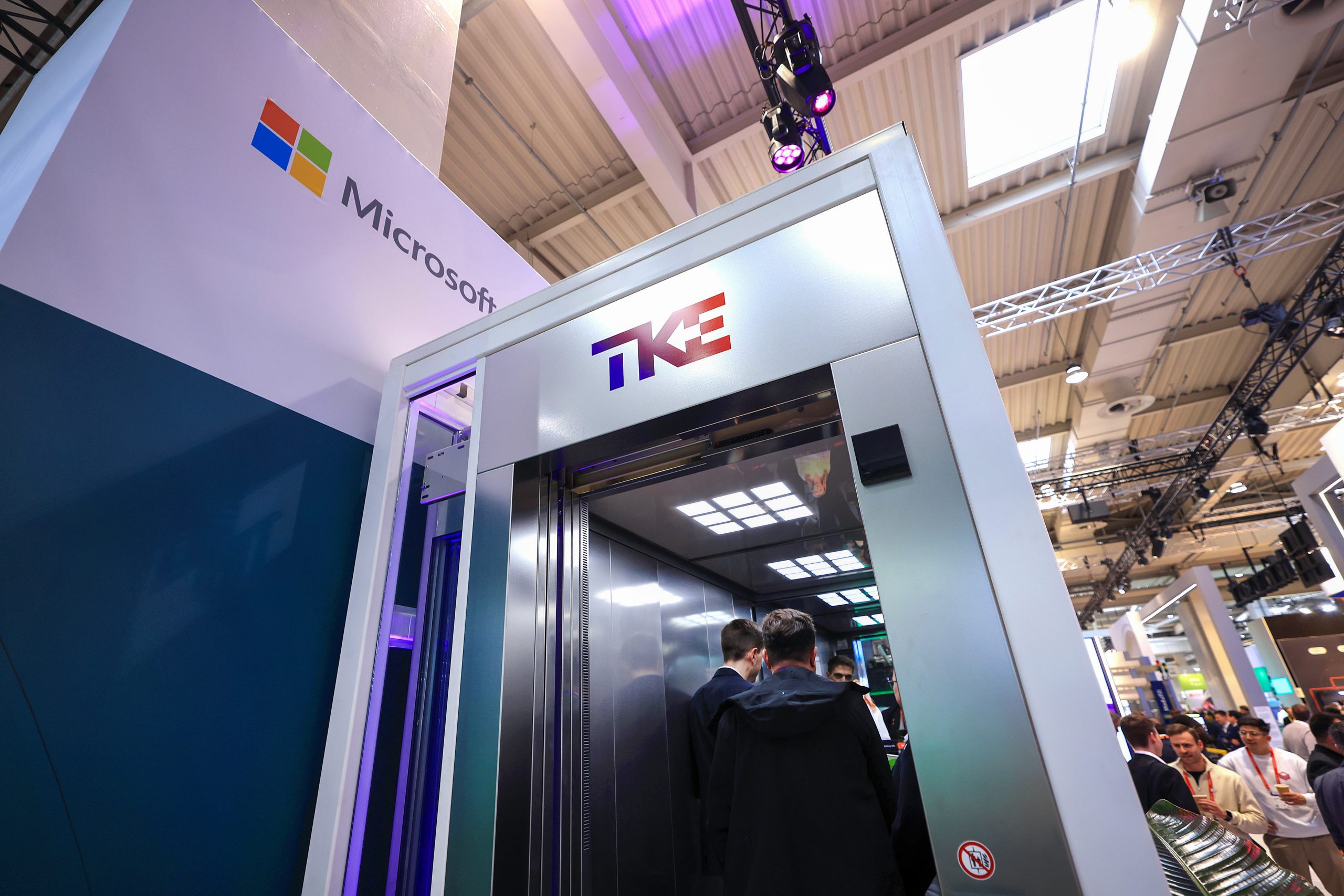
One of private equity’s biggest challenges right now is getting money back to investors. Advent and Cinven have just made a small dent in the industry’s mountain of unsold assets by agreeing the sale of TK Elevator to Finland’s Kone Oyj. What a relief. But the deal — worth €29.4 billion ($34.4 billion) including assumed net debt — exemplifies the challenges buyout firms face as they monetize even their most attractive investments.
Advent and Cinven agreed to buy the business for €17 billion from Thyssen Krupp AG in February 2020, outbidding Kone and other buyout firms as Covid spread. It was a bold move. Lockdowns had begun in China and were about to kick in worldwide. Cramped spaces like elevators were no-go zones.
The journey hasn’t been easy since then. Cash flow has been ploughed back into the operations rather than used to cut the borrowing that financed the deal. Net debt remains around €9 billion. Still, on the terms inked in Wednesday’s agreement — a payment of €20 billion in cash and Kone shares — Advent and Cinven look set to recoup more than twice their initial investment (comprising a mere €6 billion equity check and €2 billion of payment-in-kind notes, according to CreditSights).
How long will it take to fully cash out?
Advent and Cinven had three potential exit paths. None was simple. First, an initial public offering — the benchmark private equity method. That makes you hostage to the capital markets. The current geopolitical backdrop suggests an IPO this year would have been touch and go. Moreover, the proceeds of such a share sale would have needed to go into the business to cut those heavy debts, which are too high for stock-market investors. For the PE owners, getting money back would have depended on later stock sales when market conditions allowed.
Another option was a breakup. That’s time-consuming and fiddly. You typically end up with a rump of less attractive assets with a narrower range of buyers.
That leaves a full trade sale. Enter Kone for a second bite of the cherry. The transaction buys the Finnish elevator maker €1.4 billion of added yearly operating profit, the same as what it makes today, and is expected to deliver €700 million of savings on top. Luckily for Advent and Cinven, there’s no other transaction available to Kone that would give it the same step change. The negotiating power on both sides looks pretty even.
At first glance, the deal looks expensive for Kone. Tax that total €2.1 billion profit and savings boost and it amounts to a roughly 5% return on the all-in purchase price. Measly at first. Returns on that invested capital should improve over time. Kone can also refinance the inherited borrowings at a cheaper interest rate.
But the precise price Kone is paying is a bit slippery. Only €5 billion will be cash upfront when the deal completes (expected no sooner than April 2027). The rest is in stock worth €15 billion at Kone’s prevailing share price. Notably, Kone’s stock trades at a higher multiple of anticipated profit than that of rivals Schindler Holding AG and Otis Worldwide Corp. Will that hold up? Apply a peer valuation to Kone shares, and they’re worth less — and so is the deal value.

Offloading that Kone position could take several years. In fairness, it should be easier than selling shares in an IPO of the smaller TK Elevator. The less good news is that annualized returns on the original investment may end up being in the low to mid-teens if the share disposals drag on. That’s fine, not knockout.
Antitrust and politics are hurdles, too. Competition policy in Europe is now being countered by a broader desire to create European champions to bestride the global stage. This deal aspires to create a Finnish-German world leader in elevators. Kone’s original bid six years ago relied on selling off assets to private equity, and it’s hard to see how a similar plan won’t be required again. There will also have to be something in it for the US authorities, where a deal’s social impact is always a critical consideration.
Generally, size is an advantage for private equity. There is less competition for the bigger, quality assets when buying because only a few firms have the heft to bid. When the IPO markets are open, larger companies are typically easier to list as investors want to be sure the stock will have decent trading liquidity. Recent success stories have been jumbo-sized. Think of EQT AB’s IPO of skincare firm Galderma Group AG, or the Medline Inc. deal run by Blackstone Inc., Carlyle Group Inc. and Hellman & Friedman.
For the average private equity firm, exits remain tough. IPO investors are capricious, and prefer what were once leveraged buyouts to land with the “leveraged” bit removed. Even in an M&A boom, corporate bosses aren’t easy to coax into paying top whack for PE assets. Private equity investors want their money back, and most of them are still going to have to wait for it.
A message from Advisor Perspectives and VettaFi: Discover something new! Click here to register for our upcoming webcasts.
Bloomberg News provided this article. For more articles like this please visit
bloomberg.com.