
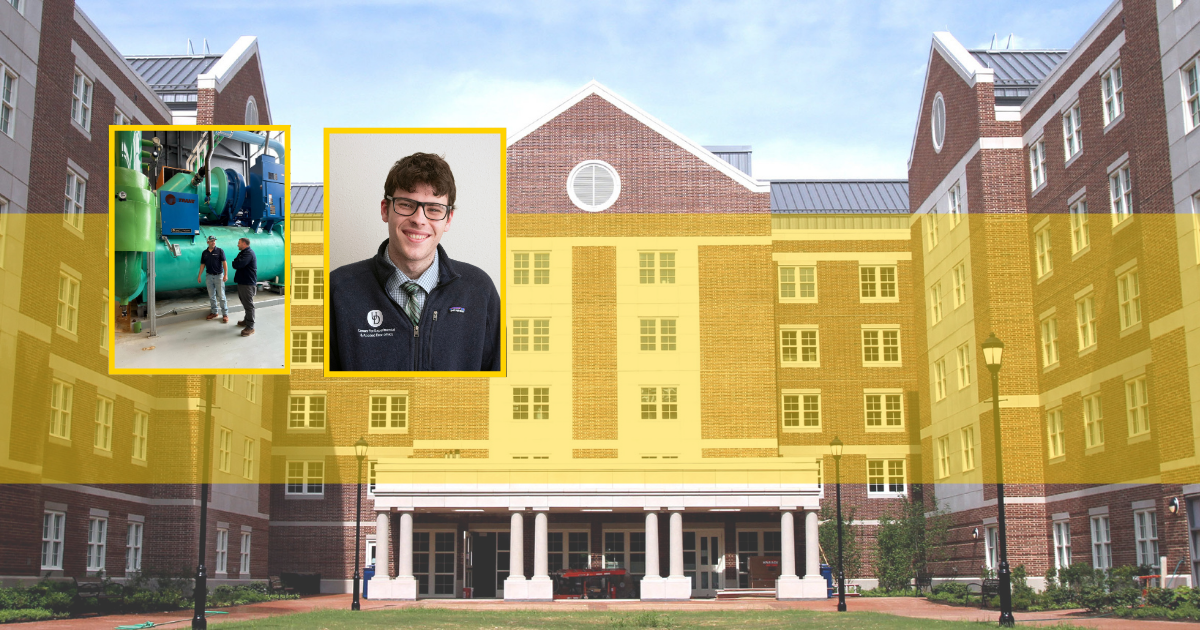
Working with UD facilities, Nelson-Poteet tested different thermostat temperature defaults in residence halls on campus and assessed whether the residents would stick with those energy-efficient defaults or move away from them.
According to Nelson-Poteet, by pushing the default temperature setting two degrees cooler (when in heating mode), people tended to stay at or below the default. He also explained that most of the students in the study did not realize any difference in the temperature during the study.
“We found very strong treatment effects between treatment groups compared to the control, so we’re confident that what we were doing had an effect,” Nelson-Poteet said. “The average sentiment of a resident affected was neutral to slightly positive, we saw a very small subsection of students having strong negative feelings about this.”
In the survey they sent to residents after the conclusion of the study, the majority of students expressed that they felt the benefits of lowering temperature defaults—saving energy and water consumption—were greater than the cost—living a few degrees cooler during colder months.
“We definitely want to be more cautious when we’re talking about generalizing the energy findings because that’s going to depend so heavily on climate, type of building, type of A/C unit, things like that,” Nelson-Poteet said. “But we found that, at UD, unit energy consumption decreased by about 38 percent.”
For his dedication to research and service throughout his time at UD, Nelson-Poteet was awarded the William J. Benton Graduate Student Award this year, an accolade given to graduate students who excel in research, academics and service.