
The muddy world of private lending has Australia’s corporate regulator on high alert.
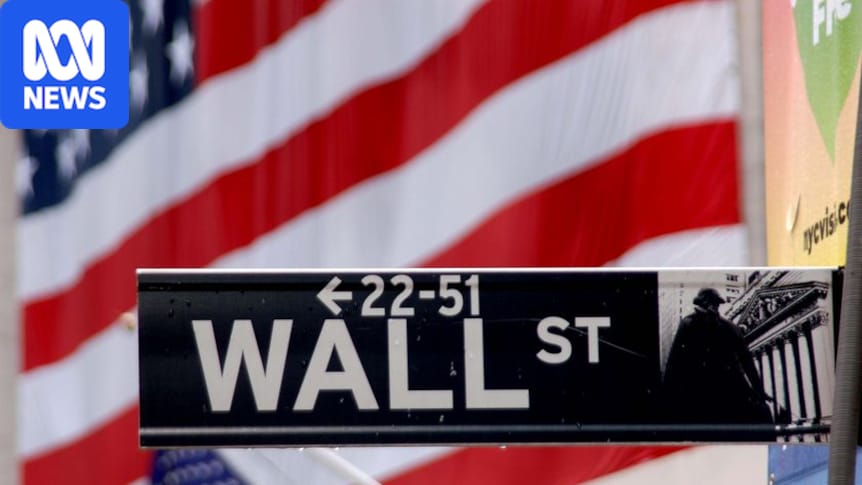
Wall Street is ground zero for the alternative investment market and there are fears this massive, risky US private lending ship is sinking and investors are jumping out.
And there are unique risks for Australia too.
“If the Australian property is overvalued, and we see those practices emerging and it happens at scale, you get gaps,” ASIC commissioner Simone Constant told The Business.
“And when you get those gaps, you get problems with liquidity, you get lagging in data, you get the risk of default, for example.
“And of course, investors putting their money into things that don’t stack up.”
Simone Constant is concerned Australian investors could lose money if there is a private credit financial shock. (ABC News: John Gunn)
US private credit firm Blue Owl had to limit the amount of money investors could withdraw this year as the company bled value from souring software investments.
The firm’s two private credit funds again faced elevated redemptions — investors seeking to withdraw cash — in the June quarter.
Its shares have plummeted 40 per cent this year as investors have fretted about the lender’s exposure to ailing software companies.
US auto lender Tricolor Holdings and UK mortgage lender Market Financial Solutions have already collapsed.
Central banks and regulators watching closely
It has caught the attention of global central banks.
In December, the Bank of England launched a system-wide exploratory scenario exercise to enhance its understanding of broader risks and dynamics in private markets, according to Reserve Bank Freedom of Information (FOI) documents.
Bank of England governor Andrew Bailey told Bloomberg in May: “There are some signs of strain in the market.”
The Bank of England, led by Andrew Bailey, wants to better understand the risks and dynamics in private markets. (AP: Toby Melville/Pool)
“We are seeing some increase in requests,” he said.
“Quite a big increase in requests for outflows, to take liquidity out.”
The results of the UK central bank’s review are expected to be published in early 2027.
Documents obtained under FOI, originally requested by Nine, reveal the Reserve Bank has also been making inquiries into financial and economic risks for Australia related to the opaque private credit sector.
ASIC’s November 2025 private credit surveillance report noted the “market is growing rapidly, but there are some areas where improvement is needed — and in some cases, materially so”.
Wave of money moves out of software
Private credit refers to lending outside the banking sector.
Software companies received much of this non-bank funding earlier this decade, but the flow of funds has since moved towards AI.
Verdad Adviser managing partner Dan Rasmussen has been warning of major global financial stability risks from an eventual implosion of US private credit.
Loading…
“We’re going to see more and more pain,” he warned.
Mr Rasmussen is worried about a negative feedback loop in which software companies default on their debt and lead to further panic in private credit markets.
“Now what’s happening is that there’s $100 billion of loans outstanding and there’s only $50 billion of new fundraising and private credit,” he said.
“Well, that’s going to force defaults on itself because there is no-one else who’s willing to lend to these companies.
“No bank is going to lend to them, so either the private credit lends to them or they go bankrupt.”
Global credit crunch risk
Australia’s corporate regulator is bracing for the rising risk of another global credit crunch.
“Private credit is now at a size and at a breadth that hasn’t been seen before and certainly hasn’t been tested in a downturn,” ASIC’s Simone Constant said.
“So, there would be bumps.”
Locally, there is currently $250 billion worth of private credit loans, up from roughly $35 billion a decade ago.
Nick Kelly thinks the Austrailan market will face challenges in the future. (ABC News: John Gunn)
“It’s not just been the retail investors in the market. The institutional investors, superannuation funds and others have piled into this asset class,” Wilson Asset Management portfolio manager Nick Kelly said.
“I think the Australian market will face its own challenges in the future, just given the amount of capital that’s being deployed into this market, into assets that I don’t think are as safe as some people perceive them to be.”
And Australia’s $4.5 trillion superannuation sector is high on the regulator’s worry list.
“So increasingly, every working Australian, investing Australian does have exposure to private credit,” Ms Constant said.
Over half of all private lending in Australia is concentrated in property development and construction.
ASIC says it is monitoring loans in this space, but it does not have as much information as it would like.
Australian financial shock
ASIC is concerned a property market crash could trigger a private credit financial shock.
Australian private credit provider Brett Craig, who is Aura Group’s director of private credit, said investors in Australian property finance needed to be careful.
“Lending against property construction transactions is a good way to make money if you know what you’re doing and you can actually step in should the borrower default,” he said.
Brett Craig warns investors in Australian property finance need to be careful. (ABC News: John Gunn)
“But it is a very good way to lose money if you don’t have that ability to step in and complete a project as an example.”
The concern for regulators, ultimately, is that private investors and superannuants end up footing the bill for weak investments.
“We want there to be confidence in private credit,” Ms Constant said.
“What could go wrong? Investors could lose money.
“Investors [may not] understand they’re going to lose money, and that could happen at some scale.”
Dan Rasmussen said every Australian should know if they were exposed to private credit.
“What we don’t know yet is who owns it, to what extent [big US companies own it], and what the downstream consequences are when they find out how bad it’s going to be, right?” Mr Rasmussen said.
“And the biggest risk I’d be worried [about] if I was in Australia is how much the superannuation schemes own of it.
“How exposed are they?
“And what happens if this stuff turns out to be materially worse than it looks now?”