
- Key insight: The bill would create a direct link between portfolio companies’ liability for debts, legal obligations and labor practices to the private equity firms that control them.
- Supporting data: Private equity fund assets roughly doubled over the last five years, reaching more than $9 trillion in 2025, compared with $4.5 trillion in 2020.
- Forward look: The bill has been introduced three times before and received hearings, and could signal at least one Democratic legislative priority should the party retake power in Congress after this year’s midterm elections.
Senate Democrats on Thursday reintroduced a bill to hold private equity firms more directly liable for the debts and legal rulings applied to companies they control while limiting how much cash and assets they can extract from entities in their portfolios.
Processing Content
In a press release Thursday, lawmakers noted the apparent congressional appetite for reining in private equity firms, pointing to a housing law
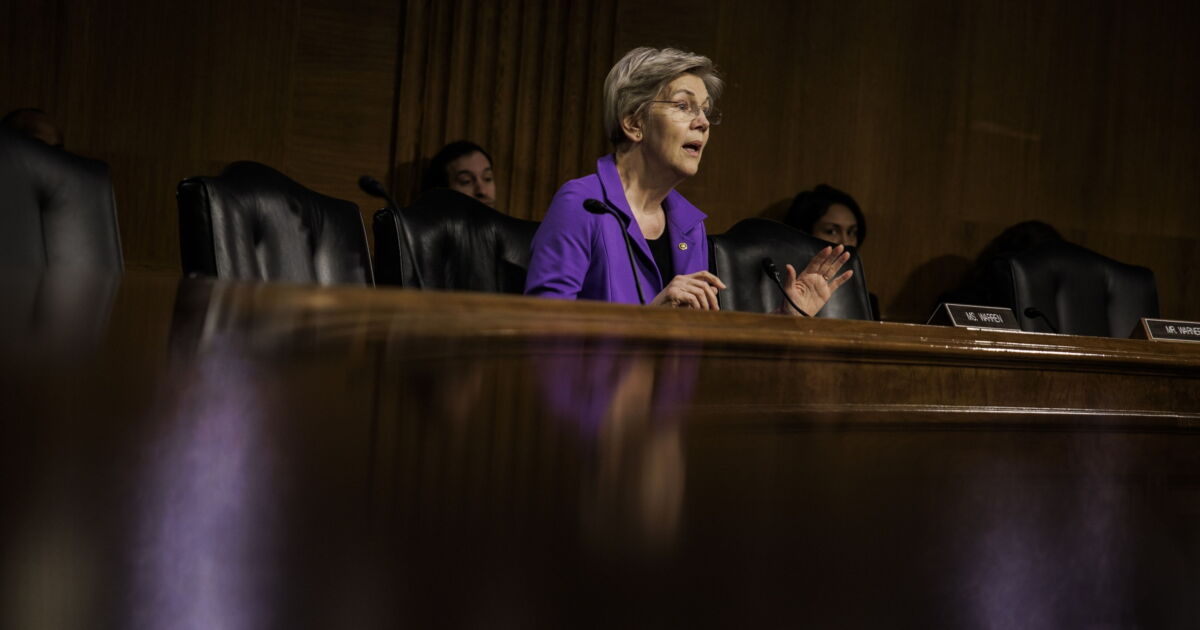
“This year, Congress proved with our bipartisan housing law that we can stop private equity from rolling through industry after industry, jacking up prices and leaving businesses and workers in the dust,” said Senate Banking Committee ranking member Elizabeth Warren, D-Mass., in a release. “The Stop Wall Street Looting Act takes a stand against private equity’s legal looting and puts power back in the hands of workers and consumers.”
The bill, dubbed the Stop Wall Street Looting Act of 2026, would aim to make private equity firms have more “skin” in the game by making PE firms and their controlling interests liable for portfolio companies’ debts, legal judgments, pension obligations and violations of the law.
The bill would prohibit portfolio companies from making payouts to investors during the first four years after a leveraged buyout and cap distributions after this period at 10% of the overall company debt. It would close bankruptcy clawback exemptions making it easier to claw back money from private equity firms if a company they bought goes bankrupt and extending the lookback period for such transfers to 15 years. The bill would also apply a 100% tax on fees paid by portfolio companies to private fund managers and ban private equity firms from using tax breaks to write off the interest on debt they foist onto companies they buy.
The bill would further raise the bankruptcy priority — the order and amount in which certain claims are paid when a company fails — for employee restitution from $10,000 to $20,000 per worker and remove the 180-day limit currently applied to those claims. It would also direct courts to favor bankruptcy bids that preserve jobs when choosing among competing offers for a failing company’s assets. Private equity firms would also be liable for portfolio companies’ WARN Act violations, which require firms to notify workers and local government before significant layoffs.
Private equity managers under the bill would face new Securities and Exchange Commission disclosure requirements regarding who owns the PE fund, levels of debt, the performance of companies under their portfolios, political contributions and labor practices, among other things. The bill would separately require private equity firms to disclose loans made by private funds through their advisers on a quarterly basis.
Read more:
The bill also would eliminate the tax subsidy for leverage by restricting deductions for interest on excessive portfolio-company debt and end the carried-interest tax treatment that allows investment managers to receive advantageous capital-gains rates on certain compensation.
The bill comes as lawmakers expressed concern that private equity firms have expanded their presence across the economy, with fund assets reaching more than $9 trillion in 2025, compared with $4.5 trillion in 2020.
“More and more, private equity is taking over various aspects of American life, bringing its harmful playbook to essential industries — including housing, health care, child care, and local newspapers,” said Senator Jeff Merkley, D-Ore. “Corporations need to be responsible when private equity prioritizes shareholders’ profits at the expense of service, quality, and good-paying jobs.”
The bill is unlikely to pass in the 119th Congress, which is rapidly drawing to a close and is controlled by Republicans in both chambers. But the bill’s reintroduction in the closing weeks of the midterm election season is an indicator that cracking down on PE firms would be a legislative priority if Democrats retake the House, Senate or both.