
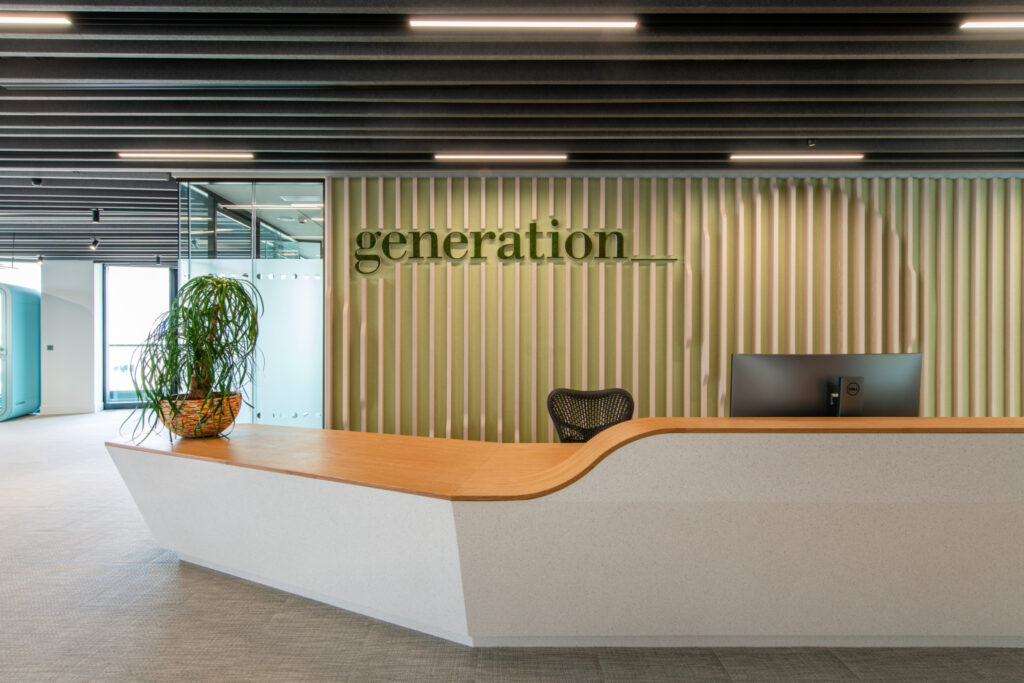
- Generation raised over $1 billion for Sustainable Private Equity Fund II and related co-investment vehicles.
- The fund will back sustainability platforms in energy, software, data, distribution and industrial workflows.
- Early investments include Octopus Energy, Kraken Technologies and IFS, with exposure to energy transition and asset-heavy sectors.
Generation targets the systems layer of sustainability
Generation Investment Management has closed Sustainable Private Equity Fund II, raising over $1 billion with related co-investment vehicles to back companies driving sustainability across core industries.
The sustainable investment manager said the fund, known as SPEF II, will focus on “sustainability platforms.” These are scaled, mission-critical businesses that can influence how industries operate. For investors, that focus matters. It moves sustainable private equity beyond single-asset exposure and into the systems that shape energy use, industrial efficiency and enterprise decision-making.
SPEF II is the second fund in Generation’s Private Equity strategy. The firm said it attracted a diverse base of institutional investors across multiple regions. Longstanding partners also provided strong support.
The strategy gives Generation flexibility to take minority or majority stakes. It targets high-quality businesses with the potential to improve sector-wide sustainability outcomes while delivering growth.
Institutional capital moves toward transition infrastructure
The close comes as institutional investors continue to seek exposure to climate-aligned growth. Many are also under pressure to show that sustainability allocations can deliver measurable business value.
Generation’s approach reflects that shift. Rather than focus only on renewable assets or single technologies, the firm is targeting the operating infrastructure behind major sectors. That includes software, data systems, customer platforms and distribution networks.
Tom Hodges, Co-Head of Private Equity at Generation Investment Management, said: “Our latest fund reflects our firm and investors’ conviction in a long-held belief that transformation happens at the systems layer. The companies that operate as the backbones of their industries – running the workflows, the data and the distribution – are where sustainability is amplified and gets delivered at scale. Our goal with SPEF II is to partner with a select group of mission-driven business leaders to drive sustainability into the core of some of the world’s most important industries.”

That thesis carries governance implications for corporate leaders. Sustainability progress increasingly depends on operational systems, not only targets and disclosures. Boards and executives are now being judged on how deeply climate and resource efficiency sit inside procurement, logistics, energy use and capital planning.
RELATED ARTICLE: Germany Targets Private Capital With $35 Billion Investment Fund
Early deals focus on energy and enterprise software
Generation has made three investments from SPEF II so far: Octopus Energy, Kraken Technologies and IFS.
Octopus Energy is a global energy business and the leading UK energy supplier. It operates in more than 25 countries across energy retail, consumer services, energy transition services and renewable power generation.
Kraken Technologies was spun out of Octopus Energy. Its platform provides infrastructure to optimise energy use, lower customer service costs and support greener energy systems. Kraken serves more than 70 million household and business accounts worldwide.
IFS gives the fund exposure to enterprise software for asset-heavy sectors such as manufacturing and construction. Generation said IFS has the potential to help reduce about 2% of global carbon emissions if adopted across key sectors.
That claim is material for investors watching the next phase of climate transition. Asset-heavy industries face pressure to cut emissions while protecting productivity and margins. Software that improves maintenance, resource use, scheduling and asset performance can become a climate tool as much as an operational one.
What executives and investors should take away
For C-suite leaders, the fund close points to where sustainability capital is moving. Investors are looking for companies that sit inside industry operating systems and can scale climate impact through existing workflows.
For private markets, it also shows that sustainability strategies are becoming more selective. The strongest opportunities may sit in platforms that help entire sectors decarbonise, digitise and reduce waste.
The global significance is clear. Climate targets will not be met through finance alone. They require companies that can make sustainability practical, repeatable and commercially durable. Generation’s new fund places its capital behind that infrastructure, from household energy accounts to industrial enterprise systems.
The ESG News Editorial Team is comprised of veteran financial journalists and sustainability analysts dedicated to providing real-time, objective reporting on global ESG regulations, climate finance, and corporate governance. Our desk monitors daily developments from the SEC, IFRS, CSRD and international regulatory bodies to ensure our 1M+ readers receive accurate, data-driven insights into the evolving sustainable investment landscape. Follow the ESG News Editorial Team for expert reporting on global sustainability standards, ESG disclosures, and climate policy. Access over 10,000 investigative reports and real-time updates.