

Monday June 22, 2026

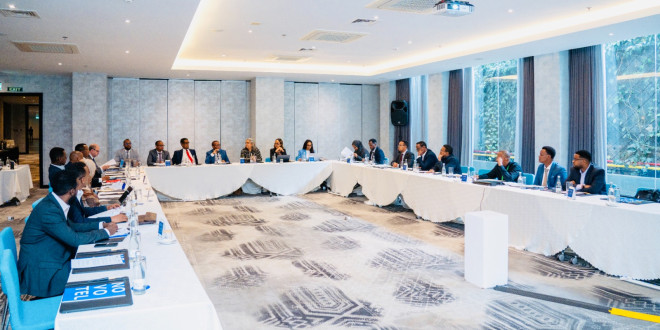
Mogadishu (HOL) — Somalia’s National Communications Authority and the International Finance Corporation opened the first Somalia Submarine Cable Landing Technical Working Group workshop in Nairobi, Kenya on Monday.
The workshop brought together telecom operators, internet service providers and technical experts to strengthen the country’s submarine cable infrastructure.
The two-day workshop is aimed at improving the resilience, reliability and sustainable development of Somalia’s broadband infrastructure, officials said.
The meeting was organized under the IFC-supported Somali Unlocking Sector Investment Project, also known as the Broadband Infrastructure Project.
Discussions are focused on outage management, competition, infrastructure development and implementation of Somalia’s submarine cable regulatory framework.
The workshop is also intended to strengthen dialogue between the regulator and industry stakeholders and build a shared understanding of the main challenges facing Somalia’s submarine cable sector.
Officials said the session will identify practical measures to improve the reliability of Somalia’s international connectivity and reduce risks linked to cable disruptions.
The workshop also reviewed findings from a recently completed report on Somalia’s telecommunications market, giving stakeholders an opportunity to validate key findings and discuss priorities for future sector development.
National Communications Authority Director General Mustafa Yasin Sheikh said submarine cables are central to Somalia’s digital future.
“Submarine cables are the backbone of Somalia’s digital connectivity, supporting economic growth, innovation, and access to essential services,” Mustafa said. “Through this Technical Working Group, we are strengthening collaboration between the regulator and industry stakeholders to build a more resilient and reliable communications infrastructure.”
Somalia’s internet connectivity depends heavily on submarine cable systems, making cable resilience and regulatory coordination key priorities for the country’s expanding digital economy.