
Close Menu
Aspire Market Guides
  • Home
  • Alternative Investments
  • Cryptocurrency
  • Economics
  • Equity Investments
  • Mutual Funds
  • Real Estate
  • Trading
What's Hot

RBI’s foreign capital push indicates concerns over rising inflation, slowing economic growth: Report

June 6, 2026

Oldfield Forge wins Gold at VisitEngland Awards 2026

June 6, 2026

Billionaire real estate financing: Why Musk and Zuckerberg use mortgages

June 6, 2026
Facebook X (Twitter) Instagram
Trending:
  • RBI’s foreign capital push indicates concerns over rising inflation, slowing economic growth: Report
  • Oldfield Forge wins Gold at VisitEngland Awards 2026
  • Billionaire real estate financing: Why Musk and Zuckerberg use mortgages
  • CSRC chairman outlines strengthening oversight of algorithmic trading
  • Glittering Returns: iShares Silver Trust Outpaces Sprott Gold Miners ETF
  • Largest US Banks to Launch Tokenization Network to Fight Back Against Crypto, Stablecoin Startups
  • Economic Community of West African States (ECOWAS) Commission and Women in Law and Development (WiLDAF) Train Women Cross-Border Traders in The Gambia – Africa24 TV
  • We’re Interested To See How Rua Gold (TSE:RUA) Uses Its Cash Hoard To Grow
  • 5 equity mutual funds deliver over 20% CAGR in 5 years. Do you have any? – The Economic Times
  • China issues guidelines to boost oversight of private investment funds
Saturday, June 6
Facebook X (Twitter) Instagram
Aspire Market Guides
  • Home
  • Alternative Investments
  • Cryptocurrency
  • Economics
  • Equity Investments
  • Mutual Funds
  • Real Estate
  • Trading
Aspire Market Guides
Home»Cryptocurrency»Largest US Banks to Launch Tokenization Network to Fight Back Against Crypto, Stablecoin Startups
Cryptocurrency

Largest US Banks to Launch Tokenization Network to Fight Back Against Crypto, Stablecoin Startups

By CharlotteJune 6, 20264 Mins Read
Share
Facebook Twitter Pinterest Email Copy Link


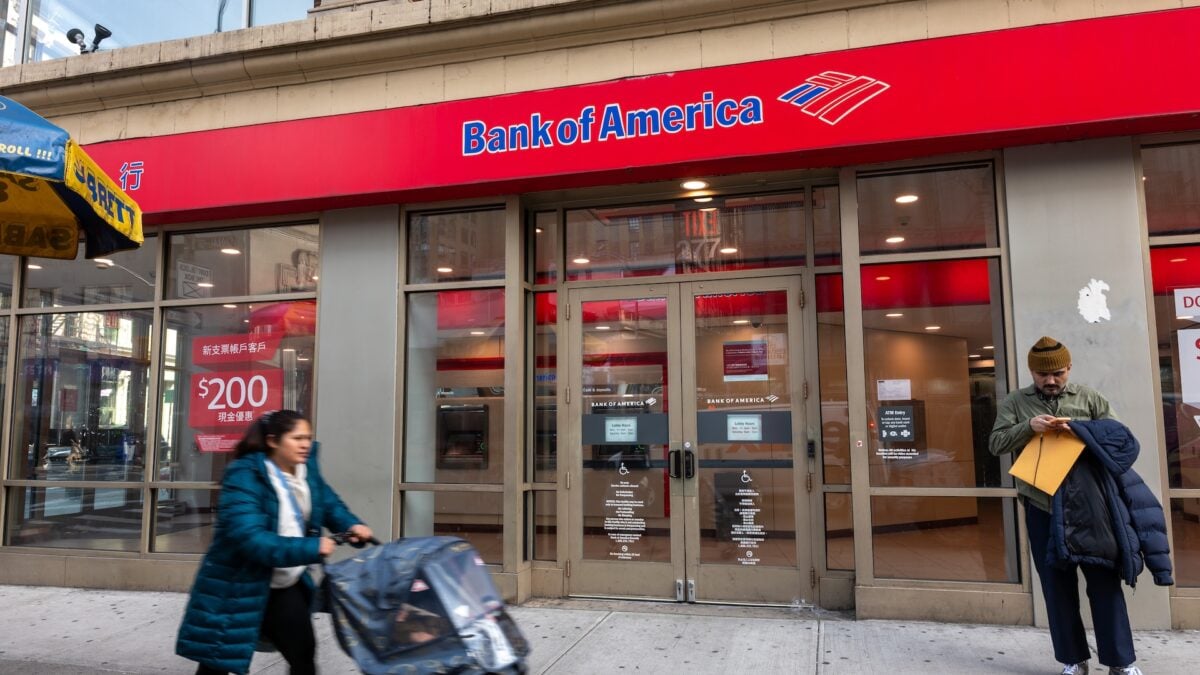
The largest banks in the United States are working on a tokenized deposit network that is intended to launch in the first half of next year through their co-owned payment network company Clearing House, according to a report in The Wall Street Journal. Specific banks involved in the project include JPMorgan Chase, Citigroup, Wells Fargo, and Bank of America. The move is seen as a response from the banking industry over the growth in stablecoins in recent years, which are the specific kind of dollar-pegged crypto token that has been at the center of a feud between the crypto and banking industries regarding specific language that will be included in the crypto regulatory bill making its way through the Senate, known as the Clarity Act.

The technical specifics of the tokenized deposit network remain unclear at this time. However, unlike stablecoins, which are issued by private companies, these tokenized deposits would be issued directly by banks as digital versions of customer deposits, meaning they would generally remain within the traditional banking regulatory framework and retain the associated consumer protections.

“Tokenization” is one of the latest buzzwords related to crypto and blockchain technology to be tossed around quite a bit, so it’s not exactly clear if these deposits will be operating on open networks or more permissioned systems, the latter of which tend to be more commonly seen when these sorts of large financial institutions are involved. This is indeed the case with the New York Stock Exchange’s upcoming tokenization platform. JPMorgan already operates its own private blockchain-based payments infrastructure through Kinexys, but the bank has also begun experimenting with public blockchain networks, launching a deposit token called JPM Coin on Coinbase’s Base blockchain.

The Return of “Blockchain, Not Bitcoin?”

Of course, the traditional banking industry has a long history of consortium blockchain systems that haven’t fared well. For example, early Bitcoin developer Mike Hearn infamously joined banking consortium blockchain company R3 in 2015, around the same time he declared Bitcoin a failed experiment with the price at roughly $430 (it’s trading at $60,528 at the time of this writing). As it turned out, Bitcoin’s decentralization has proven to be not all that necessary for regulated financial activities where more centralized systems can operate much more efficiently. R3 itself no longer operates as a consortium of banks, but it claimed to have roughly $10 billion in tokenized real-world assets (RWAs) on its Corda networks as of February 2025.

At the same time, Ethereum and other crypto networks with more expressive scripting languages than Bitcoin were able to gain traction through use cases such as token issuance and decentralized finance (DeFi). Developers were effectively able to build any sort of financial application they wanted on these public blockchain networks, but what they built mostly revolved around centrally-issued, dollar-pegged tokens we know as stablecoins. While these stablecoins were originally able to operate almost as freely as bitcoin itself, they include backdoors for freezing and blacklisting, as seen in the recent case with $344 million in the Tether-issued stablecoin USDT being frozen as a result of being tied to the Iranian regime.

Ever since @kyletorpey said that “Ethereum/DeFi not Bitcoin” was this cycle’s “Blockchain not Bitcoin” I can’t get the analogy out of my head. A lot there.

— Joe Weisenthal (@TheStalwart) May 23, 2021

As activity on these crypto networks has centralized around stablecoins, the real differences between crypto and the traditional banking system have become increasingly blurred. On top of that, the blockchain networks themselves are increasingly operating as extensions of centralized financial institutions, whether it be via longtime crypto exchange Coinbase’s Base or stablecoin issuer Circle’s Arc.

In terms of widespread adoption of this technology, it’s clear that banks and crypto companies are both merging towards a similar point on the spectrum of decentralization that will likely be far removed from what creator Satoshi Nakamoto originally enabled with the launch of Bitcoin in 2009. The specific technical structure of these systems going forward will likely depend on the final language included in the Clarity Act, in addition to any other future potential regulation applied to the fintech industry. The Bitcoin network itself is still mostly resistant to this sort of centralization creep and regulatory capture; however, there are also growing concerns there regarding the concentration of the bitcoin supply in large custodians who hold coins on behalf of others, most notably Michael Saylor’s bitcoin treasury company Strategy.


Source link

Related Posts

Cryptocurrency

Bank of Russia Limits Unqualified Investors to BTC, ETH, and USDT

June 6, 2026
Cryptocurrency

More than 200 cryptocurrency mining devices seized in Svaneti over three days

June 6, 2026
Cryptocurrency

ROSEN, A LONGSTANDING FIRM, Encourages FLOW Cryptocurrency Invest

June 6, 2026
Cryptocurrency

LayerZero (ZRO) Falls 15% Amid Broader Altcoin Weakness

June 6, 2026
Cryptocurrency

USDT Hits Near 100% Market Share in Key Latam Markets, New Oobit Report Reveals

June 6, 2026
Cryptocurrency

Analyst who nailed 2021 Bitcoin crash sends another warning

June 5, 2026
Add A Comment
Leave A Reply Cancel Reply

Editors Picks

RBI’s foreign capital push indicates concerns over rising inflation, slowing economic growth: Report

June 6, 2026

Oldfield Forge wins Gold at VisitEngland Awards 2026

June 6, 2026

Billionaire real estate financing: Why Musk and Zuckerberg use mortgages

June 6, 2026

CSRC chairman outlines strengthening oversight of algorithmic trading

June 6, 2026
SUBSCRIBE TO OUR NEWSLETTER

Get our latest downloads and information first. Complete the form below to subscribe to our weekly newsletter.


I consent to being contacted via telephone and/or email and I consent to my data being stored in accordance with European GDPR regulations and agree to the terms of use and privacy policy.

Featured

‘Harder than ever’ for global investors to achieve diversification: Orbis

April 23, 2026

Brown Corporation elects eight new trustees

May 27, 2026

Just keep mining for the silver lining – Kingsport Times News

April 11, 2026
Monthly Featured

Private equity’s liquidity moment | Kuwait Times Newspaper

April 18, 2026

US money market funds surge $66B to record $8.2T as investors rebalance

June 6, 2026

Fearful foreign nationals in South Africa forced out of their homes | Migration

June 4, 2026
Latest Posts

RBI’s foreign capital push indicates concerns over rising inflation, slowing economic growth: Report

June 6, 2026

Oldfield Forge wins Gold at VisitEngland Awards 2026

June 6, 2026

Billionaire real estate financing: Why Musk and Zuckerberg use mortgages

June 6, 2026
SUBSCRIBE TO OUR NEWSLETTER

Get our latest downloads and information first. Complete the form below to subscribe to our weekly newsletter.


I consent to being contacted via telephone and/or email and I consent to my data being stored in accordance with European GDPR regulations and agree to the terms of use and privacy policy.

© 2026 Aspire Market Guides.
  • Contact us
  • Privacy Policy
  • Terms and Conditions

Type above and press Enter to search. Press Esc to cancel.

SUBSCRIBE TO OUR NEWSLETTER

Get our latest downloads and information first.

Complete the form below to subscribe to our weekly newsletter.


I consent to being contacted via telephone and/or email and I consent to my data being stored in accordance with European GDPR regulations and agree to the terms of use and privacy policy.