
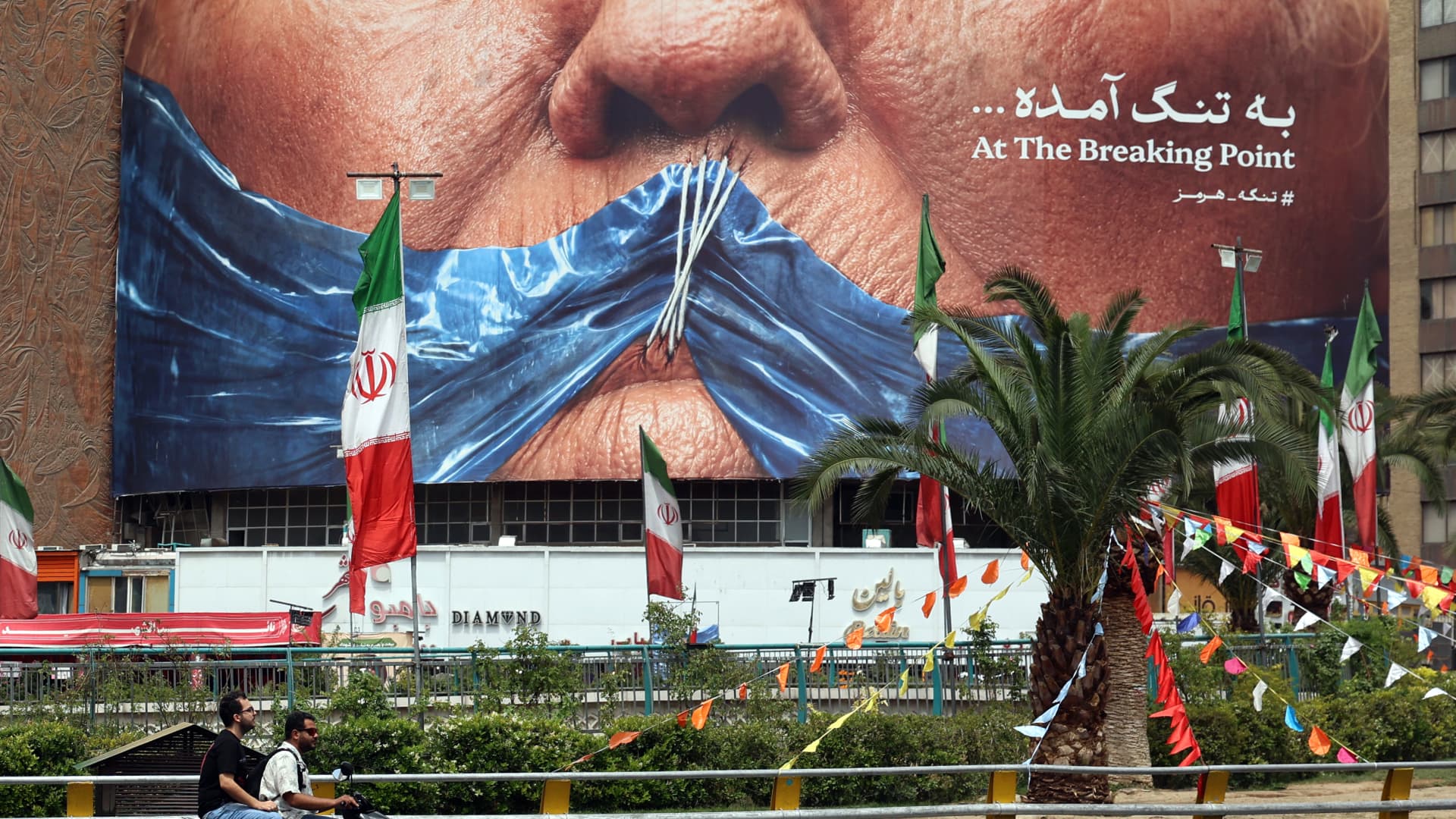
Sunday marks 100 days since the war in the Middle East began, and the conflict continues to drive substantial volatility across all asset classes in every region of the world as a lasting peace deal remains elusive.
Negotiations between the U.S. and Iran have stagnated, with Washington and Tehran sending mixed messages on the state of peace talks and both sides periodically exchanging bouts of military attacks. Nevertheless, a fragile ceasefire remains in place to allow for diplomacy to take place.
As the conflict drags on, pressure continues to mount on certain economies and pockets of financial markets.
Wall Street bulls shrug off the war
In the immediate aftermath of the U.S. and Israel’s initial strikes against Iran, stocks across the globe sold off. While shares listed in some markets have struggled to regain momentum, Wall Street’s major averages have wiped out initial losses as investors look through the war, higher oil prices and the impact of the conflict on inflation. The S&P 500 has hit new all-time highs even as the war continues.
Iain Barnes, chief investment officer at Netwealth, said equity markets had been dominated by the assumption that the war will swing major energy-importing economies from a “benign disinflationary environment” into a stagflationary one. But optimism over AI’s future disruptive power and a profitable backdrop for U.S. companies have also come into focus.
“This has seen equity markets power higher but clearly led by those companies in the U.S. and Asian markets which are seen as direct beneficiaries of AI spending,” he said in an email. “European stocks have been more subdued as the impact of rising energy costs is more problematic.”
“The spending on AI infrastructure has identified a number of potential bottlenecks, not least the insatiable demand for compute capacity that is fueling the share prices of semiconductor stocks,” Toni Meadows, head of investment at BRI Wealth Management, told CNBC in an email.
“Markets and whole economies like South Korea and Taiwan are getting upgrades to growth because of it.”
He added that as the U.S. is largely self-sufficient in oil, the pressure created by conflict in the Gulf is not as immediate for the world’s largest economy.
“If the Strait of Hormuz remains closed, inflation is likely to pick up but investors seem willing to believe that neither Trump nor the Iranians want to prolong this conflict,” Meadows added. “That said, at some point the impact of the conflict, if unresolved, will lead to demand destruction that investors can’t ignore. But that point has not been reached and although markets are being led by a small number of stocks, the positive news flow for those companies is outweighing uncertainty for other sectors like consumer stocks.”
Bond yields spike
Government bonds have been volatile since the war broke out, but yields on sovereign debt remain elevated.
Bond yields and prices move in opposite directions, so elevated yields mean downward pressure on the value of the assets remains in place.
Yields on U.S. Treasurys are among those to have surged in the aftermath of the war, as investors raced to price in higher inflation and hawkish monetary policy. Last month, the yield on the 30-year Treasury hit its highest level since before the Financial Crisis.
Many major economies have seen a similar pattern.
The U.K., which has also been gripped by domestic political turmoil, has seen its government bonds — known as gilts — sell off particularly aggressively.
Neil Birrell, chief investment officer at Premier Miton Investors, told CNBC that bond markets have taken the view that there is “something real to worry about,” pointing to concerns about higher inflation, lower growth and supply chain disruptions.
“The longevity of higher inflation and interest rates is probably more important than the absolute peaks they hit, so with the current situation looking like one that lasts, economic growth will suffer and bond yields are likely to stay elevated, making it harder for equities to maintain their level,” he said.
Oil prices have cooled — but concerns linger
The Strait of Hormuz — a critical oil shipping route in the Middle East — has been essentially shut down for the duration of the war, resulting in major oil price swings as traders have reacted to headlines around missile strikes, peace talks and ceasefires.
Although prices have fallen considerably from their wartime highs, they remain far higher than where they were trading before the conflict began. Global benchmark Brent crude oil futures are trading about 36% above their pre-war price, while U.S. West Texas Intermediate futures are still up by almost 50%.
The blockade of the Strait of Hormuz, alongside damage to and closures of key energy production facilities in the Middle East, has created severe supply constraints.
The supply issues have forced oil importers to look for alternative suppliers. The last 100 days has seen a rise in U.S. crude exports — something Tamas Varga, an analyst at PVM Oil Associates, said is one of the “ostensible mitigating factors hindering a significant price rally” in crude markets.
“These include Strategic Petroleum Reserve release, sanction waivers on Iranian and Russian oil on water, reduced Chinese oil imports, alternative routes to ship oil from the Persian Gulf to Asia and Europe, increased U.S. exports of crude oil and refined products and finally, demand destruction,” he said.
But he added that if oil inventories continue to deplete throughout June, they will reach their critical operational levels and the race for securing supply will intensify. If that happens, he said, “a break back over $100 will be imminent.”
“It is imperative that the Strait reopens as soon as possible to ease supply shortages and, consequently, inflationary pressure,” Varga added.
Inflation on the rise
Economic data has started to show the broader impact the war is having beyond financial markets.
As the ongoing war keeps energy costs high, inflation prints across various major economies have begun to show prices rising — driven by surging costs of oil, gas, jet fuel and gasoline.
In the U.S., the consumer price index hit an annual rate of 3.8% in April, its highest level in almost three years.
Dwindling energy supplies from the Middle East have been a major driver of inflation upticks, although surging prices have prompted government interventions from some countries, including Germany and India.
Paul Surguy, managing director at Kingswood Group, questioned whether markets have become “collectively numb to global warfare.”
“Are we seeing if not a return to the TACO trade, simply general apathy to the constant changes in policy from the White House?” he said.
“To the first, for humanity, I would hope not. The second, we have seen this play before — the significant market movements early in the trade debate were gut wrenching, as time moved on changes to tariffs might not even register on the tape.”
“What we can see is that support for the war in the US is at all-time lows, military funding is at all-time highs and both sides are undoubtedly looking for a face-saving exit. This, rather than the current state of play, is likely to be impacting the longer-term price of oil. Nobody wants to be here in six months.”
— CNBC’s Bryn Bache, Emilia Hardie and Emma Graham contributed to this report.