
Close Menu
Aspire Market Guides
  • Home
  • Alternative Investments
  • Cryptocurrency
  • Economics
  • Equity Investments
  • Mutual Funds
  • Real Estate
  • Trading
What's Hot

The Pension Reserve Management Management Independent Administrative Corporation (GPIF), which manag..

September 17, 2026

Could Ripple, Cardano, and Dogecoin be poised for further weakness?

September 17, 2026

Pilbara Gold CEO on Terra’s 'tremendous' high-grade gold results – Proactive financial news

September 17, 2026
Facebook X (Twitter) Instagram
Trending:
  • The Pension Reserve Management Management Independent Administrative Corporation (GPIF), which manag..
  • Could Ripple, Cardano, and Dogecoin be poised for further weakness?
  • Pilbara Gold CEO on Terra’s 'tremendous' high-grade gold results – Proactive financial news
  • Hong Kong targets stablecoin trading and tokenized real world assets
  • Indian Derivatives Market Sees 23% Drop in Trading Volumes Due to Regulatory Changes
  • Silver (XAG) Forecast: Silver Selling Stalls as Buyers Defend 50-Day Average
  • Bitcoin quantum migration may take years, Ledger CTO says
  • Atlas Tradeeu Launches Institutional-Grade Trading Platform for Global Commodities
  • Tokenomics: The Hidden Economics of AI Adoption
  • Legendary Cryptographer Nick Szabo Warns Ethereum Has “Fundamental Problem” Linking Utility to Token Value
Thursday, September 17
Facebook X (Twitter) Instagram
Aspire Market Guides
  • Home
  • Alternative Investments
  • Cryptocurrency
  • Economics
  • Equity Investments
  • Mutual Funds
  • Real Estate
  • Trading
Aspire Market Guides
Home»Economics»From military alliance to economic partnership: How Trump is redefining U.S.-South Korea ties
Economics

From military alliance to economic partnership: How Trump is redefining U.S.-South Korea ties

By CharlotteAugust 26, 20264 Mins Read
Share
Facebook Twitter Pinterest Email Copy Link


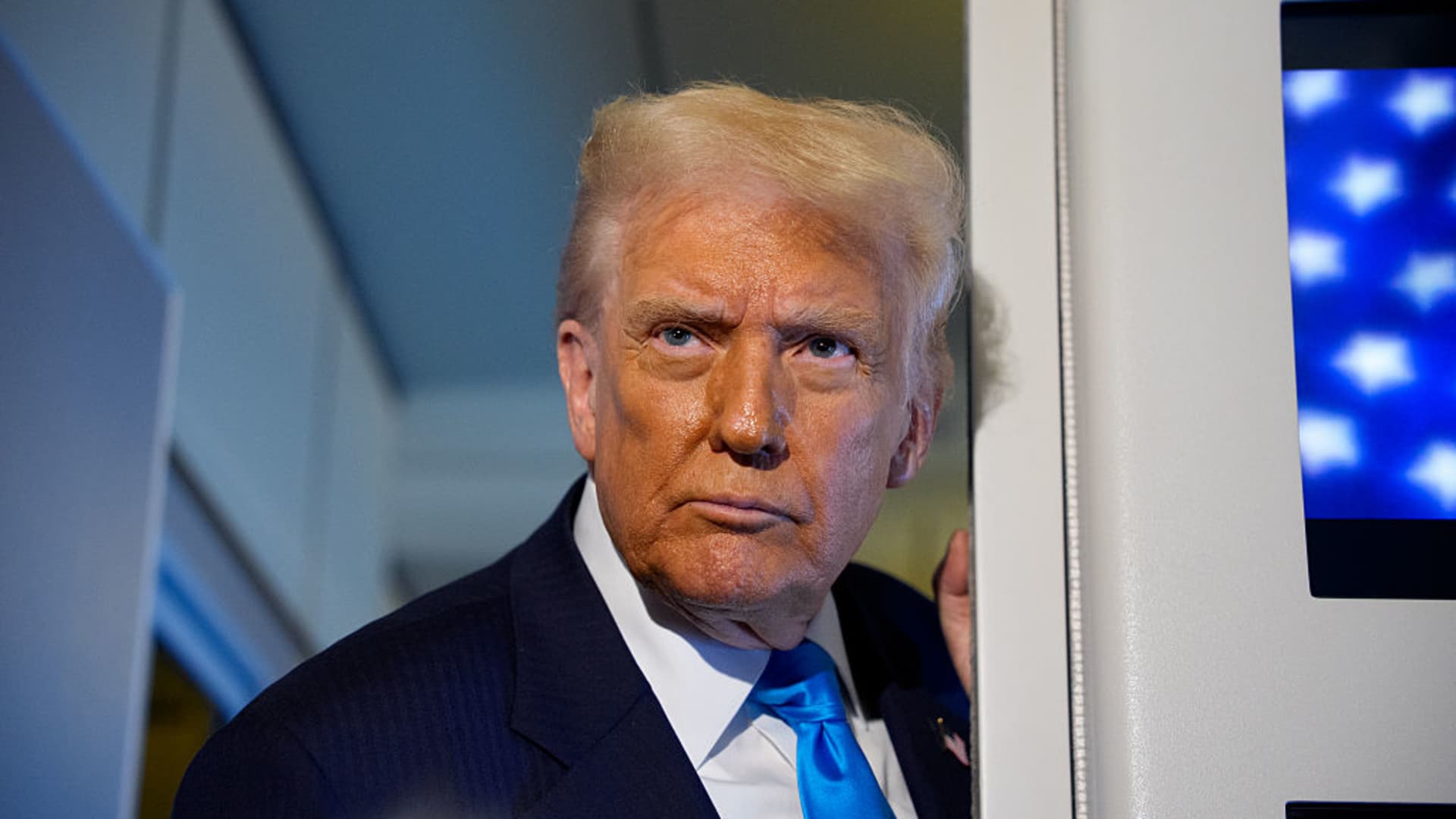
U.S. President Donald Trump speaks to journalists aboard Air Force One en route to South Korea on October 29, 2025 in Japan.

Andrew Harnik | Getty Images News | Getty Images

President Donald Trump‘s move last week to scale back annual military drills with South Korea came as Seoul finalizes hundreds of billions of dollars in investment commitments to Washington. 

Trump’s frustration over U.S. military spending overseas and stalled implementation of Korea’s investments signal a shift in the allies’ relationship from one based on security to economics, experts said. 

There are now doubts about whether investments will ensure U.S. commitments to Korea’s security that many in Seoul and Washington hoped, said Darcie Draudt‑Véjares,​ a​ fellow at the Carnegie Endowment for International Peace. She was referring to the $350 billion Korea promised to invest in the U.S. in exchange for lower “reciprocal” tariffs last year.

“Looked at a different way, we could see a shift from a relationship centered around a military alliance to one centered around integrated industrial ecosystems,” Draudt‑Véjares said. That puts “economics rather than security as the basis of the U.S.-South Korea partnership.” 

Trump on Aug. 16 said that he had instructed the Pentagon to cut military drills because they were “costly” and send “inappropriate and hostile” signals to North Korea.  

The post was made around the time Korean Trade Minister Kim Jung-kwan arrived in Washington, D.C., to discuss the investment commitments and tariffs with Commerce Secretary Howard Lutnick. 

The order partly stemmed from Korea’s slow pace of deploying the investments, compared to Japan, Politico reported, citing people familiar with the matter.

Trump had cancelled the annual exercises in 2018 as well after his historic meeting with Kim Jong Un in Singapore. Ulchi Freedom Shield exercise, which traces its roots to 1954, involved around 18,000 Korean troops and an undisclosed number of American soldiers this year.

U.S. Commerce Department and the Korean Trade Ministry did not respond to CNBC’s requests for comments. 

Investments for security?

It would be a mistake for allies to think that increased defense spending or economic ties will buy U.S. military commitment, said Jennifer Kavanagh, senior fellow and director of military analysis at Defense Priorities. 

Semiconductor trade or cooperation on shipbuilding can continue, separate from the U.S. military presence in Asia, she said. 

“The terms of exchange might change, but a smaller military footprint and narrower set of commitments in Asia would also free U.S. economic resources for investment at home and abroad,” she said. 

The two economies have deepened ties, particularly as Korean chip giants have become central to the global AI boom, with Nvidia as their most important client. 

Korean businesses are benefiting from Trump’s push for reindustrialization aimed at getting ahead in the competition with China. 

Korean companies, for their part, have significantly increased investments across semiconductors, electric vehicles, and shipbuilding in the U.S. For example, Korean chip giant SK Hynix is building a $4 billion advanced packaging plant in Indiana and allocating $10 billion to invest in new product lines and back its U.S. business.

But not all experts are convinced that scaling back the U.S. military footprint in Asia serves American interests. 

Trump’s decision to cut the annual drills “further exacerbates allies’ concerns of the unreliability of the U.S. as a security and economic partner,” said Bruce Klingner, a former senior Central Intelligence Agency officer in the Koreas.

He added that Trump is seeking to direct American voters’ attention away from the Iran war ahead of the midterm elections in November.

The shortened military exercises do not seem to have mollified North Korea. It launched more than 10 short-range ballistic missiles toward the East Sea Thursday, the South Korean Defense Ministry said. 

Richard Haass, president emeritus of the Council on Foreign Relations, said on “Squawk Box” last week that Trump’s decision weakens the U.S.’ credibility and leverage concerning North Korea. 

The greater danger is that South Korea could pursue nuclear weapons to protect itself, and it would be “incomparably worse because it would ultimately bring in China and potentially Japan,” he said. “It’s a fiasco.” 

Choose CNBC as your preferred source on Google and never miss a moment from the most trusted name in business news.


Source link

Related Posts

Economics

Tokenomics: The Hidden Economics of AI Adoption

September 17, 2026
Economics

From Macroeconomic Stabilization to Economic Transformation: The Reform Ethiopia Needs

September 17, 2026
Economics

U.S. stocks slip after the Fed raises interest rates, hints more hikes may be on the way

September 17, 2026
Economics

Tagore’s Unfinished Song: Education Quality in Free Market India

September 17, 2026
Economics

Jocel de Guzman, convenor of Scamwatch Pilipinas, and macroeconomics analyst Jonathan Ravales respond to questions from the media during the Kapihan sa Manila Bay on Wednesday. (Photos by Edd Gumban/The Philippine STAR) – facebook.com

September 16, 2026
Economics

Pakistan reports dangerous maneuvers by Indian ship in its economic zone

September 16, 2026
Add A Comment
Leave A Reply Cancel Reply

Editors Picks

The Pension Reserve Management Management Independent Administrative Corporation (GPIF), which manag..

September 17, 2026

Could Ripple, Cardano, and Dogecoin be poised for further weakness?

September 17, 2026

Pilbara Gold CEO on Terra’s 'tremendous' high-grade gold results – Proactive financial news

September 17, 2026

Hong Kong targets stablecoin trading and tokenized real world assets

September 17, 2026
SUBSCRIBE TO OUR NEWSLETTER

Get our latest downloads and information first. Complete the form below to subscribe to our weekly newsletter.


I consent to being contacted via telephone and/or email and I consent to my data being stored in accordance with European GDPR regulations and agree to the terms of use and privacy policy.

Featured

Hedge Funds Are Heavily Shorting This AI Stock: Should You Buy, Wait, or Avoid?

April 12, 2026

The “OpenAI Effect” and the Rise of AI-Native Hedge Funds:

May 29, 2026

3 Top-Ranked Diversified Bond Mutual Funds for Steady Gains – July 22, 2026

July 22, 2026
Monthly Featured

Silver (XAG) Forecast: Margin Calls Send Silver Prices Sharply Lower

June 6, 2026

Ansem: 2017 Altcoins Were Just Meme Coins With White Papers

August 28, 2026

Savills Blog | Re-thinking education infrastructure for new development amid falling birth rates

June 24, 2026
Latest Posts

The Pension Reserve Management Management Independent Administrative Corporation (GPIF), which manag..

September 17, 2026

Could Ripple, Cardano, and Dogecoin be poised for further weakness?

September 17, 2026

Pilbara Gold CEO on Terra’s 'tremendous' high-grade gold results – Proactive financial news

September 17, 2026
SUBSCRIBE TO OUR NEWSLETTER

Get our latest downloads and information first. Complete the form below to subscribe to our weekly newsletter.


I consent to being contacted via telephone and/or email and I consent to my data being stored in accordance with European GDPR regulations and agree to the terms of use and privacy policy.

© 2026 Aspire Market Guides.
  • Contact us
  • Privacy Policy
  • Terms and Conditions

Type above and press Enter to search. Press Esc to cancel.

SUBSCRIBE TO OUR NEWSLETTER

Get our latest downloads and information first.

Complete the form below to subscribe to our weekly newsletter.


I consent to being contacted via telephone and/or email and I consent to my data being stored in accordance with European GDPR regulations and agree to the terms of use and privacy policy.