
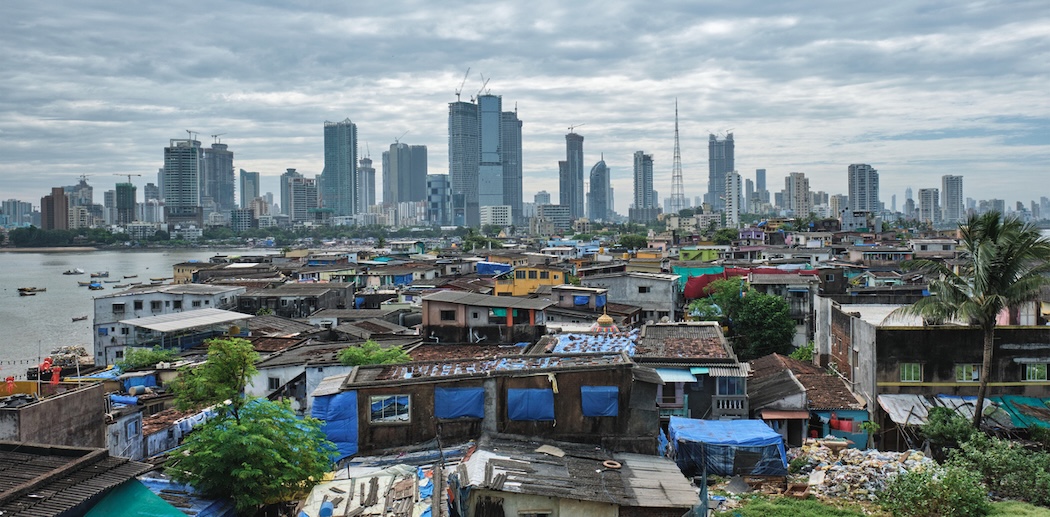
The rapid development of India in the 20th century is a remarkable story, albeit one with uneven outcomes. Today, the country faces new pressures: from converting growth into health, education and human capability – through reducing dollar dependency – to navigating the transition to green energy.
Since gaining independence from Britain in 1947, India’s economy has transformed dramatically. In the mid-1940s, the country was marked by extreme poverty, limited industrial capacity and basic infrastructure.
Almost 80 years on, it is almost unrecognisable: GDP per capita has surged, life expectancy has more than doubled and adult literacy rates have grown roughly six-fold. In just a couple of decades, India went from using kerosene lamps to boasting its own nuclear arsenal. Progress has been dizzying.
Even so, new economic challenges loom. One structural challenge is the country’s booming population. In 2023, India overtook China as the largest populace in the world – hitting over 1.4 billion people, roughly a sixth of the global population. Not only does this place a growing strain on education systems, healthcare providers and physical infrastructure like housing, but it also means that the economy faces growing pressure on the labour market to create enough jobs.
Other challenges include continuing to pursue ambitious Human Development Index (HDI) goals, navigating the vulnerability caused by a heavy dependency on US dollars and making a successful transition to a greener energy system.
These topics were the focus of a themed collection of articles posted on the Economics Observatory this week, drawing on expertise from three postgraduate students at the LSE School of Public Policy.
If the 20th century was about India rising from the rubble of colonial rule and establishing itself as a global power, then the 21st century will be about maintaining and strengthening this position in the face of ever changing political and economic threats. Meeting these policy challenges is critical – 1.4 billion lives and livelihoods depend on it.
Tunnel vision
The first article in our series explores India’s development targets – known as Vision 2047. The vision sets out India’s chief goal for the centenary of independence: to be a ‘developed’ country.
Written by Kumar Rajesh, the piece sets out the potential scenarios for India to meet this ambitious goal. Kumar argues that better education and healthcare are as important as incomes when it comes to improving people’s living standards. Countries can grow richer without making equivalent progress in life expectancy, schooling or living standards – and this is a risk for India.
Looking at India’s HDI performance since 1990 implies a gradual improvement. But Kumar notes that if we disaggregate the index into its constituent parts, progress has been uneven. While income per capita has accelerated sharply (particularly since the early 2000s), improvements in health and education standards have been more gradual. This, he concludes, is the central problem for Vision 2047.
In response, Kumar suggests that Indian policy-makers must take a three-pronged approach to institutional change:
- Lagging regions need medium-term spending frameworks for healthcare, education and nutrition.
- India needs a better ‘diagnostics architecture’, helping to track whether states are catching up and going beyond simply counting whether welfare schemes are expanding access.
- And policy-makers should move beyond rankings towards outcomes, with multi-year goals and state-specific support for the hardest problems.
A fistful of dollars
The next article in the series – written by Vinod Kumari – explores India’s dependency on the dollar. In her article, Vinod sets out the economic vulnerabilities that come from India’s exposure to movements in the dollar during global economic shocks.
Vinod looks to recent events to explore India’s economic position. Within a few weeks of the closure of the Strait of Hormuz in February 2026, India’s reserves fell by nearly $40 billion. The rupee hit a record low, and policy-makers began discussing measures to contain demand for imports.
This, she argues, shows that the country remains exposed to a structural liquidity vulnerability embedded within a dollar-centred global financial system. The Iran-US war highlights how commodity price spikes, capital flow volatility and exchange rate pressures can combine to consume external buffers in countries like India much faster than headline reserve numbers suggest.
Part of this is down to dollar-denominated debt. Referred to as the original sin by Barry Eichengreen and Ricardo Hausmann, the inability of most emerging economies to borrow internationally in their own currency is a major weakness. Indeed, India’s $420 billion worth of dollar-denominated external debt means that any depreciation in the rupee pushes up debt servicing costs.
There is also the issue of trade. Because India’s import prices are set in dollars irrespective of the dollar-rupee exchange rate, when the rupee weakens, depreciation compounds India’s import bill (rather than correcting the trade balance). This, Vinod notes, is what we are seeing with the Iran war crisis.
In terms of next steps, Vinod argues that policy-makers in India should focus on three connected areas: internationalising the rupee, improving export sophistication, and pursuing the green energy transition (more on this later).
Such an approach will move India away from dollar dependency – and help to shield its economy from future shocks such as wars.
Greener pastures
The third and final article in this collection is by Nethra Natarajan. In her article, she explores India’s green energy transition, weighing up the country’s progress so far against future challenges.
Nethra argues that India’s energy story is striking. Driven in part by rapid urbanisation and a growing middle class, she highlights how the country’s primary energy demand is projected to rise by nearly 80% between 2023 and 2040.
Against this surging demand, India has made bold climate commitments – pledging 500 gigawatts of non-fossil fuel capacity by 2030, 50% of its energy from renewable sources by the same year and further net-zero missions by 2070. The question, Nethra proposes, is whether these commitments are credible.
The answer is naturally complicated. While India has moved faster than expected in the first phase of its green energy transition, building renewable energy capacity at a surprisingly rapid rate, the second phase of achieving energy self-sufficiency seems to be much harder.
Even so, the rewards could be rich. A shift to domestic clean energy could make the public purse $1.4 trillion better off by 2040, and improve India’s trade position. Indeed, the solar equipment market alone could generate up to $42 billion in value by 2030 through import substitution.
The targets that India has set itself require more than installation at scale. Nethra argues that they also require domestic technology, grid infrastructure and levels of investment that are not yet in place. If the country manages to close these gaps, it has the chance to boost not just its climate credibility, but also its industrial future and broader economic ambitions for 2047 and beyond. The future is green – or at least it could be.
Where can I find out more?
There are several other articles on the Economics Observatory website exploring India’s economy, including:
- How is India’s trade landscape shaping up for the future? Writing in May 2024, Mayank Khurana outlined how after independence in the late 1940s up to the early 1990s, India’s trade policy was transformed: from protectionism to a liberalised economy. As the country moves towards greater global economic integration, remaining challenges include improving infrastructure and diversifying trade relations.
- The airport economist: how is southern India responding to the trade war? Writing in April 2025, Tim Harcourt reported on Bengaluru and Chennai, two of southern India’s most vibrant cities, which are emblematic of the country’s resurgence as a global economic powerhouse. With tariff barriers having been raised in China and the United States, the Asian sub-continent may offer alternative opportunities for exporters and investors.
- How has Covid-19 affected India’s economy? Writing in June 2021, Swati Dhingra and Maitreesh Ghatak described how India was hit hard by the pandemic, particularly during the second wave of the virus in the spring of 2021. The sharp drop in GDP was the largest in the country’s history, but may still have underestimated the economic damage that was experienced by the poorest households.