
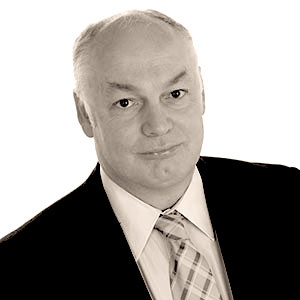
An applied economist whose work delivered substantial developments globally
MICHAEL NEVIN, who has died aged 70, put his shoulder and keen mind to improving peoples’ lives at home and abroad in the practical manner of developing tangible infrastructure such as roads, housing, sewerage systems, schools and hospitals. Mike, as he was known to friends and colleagues, took a pride in defining himself as an applied economist; not for him the theoretical or abstract papers and articles (although he could excel at those too like his father did).
Mike worked around the world in assessing and developing the business case and bringing to fruition big development projects that created employment, helped businesses flourish and raised standards of living for the many. He was at heart a free market economist who believed in the good people could do for each other through trade and exchange of ideas, services and goods. He wrote for ThinkScotland on a number of occasions with carefully researched and well-argued pieces.
Born Michael John Nevin on 30 May 1955 in Aberystwyth, he was the son of the late Edward (Ted) Nevin and Winifred Elizabeth (née Richards) with five siblings. Mike’s grandfather had risen from being an ordinary docker at Portland Dock to become the local Mayor. His father was similarly successful gaining a reputation as a first-class academic economist and outstanding university teacher at the University of Wales, becoming professor of economics at Aberystwyth 1963-68 and Swansea 1968-85.

Ted Nevin’s pioneering work in analysing the economies of Wales and then Ireland in the 50s and 60s was to encourage Mike to follow him into the same field. The young Nevin attended Bishop Gore Comprehensive in Swansea from 1968 to 1973 where his economics teacher John Booth considered him his star pupil. He then read Philosophy, Politics and Economics at Pembroke College, University of Oxford University, where he graduated with a First Class honours degree in 1976. The following year he added an MA (Econ), Economics and Econometrics, from the University of Manchester.
After graduating Mike began his influential career as an economist with the Crown Office working for the Ministry of Finance of the Government of St Lucia during the period leading up to and immediately following the island’s independence from the UK in 1979.
His work in St. Lucia included drafting the government’s annual capital budget and preparing projects for funding by development banks and aid agencies. These included various road schemes, the upgrading of the sewerage system of the island’s capital, Castries, and improving agricultural yields through irrigation systems. Changing lives for the better was to become the regular outcome of Mike’s work.
 Mike’s achievements in St Lucia led to an offer of work from the Commonwealth Development Corporation (now British International Investment) in London, which finances and manages projects in Africa, Asia, the Caribbean and Latin America. His time as a financial analyst included missions to the Solomon Islands, Thailand, Costa Rica – and attending negotiations with the European Investment Bank (EIB) in Luxembourg.
In turn that work led directly to joining the EIB in Luxembourg as a Loan Officer responsible for the Bank’s lending operations in Africa. In 1984 Mike met Caroline in Edinburgh, and she joined him in Luxembourg in 1985 to work in the European Parliament. They married the following year.
Mike was now spending time visiting Botswana, Burundi, Lesotho, Malawi and Mozambique to negotiate loans for coal and hydro electric power plants, water and sanitation systems, a tea plantation, cement works and vegetable cannery.
Although life in Luxembourg was highly enjoyable Mike always itched to get back to the UK, so he and Caroline returned in 1986 with Mike taking a pay cut to join the London Docklands Development Corporation where he was responsible for the financial planning and management of the largest urban regeneration programme ever implemented. This included leadership of projects such as the Docklands Enterprise Centre.
Mike’s work in Surrey Docks realised a substantial profit for the Corporation and his approach became a model for funding urban regeneration through private finance rather than government grants. In 1988, Mike was promoted to the position of Financial and Economic Manager of the Corporation’s Highways Implementation Team, responsible for building the strategic infrastructure necessary to support Canary Wharf and the other commercial developments on the Isle of Dogs.
Yet for all his towering intellect, or perhaps, because of it, Mike could never be accused of possessing a practical streak. One of his friends still dines out on the story of Mike, having volunteered to do the cooking one evening, being found attempting to mash potatoes without boiling them first. Another friend, on visiting him in Luxembourg, was met with the news that there was no hot water in Mike’s flat – it having been off for several days. An extinguished pilot light had proven to be a challenge too far for Mike.
Professionally though he was in demand more than ever and joined international accountants Touche Ross in the City of London and Edinburgh in 1990 (before it became Deloitte Touche in 1995). An early task was providing support to the UK Department of Trade and Industry. Over 1,000 copies of Mike’s study, Global Climate Change: The Role of Technology Transfer, proved highly influential after being circulated to participants of the 1992 United Nations Conference on Environment and Development and also at the Earth Summit, both held in Rio de Janeiro.
Other clients included establishing an environmental strategy for Lothian Regional Council, Edinburgh District Council and the Edinburgh Chamber of Commerce; providing a due diligence review for investors in Eurostar, and a concept–to-operation plan for a Central Europe Pipeline System (CEPS) for NATO fuel supply.
He later served on secondment with the Private Finance Unit of the Scottish Office in 1996/97, which led to Mike leaving Deloitte & Touche in 1998 to found Caledonian Economics specialising in PFI/PPP advice. As managing director he led the firm’s financial advice on transactions with a combined investment value of more than £1 billion – when that was a very large number.
The firm advised public sector clients particularly on schools and waste management partnerships. Worthy of note was Mike’s work for the Department for International Development (DFID) with Adam Smith International in 1998/99, creating the concept of Development Resources Trusts (DRTs). DRTs would be a vehicle through which UK investors could invest in shares of companies operating in the world’s poorest countries, with the value of the investments being tax deductible in the UK up to an agreed maximum each year. This encouraged considerable amounts of private capital investment into Africa.
Anticipating, correctly, a downturn in the UK PPP market, he sold his majority interest in Caledonian Economics in 2007 and established his own consultancy, Nevin Associates Ltd, from the family home in Trinity, Edinburgh.
This was to again take him to Africa, working primarily in establishing best practice for the identification, appraisal, implementation and monitoring of large scale projects for Nigeria and Rwanda under the auspices of Adam Smith International, which was running UK government development aid projects across the continent. This was when I also started working in Botswana and Nigeria for ASI and met Mike on a number of trips in Abuja.

In 2013 Mike’s book The Golden Guinea explained the global financial crisis of 2007-08 criticising the use of quantitative easing and suggested a means to reestablishing a gold-based internationals reserve currency. It was lauded as “one of the most clearly written texts on the current state of the world economy and international finance” and “Thoroughly readable”. Mike wrote a number of articles for ThinkScotland on the subject.
Beyond professional economics and an interest in politics Mike Nevin had a lifelong fascination with and support for the Stuart cause. In 2002 Mike had acquired a handwritten memorandum submitted by Prince Charles Edward Stuart to Louis XV of France, this inspired his interest in the true facts surrounding the Jacobite rising of 1745. Between 2005 and 2010 he served as Treasurer of the 1745 Association, and became the Association’s chair in 2016 for four years.
In 2024 Nevin had his book Reminiscences of a Jacobitereleased by Birlinn, with his publisher Hugh Andrew remarking it was people like Mike with their enthusiasm and commitment who were keeping Scottish history alive. His keen interest included giving talks and providing Jacobite walking tours in Edinburgh, which he continued doggedly with right up to his death, although clearly weakening from a long term illness.
Mike was still researching and writing economic articles until he died. He had just published his perceptive and now timely findings on the unintended consequences of the UK’s minimum wage on ThinkScotland. He was surprised at how out of line the UK now is from the OECD average:
“We now have the highest minimum wage of any major country, and it is about two-thirds of the average wage compared to about half the average wage in the other countries I looked at. It makes the UK the Number One Destination for many in the world seeking to improve their economic prospects.”
“In the UK (July-Sept 2025), about 12.7% of 16-24 year olds were NEET (Not in Employment, Education, or Training), totalling around 946,000 young people. My concern is that they are being priced out of work by rising minimum wages which make it uneconomic for employers to take them on.
The full article can be read here.
Other economists were generous in their praise of Mike. Ewen Stewart commented, “I always found Mike to be extremely generous with his time, a highly honourable man and economically rather laissez faire. He despaired at our monetary debasement and short termism as he saw it.”
He had recently completed a draft chapter for a forthcoming book on twelve economists of the late 20th century who did not win a Nobel Prize. Mike’s submission was “Harry G Johnson’s theory of money, interest and international finance.” Johnson was one of the world’s leading academic economists, simultaneously holding Chairs in the not so dismal science at the University of Chicago and London School of Economics. Mike recalled the old joke that Johnson was “a Keynesian in Chicago and a Monetarist at the LSE.”
Colleagues valued Mike as an economist who was always willing to listen, accept differing opinions (an occupational hazard in the field of economics) and offer constructive advice. A clubbable networker who made friends easily, being both a member of Edinburgh’s Tuesday and New Chapter dining clubs, Mike Nevin earned a reputation as a gentleman exuding charm, wit and gravitas. When meeting this author he always turned up with a specially bought fat cigar, a memory of smoking at the Hilton Abuja Pool Bar, plotting the next project into the wee small hours of a Nigerian morning.
Mike Nevin married Caroline Kellacher in 1983. She survives him with their son Jamie. Michael John Nevin, born in Aberystwyth 30 May 1955, died in Edinburgh 5 March 2026.
Mike Nevin’s Books:
The Age of Illusions: The Political Economy of Britain, 1968 – 1982, London, Victor Gollancz, 1983.
Privatisation and Investment Opportunities in Eastern Europe and the CIS, Business Monitor International Ltd, 1997
Global vehicle emissions: Commercial opportunities from emissions regulation for vehicle manufacturers and component suppliers (with Mark Barrett). An FT Management Report, Financial Times Business Ltd, 1999
The Golden Guinea: The International Financial Crisis 2007-2014: Causes, Consequences and Cures, Southdown Books, 2013
Reminiscences of a Jacobite: The Untold Story of the Rising of 1745, Edinburgh, Birlinn 2020
Edward Nevin: An impression of his life, times and legacy, Self published, 2024
Some of Mike Nevin’s thinkScotland articles:
Established in 2006 and celebrating twenty years, ThinkScotland is not for profit relying on donations to publish our wide range of opinions. You can subscribe to our FREE newsletter here – share and follow us on ‘X’ here – like and comment on facebook here and make a donation here. Every contribution helps to meet our overheads.