
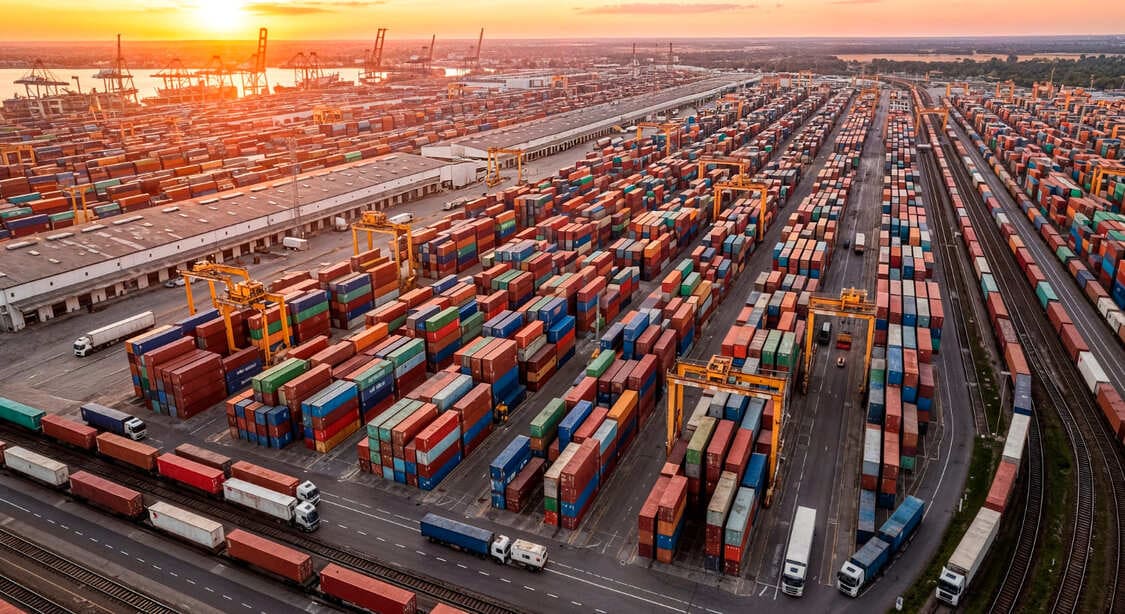
In recent years, the dynamics of global supply chains have been heavily influenced by the shipping container market. As businesses navigate a complex economic landscape, understanding market share trends becomes crucial for strategic planning. This article delves into the evolving container economy, exploring its impact on global trade and businesses worldwide.
Growth in the Global Shipping Container Market
Shipping containers remain pivotal in the arena of international trade, significantly impacting logistics operations. According to Archive Market Research, by 2025, the market for global shipping containers was forecasted to reach a valuation of $5,551 million, highlighting the substantial increase in demand. As businesses continue to expand globally, the importance of efficient and scalable container logistics systems cannot be overstated.
– Advertisement –
The remarkable growth in the container market is a testament to the increased globalization of industries. As businesses strive to improve their operational efficiencies, the reliance on container systems is more evident than ever. This trend points to an ongoing evolution where containers are not just limited to shipping but are integral to supply chain strategies.
Moreover, the digital transformation of logistical processes has enabled businesses to track and optimize their container usage effectively. This technological advancement has made the market more adaptable to fluctuations in demand. As enterprises scale operations globally, enhanced container tracking capabilities have become indispensable in managing supply chain interruptions.
The Significant Revenue Share of Shipping Containers
In 2022, shipping containers made a significant mark in the market by accounting for a notable portion of revenue in the logistics sector. According to Grand View Research, shipping containers comprised a revenue share of 21.4%, reflecting their crucial role in trade. This revenue prominence indicates the indispensability of efficient container management in facilitating seamless business operations.
The substantial revenue share of containers reflects their strategic importance in maintaining competitive advantages in the logistics industry. Businesses that optimize container use are better positioned to reduce costs and improve service delivery. Consequently, the financial implications of well-managed container fleets underscore their contribution to robust business models.
Furthermore, the adaptability of containers to various commodities enhances their value in the supply chain. From perishables to electronics, the versatility of containers ensures businesses can transport a diverse range of goods effectively. This adaptability not only supports business growth but also fosters resilience in supply chain management.
Trends in the U.S. Portable Storage Container Market
The U.S. market for portable storage container rentals has shown notable growth, with projections indicating continuous expansion. According to Verified Market Research, in 2023, the market’s valuation was at $532.42 million and is expected to climb to $791.42 million by 2031, growing at a compound annual growth rate (CAGR) of 5.82% between 2024 and 2031. This growth trajectory underscores businesses’ increasing reliance on flexible storage solutions.
Portable storage solutions are becoming a strategic asset for businesses seeking adaptable logistics. The anticipated growth reflects shifts in consumer demand and the need for businesses to accommodate more agile inventory management strategies. By utilizing portable storage, companies are better equipped to handle seasonal demand fluctuations and infrastructural constraints.
The portable storage market’s growth also indicates broader shifts towards sustainable business practices. With containers increasingly being repurposed and reused, businesses are finding new ways to diminish their environmental impact. The evolving market points towards a future where innovation and sustainability coalesce within logistics frameworks.
The container economy presents both challenges and opportunities for businesses in the global supply chain sector. Understanding market share trends helps businesses align their strategies with market demands, optimize logistics, and remain competitive. As these trends continue to evolve, businesses must stay informed and adaptable, ensuring their supply chain practices meet the ever-changing landscape of international commerce.
– Advertisement –