
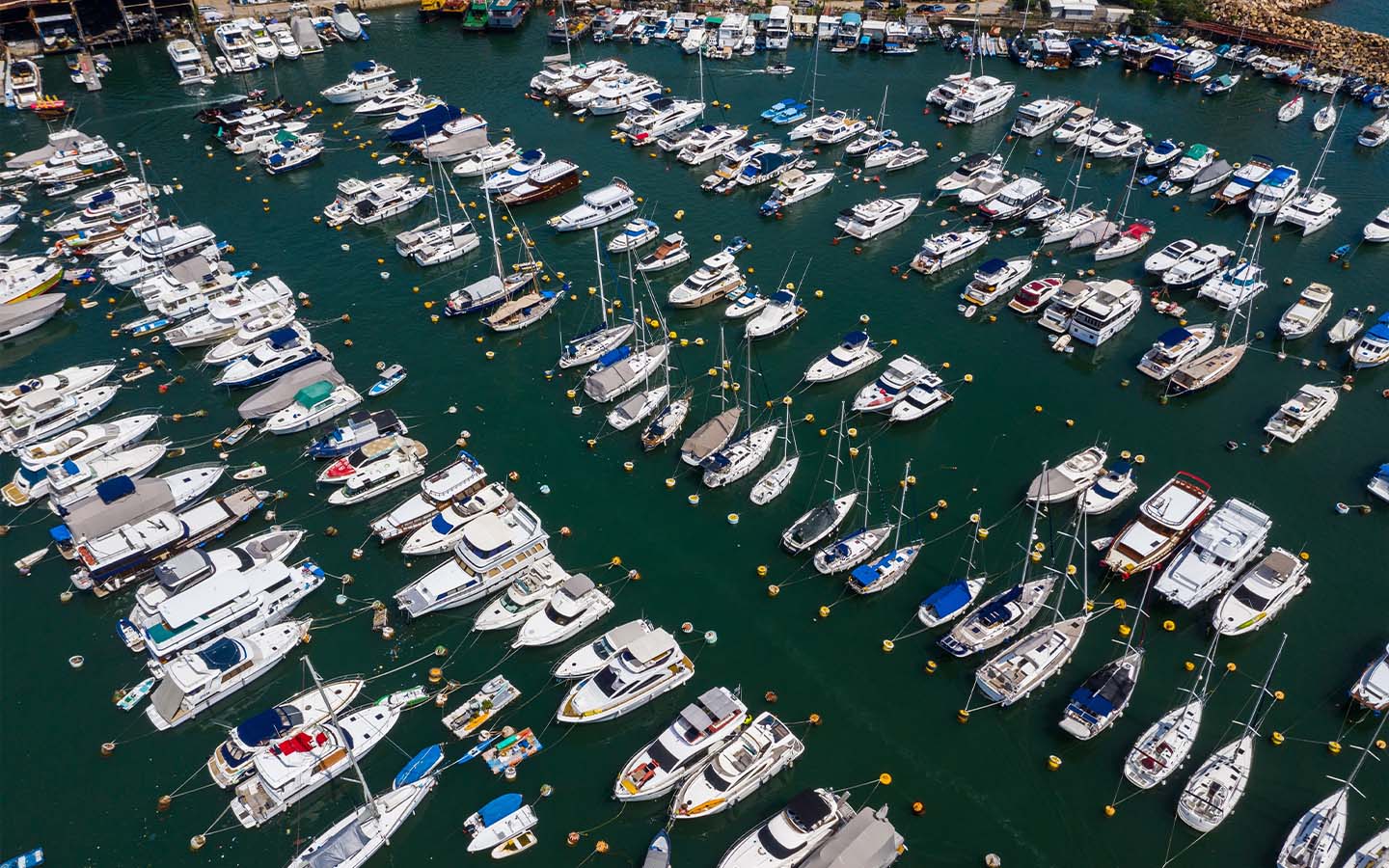
Ever since Hong Kong’s chief executive introduced a “Tourism Everywhere” campaign, which included public support for a local yacht economy, momentum towards the city’s nautical endeavours has quickly picked up headway, so to speak. Delivered in last October’s policy address, the seafaring initiatives aim to capture a share of an expanding global yacht market expected to be worth $45 billion by 2032, driven in part by strong demand emerging from the Asia-Pacific region.
But the policy goes beyond economics and capital investments. The strategy represents a watershed moment for both SARs of Hong Kong and Macao, as well as a strategic opportunity for the Greater Bay Area (GBA) particularly as it relates to cross-boundary mobility and the region’s 90 million people.
[See more: Hong Kong anchors its global yacht push with airport marina project]
For Hong Kong, the immediate impact is relatively modest. Early estimates forecast an annual intake of around HK$4.5 billion ($600 million), roughly half of Hong Kong Disneyland’s turnover last year. However, the roadmap leverages the city’s 1,200-kilometre coastline by drawing resources into underutilised areas, prompting infrastructure spending that generates job opportunities across service and hospitality industries.
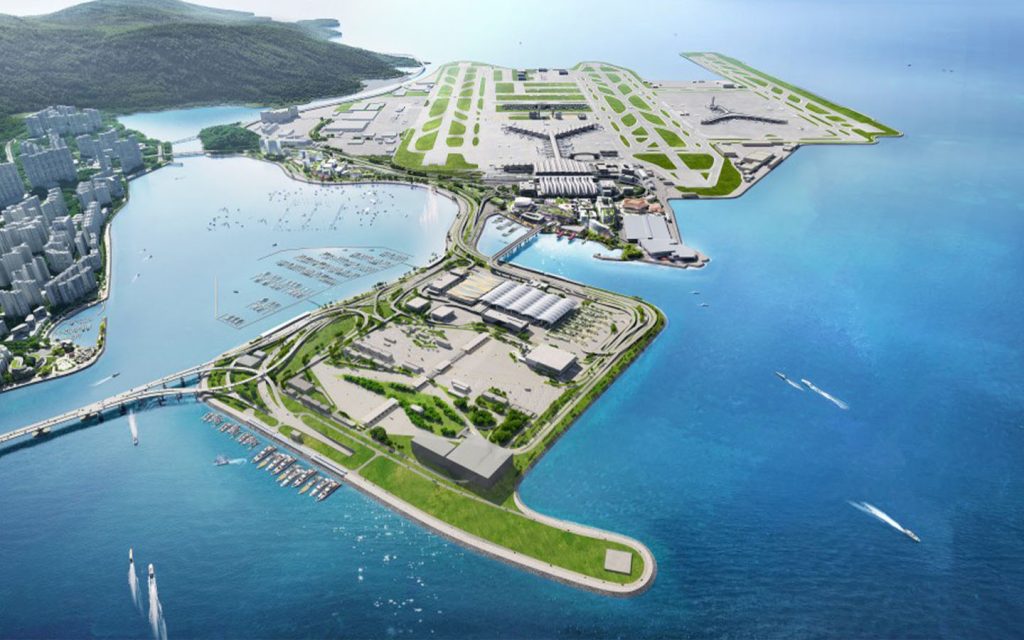
Most recently, a number of designated sites have been identified to add more than a thousand vessel berths to Hong Kong’s current capacity of 4,300, a welcomed improvement for the city’s 12,000 plus registered yacht owners. In addition to new docking and maritime facilities, Hong Kong envisions its local yachting hub to extend into other critical economic pillars, including cultural tourism and sporting events. By 2028, the first phase of SkyCity, a 200-hectare waterfront recreation zone centred on the Airport Bay Marina, which will include a 300-room hotel and superyacht accommodations, is anticipated to be up and running, building on the city’s premium leisure offering.
GBA implication
Beyond the shoreline’s physical changes, the introduction of mutual yacht recognition for GBA-registered vessels addresses nautical traffic, opening new maritime frontiers and supporting fluid yacht movement between the SARs of Hong Kong and Macao with mainland China, all within the Greater Bay Area framework.
Heading north under a Guangdong pilot proposal, SAR-registered yachts would be eligible to travel to six designated mainland points, while a southbound arrangement would allow mainland-registered boats to utilise ports adjacent to Shenzhen Bao’an International Airport and the Shenzhen Bay Marina Club to complete customs clearance before sailing directly to Hong Kong.
While the reciprocal yacht arrangement would itself be a new initiative, the concept of cross-boundary transport for private individuals is not a novel one. Registered vehicles have been able to travel between the SARs and nearby mainland Chinese cities under a northbound travel scheme introduced in 2023 from Hong Kong and in 2024 from Macao, with the southbound quota scheme commencing back in 2025.
[See more: Greater Bay Area yachting scheme set for expansion]
The cross-border car policy offers itself as a good learning opportunity and precedence for the maritime movement, comments Eduardo Buisson Loureiro, a Macao based lawyer and international arbitrator who specialises in manufacturing and yacht registration, speaking to The Bay (Macao News).
Like cars, boats follow strict activity guidelines, displaying relevant license plates. A similar “dual flag” system for yachts has been suggested, allowing owners to register in Hong Kong for legal and tax benefits while displaying a secondary flag to expand operational flexibility.
But Lourero, who holds an Ocean Navigation Licence from Macao that is also recognised in Portugal, notes that the shortcomings of the car policy are applicable to reciprocal yacht recognition, pointing out that administrative bottlenecks and digital customs harmonisation must be addressed to ensure smooth GBA-integration, otherwise the cross-boundary ambition will fall short of its intended goal.
Macao’s niche role
With Hong Kong earmarking HK$30 billion ($4 billion) to build out its nautical facilities, the city is signalling a serious commitment to position itself as a premier yachting destination synonymous with Monaco’s coastal image. Spillover interests could positively benefit Macao, Loureiro suggests, though like Hong Kong the neighbouring SAR faces more acute berthing circumstances due to shallower water and smaller coastline with the main facilities located at Fisherman’s Wharf and the Macau Yacht Club.
But while Hong Kong’s investment targets affluent tourists that reflects the financial hub’s family office ambitions and cross border capital flows, Macao is better placed to leverage its historical gateway to support its cultural tourism under the 1+4 initiative.
Macao is no stranger to aquatic sporting events. The city hosts an annual international sailing competition just off the main peninsula. However, expanding seaborne activities goes beyond yacht tourism, and goes hand in hand with the city’s tangible history and gastronomic identity.
[See more: Macao regatta aims to lure top sailors with new international competition]
“Macao’s historical flavours all arrived by sea,” comments culinary academic and author Annabel Jackson, whose book The Making of Macau’s Fusion Cuisine: From Family Table to World Stage, was recently translated into Chinese by the Cultural Affairs Bureau.
“Five hundred years of nautical history along with those arriving by ship are responsible for shaping Macao’s current identity. From the East India Company merchants who champion business opportunities to artists like George Chinnery, who found inspiration among the Tanka boat people, there is as much UNESCO heritage and cultural tourism on the sea as there is in Senado Square,” Jackson explains.
In the meantime, Macao’s yacht ambitions might still be anchored to the proverbial shore. When the first phase of the SkyCity project is set to open by 2028, the new train lines connecting Tung Chung and the Hong Kong–Zhuhai–Macao Bridge to the Airport Bay Marina should be running, ironically linking Macao to Hong Kong’s yacht hub most efficiently by bus.
Source link