
The S&P Dow Jones Indices is a joint venture within S&P Global that creates, calculates, and publishes global stock market benchmarks such as the S&P 500 and the Dow Jones Industrial Average.
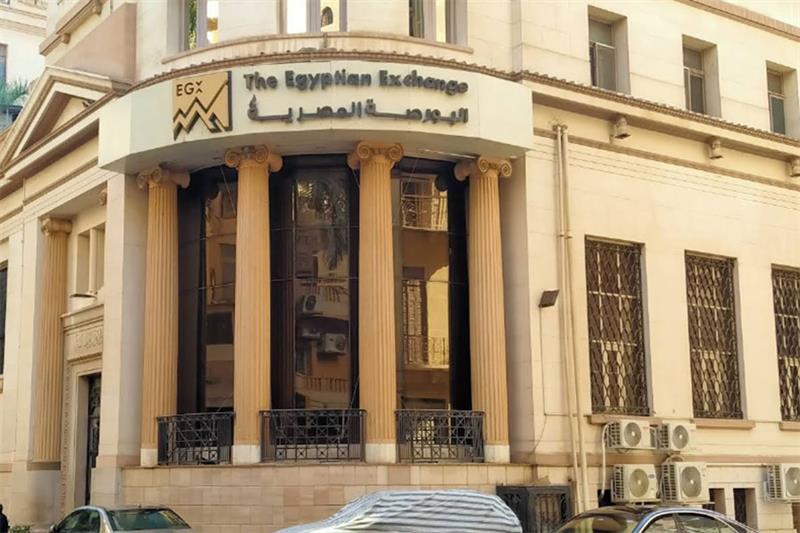
Maintaining Egypt’s classification underscores the strength and development of its market. It also reflects improvements in the country’s investment climate, its economic resilience, and its ability to cope with regional and international challenges, according to EGX Chairman Omar Radwan.
During the first nine months of fiscal year 2025/2026, Egypt’s real GDP growth reached 5.2 percent, while in the third quarter of the same fiscal year, the growth rate recorded 5 percent.
Meanwhile, the Central Bank of Egypt’s (CBE) Monetary Policy Committee (MPC) kept its key rates unchanged following its meeting on 20 August, maintaining strict monetary conditions to support disinflation and curb inflation expectations.
The status also reflects the continued success of coordination in reviewing and modernizing market mechanisms and financial instruments between the EGX, capital market stakeholders, and relevant institutions and government bodies.
Such successful coordination attracts more foreign investor activity and investments.
In June 2026, S&P DJI released a document from its country classification review, proposing to reclassify Egypt and downgrade its status from an ‘emerging market’ to a ‘frontier market.’ The document suggested that the country’s economy, which it described as neither large nor developed enough, suffers from a liquidity shortage that may carry higher risks for investors.
This comes as Egypt’s Financial Regulatory Authority has been bolstering efforts to advance the country’s capital market by launching the derivatives market, activating the short-selling mechanism and framework, expanding digital transformation, upgrading the market’s technological infrastructure, and introducing new services for investors.
These efforts align with the stock exchange’s market development agenda, as 180,000 new investors are expected to join the market in 2026.
Furthermore, the EGX confirmed its commitment to improving its institutional development, products, and services by developing sustainable finance and environmental markets to “enhance market accessibility, increase depth and liquidity, broaden the investor base, develop products and services, and improve the efficiency of our technological and operational infrastructure,” Radwan said.
In early April, less than two months after the onset of the US-Israel war on Iran on February 28, S&P Global Ratings gave Egypt’s long- and short-term foreign and local currency sovereign credit ratings at ‘B/B’, indicating a maintained stable outlook. S&P still warned that the regional conflict will cause strain on the country’s external position if it persists.
The Egyptian pound currently remains about EGP 3, or 6.2 percent, weaker than its pre-conflict level of EGP 47.99 against the dollar.
Additionally, credit rating agency Fitch Ratings confirmed Egypt’s B’/Stable sovereign rating, citing exchange-rate flexibility absorbing the impact of capital outflows on foreign exchange buffers.
Fitch added that Egyptian banks are well-positioned to withstand economic fallout from the ongoing Middle East conflict, supported by strong profitability, solid capital buffers, and improved foreign-currency liquidity.
The country’s net international reserves surged by around 2.2 percent to a new record of $56.29 billion by the end of July 2026, up from $55.07 billion at the end of June.
Follow us on:

Short link: