
Close Menu
Aspire Market Guides
  • Home
  • Alternative Investments
  • Cryptocurrency
  • Economics
  • Equity Investments
  • Mutual Funds
  • Real Estate
  • Trading
What's Hot

Wells Fargo leads $1.4B financing for Hudson Yards tower – Crain's New York

May 29, 2026

Insurers dive into private credit; megadeal stokes waste management investment – S&P Global

May 29, 2026

WCNC – YouTube

May 29, 2026
Facebook X (Twitter) Instagram
Trending:
  • Wells Fargo leads $1.4B financing for Hudson Yards tower – Crain's New York
  • Insurers dive into private credit; megadeal stokes waste management investment – S&P Global
  • WCNC – YouTube
  • How Private Market Tokenization is Revolutionizing Equity, Funds, and Alternative Investments
  • HBAR Utility Pays Off: The Hard Part Is Holding Above This Level
  • Silver X Returns to Profitability in Q1 on Stronger Silver Prices, Higher Throughput
  • Should senior citizens continue investing in equity mutual funds after retirement? Expert explains
  • Market Humanism: A New Paradigm for a New Era : Democracy Journal
  • The “OpenAI Effect” and the Rise of AI-Native Hedge Funds:
  • IFF Enters Into Agreement to Sell Its Food Ingredients Business to CVC
Friday, May 29
Facebook X (Twitter) Instagram
Aspire Market Guides
  • Home
  • Alternative Investments
  • Cryptocurrency
  • Economics
  • Equity Investments
  • Mutual Funds
  • Real Estate
  • Trading
Aspire Market Guides
Home»Economics»The Stock Market Faces Serious Problems in President Trump’s Economy. History Says This Could Happen Next.
Economics

The Stock Market Faces Serious Problems in President Trump’s Economy. History Says This Could Happen Next.

By CharlotteMay 7, 20264 Mins Read
Share
Facebook Twitter Pinterest Email Copy Link


The S&P 500 (^GSPC +1.46%) has added 6% year to date and currently trades near its record high. That momentum has been driven by strong earnings growth in recent quarters, which itself has been supported by prodigious investments in artificial intelligence.

However, investors may be overestimating the stock market’s resilience. President Trump’s tariffs and military operations in Iran pose serious threats to the U.S. economy. Last week, Moody’s chief economist Mark Zandi said, “We’d likely be in a recession already if not for the AI investment-driven boom.”

Here’s what investors should know.
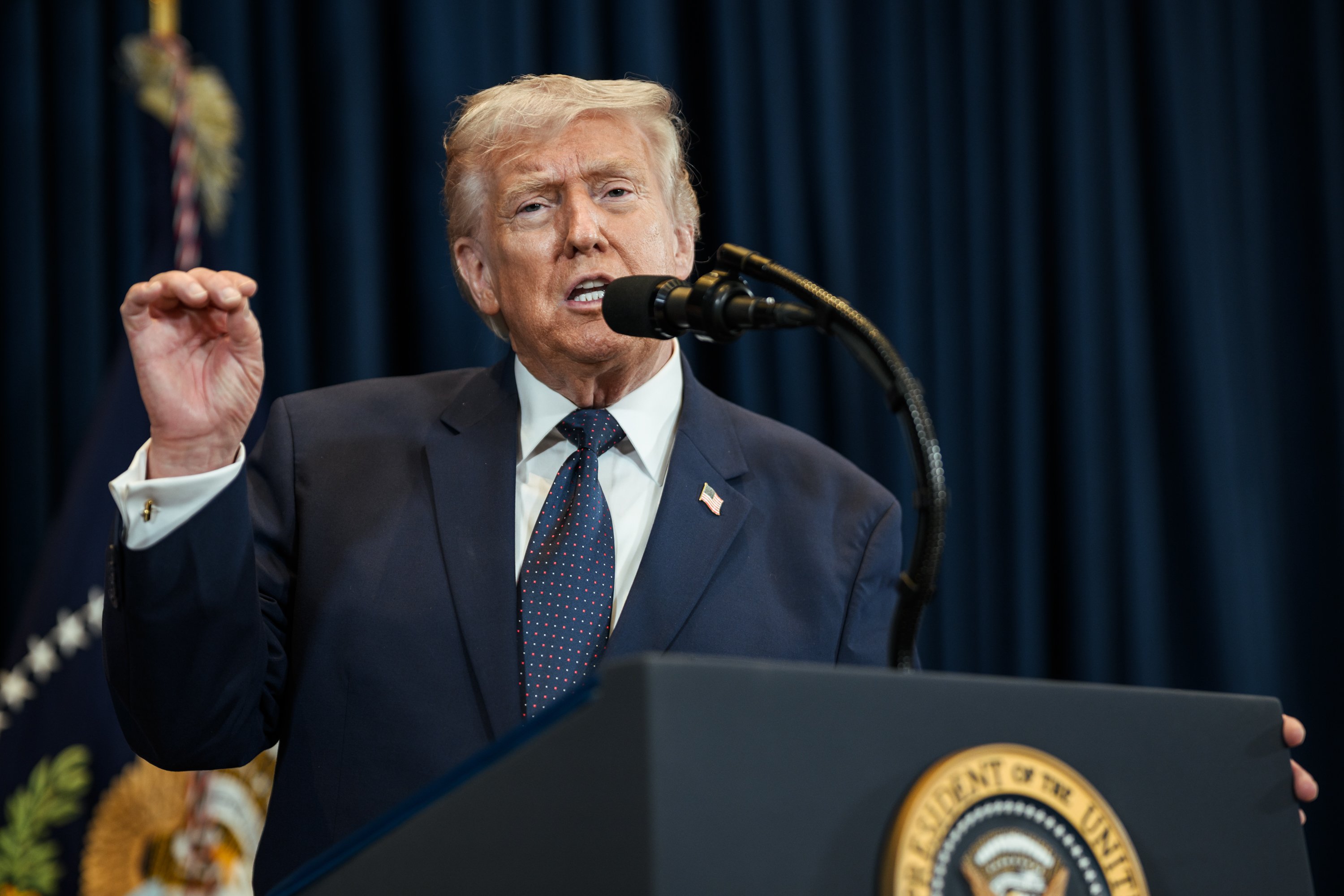
President Donald J. Trump delivers remarks at a press conference.

President Donald J. Trump delivers remarks at a press conference. Image source: Official White House Photo.

President Trump’s military operations in Iran have driven inflation higher

Trump’s decision to strike Iran in late February has spiraled into the largest oil supply disruption in history, per the International Energy Agency. The conflict has not only closed the Strait of Hormuz, a critical shipping route in the Persian Gulf, but it has also damaged infrastructure. Ramping up oil flows to pre-war levels could take months.

Meanwhile, energy prices have increased dramatically. Brent Crude oil, an international benchmark, currently costs $110 per barrel, up 80% since January. And the average price per gallon of regular gasoline in the U.S. is $4.45, up 60% since January, according to the Energy Information Administration.

CPI inflation hit 3.3% in March, the highest level since April 2024, and will likely accelerate further as elevated energy prices percolate the economy by raising transportation and manufacturing costs. Indeed, a forecasting tool from the Federal Reserve Bank of Cleveland shows CPI inflation trending to 5.6% in the second quarter.

If that projection proves accurate, the Federal Reserve would almost certainly raise interest rates, which would likely trigger a flight to safety. Investors hoping to protect their portfolios from an economic downturn would sell stocks and buy safe-haven assets such as gold and Treasury bonds.

President Trump’s tariffs are damaging the U.S. economy

The Iran war has stolen focus from Trump’s trade war, but it remains a source of concern. Earlier this year, the Supreme Court struck down certain tariffs, but tariffs still in effect have raised the average tax on U.S. imports to 11.8%, the highest level since the 1940s, according to the Budget Lab at Yale.

In late February, Trump used Section 122 of the Trade Act of 1974 to impose a 10% global tariff, which expires after 150 days unless extended by Congress. But doing so bought the administration time to conduct trade investigations, which are expected to result in more durable, and potentially steeper, tariffs under the authority of Section 301.

So what? Several studies have concluded that U.S. companies and consumers, not foreign suppliers, are paying most of Trump’s tariffs. That means his trade policies are effectively a tax on consumption and a direct headwind to economic growth. Last year, GDP increased just 2% and the economy added just 116,000 jobs. Neither figure has been so low since the pandemic in 2020.

Moody’s economist Mark Zandi recently wrote, “We have a year’s worth of economic data since Liberation Day, when President Trump announced much higher tariffs on most imported goods and countries, and the data are definitive: The tariffs have done significant damage to the economy.”

Here’s the big picture: Trump is likely to impose fresh tariffs once trade investigations are complete this summer. Those duties could hit the economy at a time when oil prices are still elevated because of the Iran war. Together, those headwinds could trigger a steep decline in the stock market.

Historically, the S&P 500 has fallen by an average of 40% when gas prices top $4

As mentioned, U.S. consumers currently pay an average of $4.45 per gallon of regular gas. The national average has only exceeded $4 per gallon twice in history — the financial crisis in 2008 and the pandemic in 2022 — and the S&P 500 declined by an average of 40% during those incidents.

Of course, past performance is never a guarantee of future results. High gas prices were not the only reason the S&P 500 dropped sharply during those bear markets, nor are they the only threats the U.S. economy faces today. Ultimately, it is impossible to guess how far the stock market will drop during the next drawdown, but investors should be cautious in the current environment.


Source link

Related Posts

Economics

WCNC – YouTube

May 29, 2026
Economics

Market Humanism: A New Paradigm for a New Era : Democracy Journal

May 29, 2026
Economics

EAEU emerges as global center of economic attraction

May 29, 2026
Economics

THE COST OF COMPLACENCY: Why Ghana Must Reciprocate, Boycott, and Lead the Economic Isolation of South Africa

May 29, 2026
Economics

Analysis of an International Business with Tools from Microeconomics and Accounting in the GOLE Program

May 29, 2026
Economics

The Curious Case of the ‘Hindu Rate of Growth’

May 29, 2026
Add A Comment
Leave A Reply Cancel Reply

Editors Picks

Wells Fargo leads $1.4B financing for Hudson Yards tower – Crain's New York

May 29, 2026

Insurers dive into private credit; megadeal stokes waste management investment – S&P Global

May 29, 2026

WCNC – YouTube

May 29, 2026

How Private Market Tokenization is Revolutionizing Equity, Funds, and Alternative Investments

May 29, 2026
SUBSCRIBE TO OUR NEWSLETTER

Get our latest downloads and information first. Complete the form below to subscribe to our weekly newsletter.


I consent to being contacted via telephone and/or email and I consent to my data being stored in accordance with European GDPR regulations and agree to the terms of use and privacy policy.

Featured

Chip Frenzy Ignites Asia-Pacific. Nikkei Breaks 66,000 for First Time, South Korean Stocks Surge 5% Triggering Circuit Breaker.

May 27, 2026

Bitcoin CME Options Open Interest Stays Put-Heavy as Price Stalls Around $76,000

April 18, 2026

Bow River Capital Expands Private Equity Team with Addition of Amanda Tallman as Head of Business Development – mykxlg.com

April 20, 2026
Monthly Featured

SIF, what it means – The New Indian Express

April 26, 2026

CDAE Announces Inaugural Thomas F. Patterson Honors Day

April 17, 2026

Flexi cap vs multi cap: Do multi cap funds have an edge, and what should investors do now?

April 24, 2026
Latest Posts

Wells Fargo leads $1.4B financing for Hudson Yards tower – Crain's New York

May 29, 2026

Insurers dive into private credit; megadeal stokes waste management investment – S&P Global

May 29, 2026

WCNC – YouTube

May 29, 2026
SUBSCRIBE TO OUR NEWSLETTER

Get our latest downloads and information first. Complete the form below to subscribe to our weekly newsletter.


I consent to being contacted via telephone and/or email and I consent to my data being stored in accordance with European GDPR regulations and agree to the terms of use and privacy policy.

© 2026 Aspire Market Guides.
  • Contact us
  • Privacy Policy
  • Terms and Conditions

Type above and press Enter to search. Press Esc to cancel.

SUBSCRIBE TO OUR NEWSLETTER

Get our latest downloads and information first.

Complete the form below to subscribe to our weekly newsletter.


I consent to being contacted via telephone and/or email and I consent to my data being stored in accordance with European GDPR regulations and agree to the terms of use and privacy policy.