
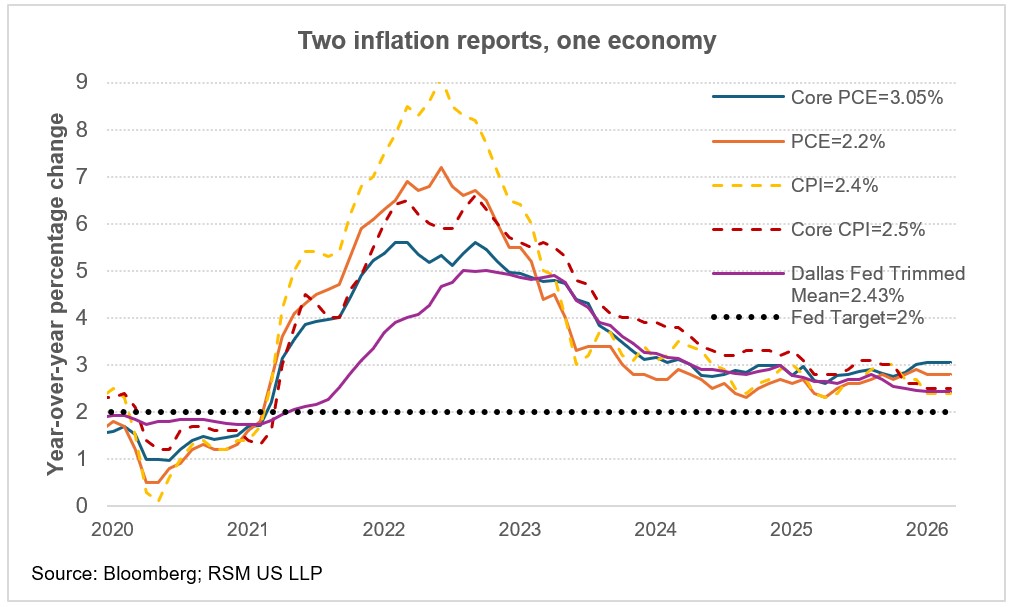
This week two inflation reports will be released that will affect not only monetary policy but also public inflation expectations in response to the oil shock caused by the war in Iran.
Tuesday’s announcement of a ceasefire, though, which includes a reopening of the Strait of Hormuz, promises to offer a reprieve to the shock.
On Thursday, the February personal consumption expenditures index, which is the best longer-term predictor of inflation, will be published. Because the war began at the end of February, the top line will be ignored.
Get Joe Brusuelas’s Market Minute economic commentary every morning. Subscribe now.

But the core PCE, the Federal Reserve’s preferred measure of inflation, is likely to increase by 0.4% for the third consecutive month, resulting in a 3% year-ago reading.
That core reading will be taken seriously by the global investment community and will feed into the current consensus that the Fed will remain on hold at least until its meeting in June.
The increase in the core PCE is being driven primarily by a combination of sticky service inflation and goods pricing, which are a result of elevated tariffs and robust aggregate demand.
Such an increase will only add to the concern about the oil and energy shock cascading through the American economy.
A day after the PCE report, the consumer price index for March will be released and will include data captured after the start of the war. We think that top-line inflation will increase by a minimum of 1% on the month and 3.5% from a year ago.
The energy, gasoline and transportation components will be the primary drivers of rising inflation, with the gasoline metric likely to show a strong double-digit increase near 20%.
Our view is that the Fed will and should look through short-term distortions to critical inflation metrics. Patience is the correct approach under current conditions.
Should the Fed observe sharp moves higher in inflation expectations or a bleeding through to core service pricing—think of the impact of fuel surcharges on airline fares—then the central bank may choose to prepare the public, policymakers and investors for potential rate hikes.
But we are some time away from that moment if indeed it ever arrives.