
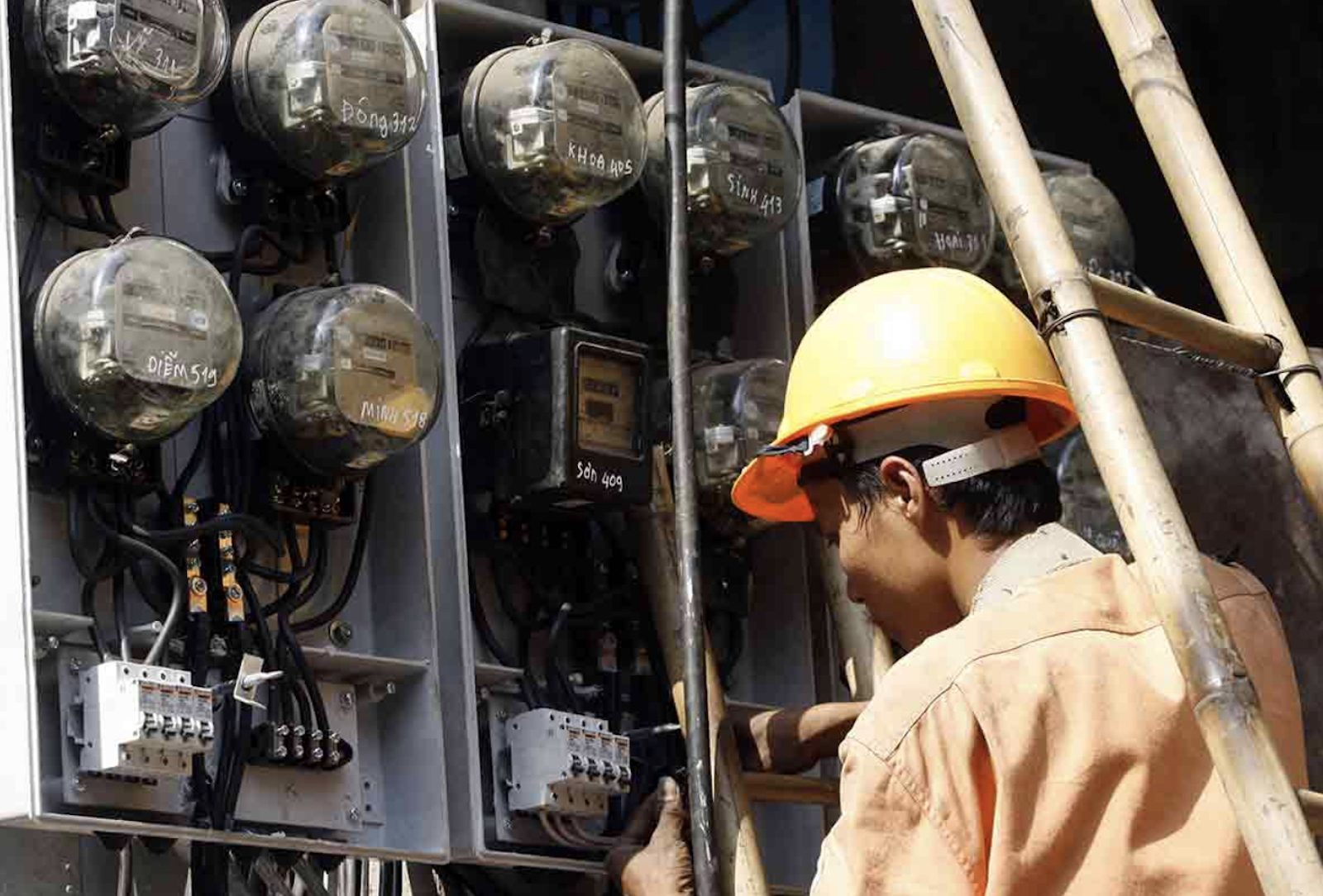
The proposal to gradually pass nearly 45 trillion dong (about US$1.8 billion) in accumulated losses from Vietnam Electricity (EVN) into future electricity prices reveals a deeper contradiction at the center of Hanoi’s economic strategy.
For years, while Hanoi has persistently lobbied Washington to recognize Vietnam as a “market economy”, the country’s electricity sector has continued to operate under a hybrid model in which risks are socialized while market competition remains tightly controlled.
The issue is not simply about rising electricity bills. It raises a broader question: can Vietnam convincingly present itself as operating under market principles while maintaining politically managed pricing mechanisms and the dominance of state-owned enterprises in strategic sectors?
The debate is heating up at a sensitive moment. Vietnam faces growing risks of expanded US trade investigations related to subsidies, dumping practices and transshipment linked to China-centered supply chains.
Hanoi has therefore ramped up efforts to secure Washington’s market-economy recognition in hopes of reducing the likelihood of anti-dumping duties on Vietnamese exports.
Yet the decision to shift more than 45 trillion dong in EVN losses onto Vietnamese consumers inadvertently highlights why such recognition remains politically difficult and increasingly doubtful in Washington.
Political electricity market
Under the Ministry of Industry and Trade’s proposal, EVN’s losses would not be addressed through deep restructuring, shareholder dilution or genuine market competition. Instead, the costs would gradually be incorporated into retail electricity prices paid by households and businesses.
This reflects a longstanding feature of Vietnam’s economic governance model: electricity prices are neither fully market-driven nor entirely subsidized. They are politically calibrated.
For years, Hanoi maintained relatively low electricity prices in order to: contain inflation, support exports, preserve social stability, and sustain GDP growth. However, this policy has also created mounting financial pressure inside EVN, especially following global fuel price shocks and rising generation costs.
Vietnam now faces a difficult balancing act. If electricity prices remain artificially low, EVN’s financial position will continue to deteriorate. But if prices rise too quickly, inflationary pressure and public dissatisfaction will intensify.
The result is a compromise model in which losses are distributed across society while the electricity sector itself remains only partially liberalized.
This creates a paradox that US policymakers are unlikely to ignore. In market economies, price increases are generally justified by market competition, transparent cost structures, investment risks and consumer choice. Vietnam’s electricity sector does not fully meet those conditions.
Although Vietnam has partially opened the solar energy and independent power generation sectors to private investment, EVN still retains dominant control over transmission infrastructure, grid management, and retail pricing mechanisms. Consumers cannot freely choose electricity providers.
Nor do they have meaningful influence over how prices are determined. Yet when the system accumulates losses, the burden is transferred to consumers through administrative pricing adjustments.
From Washington’s perspective, this raises broader questions about how Vietnam defines “market principles.”
If electricity prices are tightly controlled in the name of economic stability when necessary, but suddenly adjusted according to “market pricing” once losses become unsustainable, many US lawmakers may view the system as selectively market-oriented rather than genuinely competitive.
US skepticism
Vietnam’s effort to gain market-economy status has long faced skepticism from both the Republican and Democratic parties.
Conservative trade hawks increasingly see Vietnam as an extension of China-centered supply chains. Meanwhile, progressive lawmakers and labor advocates continue to raise concerns about state-owned enterprises, labor rights and unequal market competition.
The EVN case further reinforces these concerns because electricity prices directly affect export competitiveness. Electricity is a core input for industries such as steel, electronics, chemicals, solar equipment and industrial manufacturing.
If US authorities conclude that electricity prices are distorted by state intervention rather than driven by market competition, they may argue that Vietnamese exporters continue to benefit from advantages inconsistent with the standards of a market economy.
This matters greatly because in anti-dumping investigations, Washington closely examines whether domestic prices genuinely reflect market conditions.
To be fair, Vietnam is not the only country facing this type of power challenge. Many developing economies struggle to liberalize strategic sectors without triggering social instability. Even advanced economies intervene heavily in energy markets during periods of crisis.
The difference, though, lies in institutional structure. In more mature market economies, electricity price increases are typically accompanied by stronger independent regulators, greater financial transparency, more meaningful competition and clearer accountability mechanisms.
Vietnam, by contrast, still operates under a more centralized system in which state-owned enterprises remain closely tied to macroeconomic management and social stability objectives.
This hybrid model helped Vietnam industrialize rapidly over the past two decades. But it also complicates Hanoi’s current effort to convince Washington that Vietnam’s economy now operates primarily on market principles and dynamics.
Larger market questions
The debate surrounding EVN ultimately reflects a broader strategic challenge facing Vietnam.
Hanoi wants greater access to Western markets, recognition as a market economy and deeper integration into global supply chains. At the same time, however, the state remains reluctant to relinquish strong control over sectors considered strategically and politically sensitive.
This approach may continue to provide domestic stability in the short term. But internationally, especially in an era of rising economic protectionism and intensifying geopolitical competition, the space for “partial marketization” is narrowing.
As US-China competition becomes increasingly intertwined with supply chains and trade standards, debates that once appeared purely domestic, such as EVN’s electricity pricing policies, are now becoming part of a much larger geopolitical equation.
Nguyen Ngoc Nhu Quynh, also known as Mother Mushroom, is a Vietnamese writer, human rights commentator and former political prisoner based in Texas, United States. She is the founder of WEHEAR, an independent initiative focusing on Southeast Asian politics, human rights and economic transparency.