

Blog Article
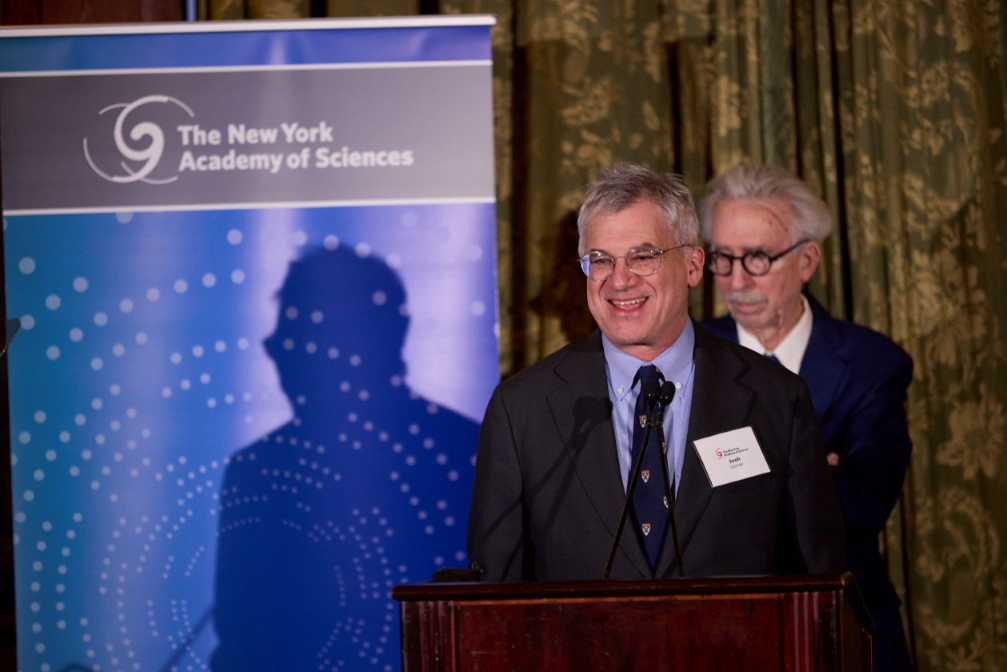
The “Private Capital and Discovery: Strategic Investing in Scientific Innovation” event series concluded a successful inaugural run, bringing together leading voices in science, technology, and private capital to explore the future of innovation-driven investment.
Published May 20, 2026
By Nick Fetty
Technology impacts nearly every aspect of our daily lives. Advancements in relatively new fields like artificial intelligence has shown immense potential in the business world, especially within private capital markets, venture investing, and long-horizon institutional investment strategies.
The “Private Capital and Discovery: Strategic Investing in Scientific Innovation” series, which concluded earlier this year, exemplifies the growing convergence of scientific innovation and private capital investment strategy. This four-part series, a collaboration between The New York Academy of Sciences and the Private Capital Research Institute (PCRI), was launched in fall 2025. The series, sponsored by Ropes & Gray, focused on fostering a deeper understanding of emerging scientific and technological trends and their implications for private capital investors seeking scalable, long-term opportunities. The inaugural series covered four areas:
Entrepreneurship in AI
The debut event focused on the role of entrepreneurship within the realm of AI. Unlike many prior technological shifts, the success of AI will depend heavily on substantial private capital investment in infrastructure, compute capacity, and early-stage commercialization pathways. Furthermore, the near-term success of these technologies will be reliant on developing AI applications to tackle concrete challenges in realms like drug discovery, materials science, and management efficiency. Panelists emphasized that trust, transparency, and public-private collaboration, will be key to ensuring these technologies develop in ways that benefit society while also supporting sustainable investment theses for private capital stakeholders.
The Role of Quantum Computing
The second event, sponsored by HMC Capital, focused on the role of quantum computing, “an emergent field of computer science and engineering that harnesses the unique qualities of quantum mechanics to solve problems beyond the ability of even the most powerful classical computers.” This cutting-edge, new technology has potential to solve computational problems at speeds far beyond anything possible with current microprocessors. Despite the potential, some physicists remain skeptical about its practicality. From a private capital perspective, uncertainty around timelines, scalability, and technical feasibility continues to make quantum computing a high-risk, high-reward investment category.
To achieve its potential, the panelists agreed that the successful teams will need to effectively combine expertise in physics, investor relations, organizational leadership, and tenacity. By establishing clear benchmarks, which are currently lacking, private capital investors could more effectively evaluate risk and return profiles. If successful, quantum processors are expected to complement, rather than replace, conventional computing systems.
Climate Tech
Mitigating the impact of climate change remains a central priority for many scientists, engineers, corporate leaders, and private capital investors. Technology-driven strategies can be a critical part of the solution. Panelists during this third event emphasized the need for a broad portfolio of climate mitigation technologies, while also noting significant challenges in deployment — particularly the difficulty of integrating new energy sources, from solar infrastructure to advanced fusion systems, into large and complex electrical grids.
Part of the challenge for climate technology startups is the long time required to scale solutions and integrate them into existing infrastructure. But with the right strategic private capital investment, these companies have the potential to achieve long-term profitability while effectively addressing urgent environmental problems. Government regulation also shapes market dynamics, but panelists were optimistic that increased collaboration among technology innovators, regulators, and private investors deploying capital can be beneficial to both business and environmental interests.
Health Innovation
The final event in the series focused on biomedical research and development enterprise. Recent funding cuts in the United States, market volatility around AI, and shifting geopolitical forces have created challenges and uncertainty in this realm. While AI is being used to streamline some aspects of medical administration and augment doctors’ decision-making to improve the quality of care, there are concerns that the rush of investment funds on AI-focused projects may overlook other strategies that would be more beneficial to both patients and investors. The panelists advised that to succeed in this space requires cautious optimism. New technologies should be evaluated individually, with careful attention to risk, clinical impact, and long-term private capital return horizons rather than short-term market momentum.
Expert Panels Across Diverse Fields
The panels from the inaugural series included:
- Josh Lerner, PhD, the series moderator who also serves as the Jacob H. Schiff Professor at Harvard Business School (HBS) and co-director of the HBS Private Capital Project.
- Jianying Hu, PhD, IBM
- Ravi Kumar S., Cognizant.
- Daniel Feder, CFA, University of Michigan
- Maya Frutiger, Minnow Venture Partners
- Matthew Kinsella, Infleqtion
- Reed Sturtevant, The Engine Ventures
- Bill McMahon, PhD, Minnow Venture Partners
- Shahin Farshchi, PhD, Lux Capital
- Emily A. Carter, Princeton University
- Patrick Lynch, Featherlight Capital
- Reuben Munger, Vision Ridge
- Ron Gonen, MBA, Closed Loop Partners
- Abrar Mir, Quadria Capital
- Charles Ruprecht, GHO Capital
- Kevin Tracey, Institutes for Medical Research
- Paula Volent, The Rockefeller University
Plans are underway for the next season of programming.