
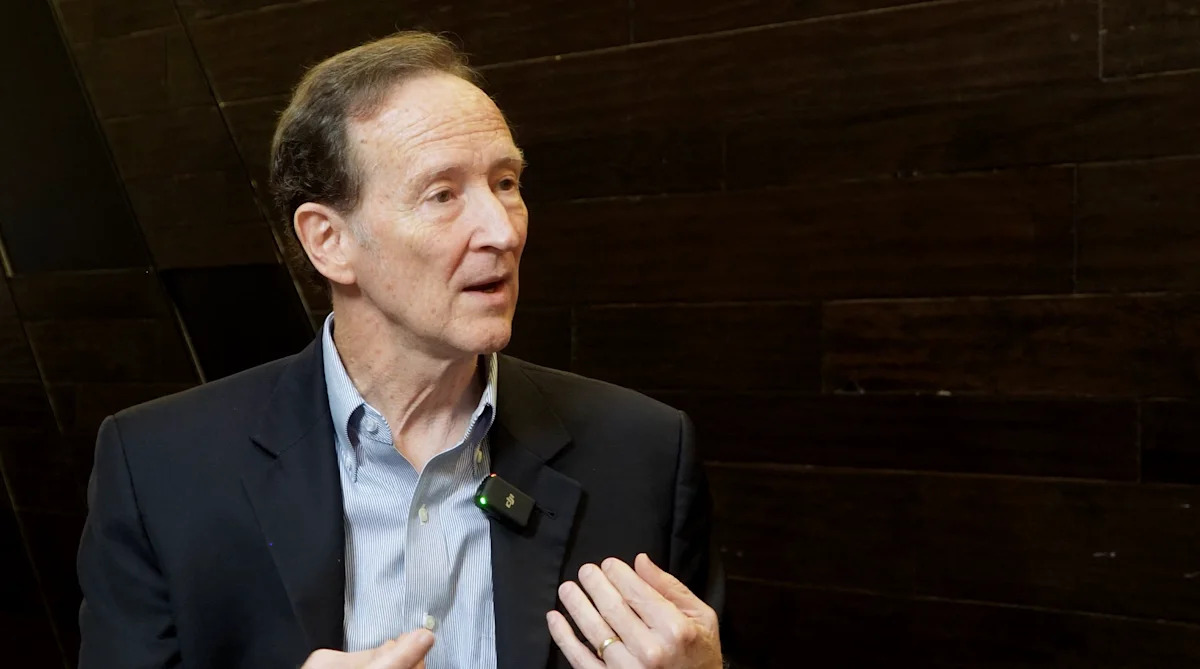

ETF.com President & Director of Research Dave Nadig grabbed some time with John Montgomery, Founder, CEO, and PM at Bridgeway Capital Management, while at the 2026 ICI ETF Conference. Their discussion covered everything from contrarian investing and walking the talk to the company’s 50% donation of profits to charities since its inception in the early ’90s.
A Small Team Driving Meaningful Change
John Montgomery has been running Bridgeway for over three decades, with a simple pitch: deep quantitative research, a focus on smaller, less-liquid stocks that bigger competitors can’t touch, and a lean team where everyone knows everyone. But the real differentiator isn’t the strategy but instead the why. Bridgeway funnels a share of its profits into a foundation focused on ending genocide and preventing war atrocities, working in sub-Saharan Africa and Ukraine. It’s not a marketing gimmick either but instead is baked into the culture from the board room down.
The firm’s move from mutual funds to ETFs is its own case study in doing things the hard way for the right reasons. Rather than sidestep the pain with a cheaper clone or share-class workaround, Bridgeway fully converted several strategies, eating short-term costs for long-term tax efficiency and lower fees. Montgomery’s philosophy is if a painful transition is coming, do it early and don’t wait until you’re the last holdout. However, Bridgeway isn’t trying to be a trailblazer either in that regard, instead waiting for at least some of the infrastructure to get built by others and jumping in once the operational kinks are worked out.
On the investing side, Montgomery’s contrarian streak runs deep. His family literally trims their own personal budget to buy more stock when markets crash, putting the buy low, sell high mentality into practice. That mindset shows up in Bridgeway’s small-cap value strategy, which stays disciplined even when the category falls out of favor, helped by a long partnership with Focus Partners Wealth that rebalances into the strategy precisely when everyone else is fleeing it. It’s a countercyclical approach that sounds obvious on paper and is brutally hard to live by in practice. It’s also the perfect case study for exactly why people need financial advisors in the first place.