
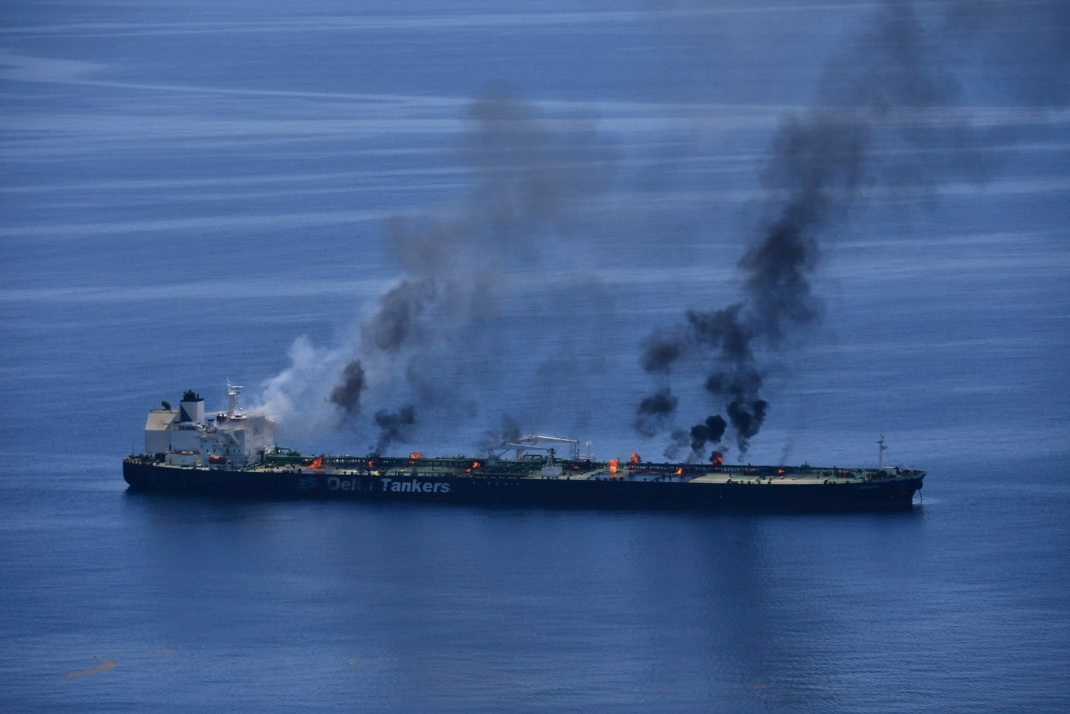
Developments in the Middle East have entered a more dangerous phase after Saudi Arabia confirmed that its strategic East-West oil pipeline was temporarily shut down following drone attacks. The attacks coincided with another major strategic shift: Houthi advances along Yemen’s western coast and toward the Bab el-Mandeb Strait.
The developments come as Saudi oil supplies are already under pressure. According to the International Energy Agency, as reported by Reuters, Saudi crude supply fell to around 6 million barrels per day in August, its lowest level in more than three decades, amid growing disruption to Gulf and Red Sea energy flows.
Saudi Arabia later said that drones launched from Iraq had struck the East-West pipeline. Riyadh said it was holding off on immediate retaliation but reserved the right to take measures to protect its territory and vital infrastructure.
Hotspots Along Saudi Arabia’s Oil Lifeline
The East-West pipeline is particularly important because it provides Saudi Arabia with an alternative to exporting crude through the Strait of Hormuz. It transports oil from the kingdom’s eastern fields across the country to the Red Sea port of Yanbu.
That makes the latest attack more than another episode in the regional conflict. It directly affects infrastructure designed to protect Saudi oil exports from instability around Hormuz.
The strategic picture becomes even more troubling when developments across the Red Sea are considered.
The Houthis have advanced along Yemen’s western coast, taking positions that bring them closer to Bab el-Mandeb. Reuters describes the strait as one of the world’s critical maritime chokepoints, connecting the Red Sea to the Gulf of Aden and carrying roughly 7% of global oil flows.
Saudi Arabia could therefore find itself caught in what amounts to a maritime-land pincer: its alternative oil pipeline is exposed to attacks on land while the maritime outlet it serves faces growing military pressure around Bab el-Mandeb.
The East-West pipeline was intended to function as a strategic safety valve if Hormuz became dangerous. If that route becomes vulnerable while the Houthis strengthen their presence around Bab el-Mandeb, Riyadh’s room for maneuver narrows considerably.
Washington Faces a New Test
The deteriorating situation has already pushed Saudi Arabia to seek greater American involvement.
According to Axios, Saudi Crown Prince Mohammed bin Salman called President Donald Trump twice on Thursday as Houthi forces advanced toward the strategically important Red Sea chokepoint.
During the second call, MBS reportedly urged Trump to order U.S. strikes against the Houthis. Trump declined, while American officials said Washington currently has no plans for direct military intervention. The United States is instead providing intelligence and targeting information to Saudi Arabia.
This represents a significant change from July, when Riyadh had indicated that it could manage the renewed confrontation with the Houthis with more limited American support.
The situation on the ground, however, has changed rapidly.
Reuters reported that Houthi forces had reached Perim Island, also known as Mayyun, in the middle of Bab el-Mandeb after Saudi-backed Yemeni forces withdrew from several positions. The Houthis also advanced around Mokha and Dhubab on Yemen’s Red Sea coast.
The implications extend far beyond Yemen.
With shipping through the Strait of Hormuz already disrupted by the confrontation with Iran, stronger Houthi control around Bab el-Mandeb could provide Tehran and its regional allies with another powerful source of leverage over global shipping and energy markets.
Reuters estimates that disruption around Bab el-Mandeb could affect about 7% of global oil flows and around 12% of world trade.
A Saudi Failure in Yemen?
The latest developments also revive questions about Saudi Arabia’s management of the Yemen conflict.
A southern Yemeni journalist described the Houthi advance as one of the movement’s most important strategic victories since the beginning of the war, arguing that its significance could eventually exceed that of the seizure of Sana’a.
His reasoning is that Sana’a fell under very different circumstances, while some of the territory now being lost had previously been recaptured after years of fighting, military expenditure and heavy human losses.
More importantly, the Houthis are now positioned around the gateway to Bab el-Mandeb.
The commentator also contrasted the previous Emirati military role on Yemen’s western coast with Saudi Arabia’s current management of the conflict, arguing that the UAE’s withdrawal exposed weaknesses in Riyadh’s strategy.
Whatever one makes of that politically charged assessment, the strategic problem is increasingly difficult to ignore.
Saudi energy security has long depended on maintaining alternative export routes. When Hormuz becomes dangerous, crude can be redirected west through the East-West pipeline toward Yanbu. But if that pipeline is attacked while the Houthis strengthen their position around Bab el-Mandeb, both routes come under pressure simultaneously.
For Saudi Arabia, the danger is therefore no longer confined to the battlefield in Yemen. It now reaches the infrastructure underpinning the kingdom’s position as one of the world’s leading oil exporters.
A land corridor under attack and a maritime chokepoint facing growing military pressure could turn western Saudi Arabia and the Red Sea into a single strategic theater — with consequences extending far beyond Riyadh and Sana’a.
We’ll get straight to the point: The financial hardships that Daily Kos is facing this year are tough.
We continue to be paywall-free. We continue to be supported by our readers, not billionaires or corporations. But we need to bring in more revenue. We are leaning on our community more than ever to help make ends meet.