
Summary: Mexico’s industrial real estate market is transitioning from rapid nearshoring-driven expansion to a more balanced growth phase, with sustained warehouse demand, declining vacancy rates and continued investment in new industrial parks despite slower project launches. Rising emphasis on energy-efficient building technologies, flexible construction systems and logistics infrastructure is reshaping competition among developers, manufacturers and industrial park operators, while investments such as Jalisco’s US$625 million expansion reinforce Mexico’s role as a strategic manufacturing and export platform for North American supply chains.
Mexico’s industrial real estate market showed signs of stabilization during April and May 2026, as demand for warehouses and industrial parks remained active but moderated from the rapid expansion seen during the peak nearshoring years, according to industry data. Industrial occupancy surpassed 680,000m2 nationwide during the two-month period, representing a 6% increase year over year, according to the Solili Industrial Report May 2026.
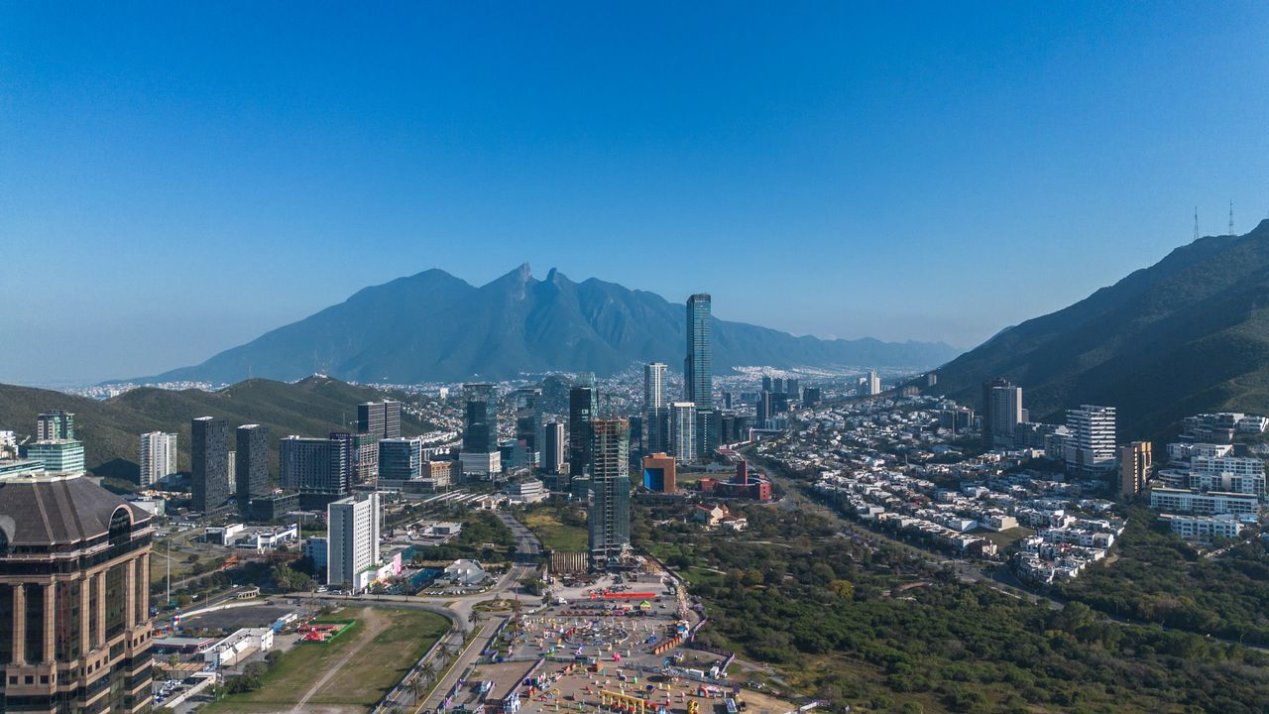
Monterrey accounted for 26% of all industrial leasing transactions in Mexico, consolidating its position as the country’s most active industrial market. Mexico City represented 19% of leasing activity, while Guadalajara contributed 13%.
The market’s stabilization has been accompanied by lower vacancy levels, suggesting that demand continues to absorb a significant portion of available industrial space despite a slower pace of expansion. Cumulative industrial vacancy exceeded 240,000m2 during the April-May period, but remained 18% below the level recorded a year earlier. Tijuana led space releases with 35% of the national total, followed by Guadalajara with 21% and Mexico City with 15%.
Meanwhile, developers launched more than 490,000m2 of new industrial projects, a decline of nearly 25% compared with the same period in 2025. However, approximately 445,000m2 of new supply were delivered to the market, raising Mexico’s industrial inventory to 113.1 million m2.
Monterrey again led expansion, adding more than 210,000m2 to its industrial inventory. Guanajuato and Guadalajara each contributed about 45,000m2. Average industrial rents reached US$7.56/m2 per month, up 6.9% year over year. Mexico City recorded the highest rents at US$10.37/m2, followed by Tijuana at US$8.67.
Construction Technologies Target Faster Delivery
As developers compete for tenants, suppliers are increasingly promoting technologies designed to reduce construction times, improve flexibility and lower operating costs. During Expo Naves y Parques Industriales 2026, companies presented solutions aimed at meeting the evolving requirements of manufacturers and logistics operators.
Among the exhibitors was Estructuras Solana, which showcased a patented construction system integrating prefabricated foundations, steel structures and roofing components. “We are a company with 71 years of experience. We have developed a patented system that includes prefabricated foundations, walls, steel structures and roofing,” Rodolfo Escobar, Commercial Manager, Estructuras Solana.
Escobar said all components are manufactured in advance and assembled on-site, allowing future expansion, relocation or modification of industrial facilities. “Because it is a bolted system, it allows clients to expand, reduce or even move a structure to another location if their needs change,” he said.
Energy Efficiency Gains Importance
Beyond construction speed, energy efficiency has become a central competitive factor for industrial parks seeking to attract manufacturers and logistics operators. Jungo Lighting presented LED lighting systems designed for manufacturing facilities, industrial parks and infrastructure projects.
“We can provide lighting that takes advantage of natural daylight or operates through motion sensors. This helps reduce energy consumption when no activity is detected and lowers operating costs,” Diego Terán, the company’s Commercial Manager, said.
The growth of distribution centers and manufacturing complexes is also driving demand for loading and unloading infrastructure. MUNDIACERO presented hydraulic dock ramps, industrial doors and access systems through its DOCKMAN division. “We started manufacturing shutters more than 40 years ago, and today we can serve projects ranging from a single warehouse to facilities with hundreds of loading docks,” Alma Mota, Commercial Manager, MUNDIACERO, said.
Thermal efficiency has become another priority as operators seek to reduce cooling costs. ITERMIK introduced a reflective membrane technology designed to reduce heat transfer through metal roofs.
“Our technology can reduce indoor temperatures by up to 12 degrees Celsius while also waterproofing the roof surface and preventing leaks,” Verónica Morales, the company’s Marketing Director, said.
Jalisco Announces US$625 Million Expansion
The push for new industrial infrastructure is extending in many cities across Mexico. For instance, Jalisco announced a projected US$625 million investment to develop more than 800,000 m2 of industrial parks, reinforcing its position as one of Mexico’s main investment destinations.
The expansion follows a strong year for the state, which recorded 677,906 m2 of industrial absorption in 2025, representing nearly US$500 million in investment and a 25% increase over 2024. State officials said much of the industrial space currently under construction has already been pre-leased, indicating sustained demand from domestic and international companies.
Jalisco also ranked second nationally in foreign direct investment inflows during 4Q25 and generated US$52.6 billion in exports, making it Mexico’s leading non-border exporting state. The state benefits from connectivity through the Port of Manzanillo, as well as air and ground transportation networks that support trade with North America and Asia.
Industry executives say the combination of nearshoring demand, energy efficiency requirements and faster construction methods is transforming Mexico’s industrial real estate market, where developers increasingly compete not only on available space but on the ability to deliver infrastructure tailored to modern manufacturing and logistics operations.