
Close Menu
Aspire Market Guides
  • Home
  • Alternative Investments
  • Cryptocurrency
  • Economics
  • Equity Investments
  • Mutual Funds
  • Real Estate
  • Trading
What's Hot

Korea ministries clash over who sets standard prices for tax on buildings – CHOSUNBIZ – Chosunbiz

August 24, 2026

ETMarkets Smart Talk| Bonds vs debt funds vs FDs: Sandeep Yadav explains the tax trade-offs investors should know

August 24, 2026

News flash: We live in a mixed economy | Froma Harrop – auburnpub.com

August 24, 2026
Facebook X (Twitter) Instagram
Trending:
  • Korea ministries clash over who sets standard prices for tax on buildings – CHOSUNBIZ – Chosunbiz
  • ETMarkets Smart Talk| Bonds vs debt funds vs FDs: Sandeep Yadav explains the tax trade-offs investors should know
  • News flash: We live in a mixed economy | Froma Harrop – auburnpub.com
  • Stablecoin Payments Surge as Crypto Card Spending Triples
  • Dr. Daniel Sutter: Socialism and government spending
  • Altcoin Season Index Drops To 41: What It Signals For Crypto Markets
  • Teaching Introductory Economics | The Daily Economy
  • BitMart Rethinks Shutdown of Its Crypto Exchange
  • Bond SIP: A new proposition for MFDs to expand business and improve clients’ debt allocation
  • Industrial tenants favour specialised facilities amidst AI boom
Monday, August 24
Facebook X (Twitter) Instagram
Aspire Market Guides
  • Home
  • Alternative Investments
  • Cryptocurrency
  • Economics
  • Equity Investments
  • Mutual Funds
  • Real Estate
  • Trading
Aspire Market Guides
Home»Economics»Dr. Daniel Sutter: Socialism and government spending
Economics

Dr. Daniel Sutter: Socialism and government spending

By CharlotteAugust 24, 20264 Mins Read
Share
Facebook Twitter Pinterest Email Copy Link


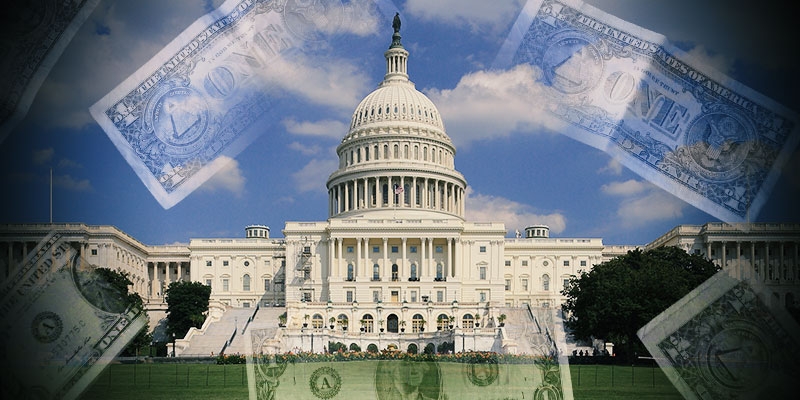
The Democratic Socialists of America (DSA) seek enormous growth of government.  The Cato Institute recently estimated a price tag of possibly $200 trillion for this agenda.  Yet socialists proposing government spending still rely on the market economy for their efforts.

Cato’s Adam Michel attempted pricing a DSA agenda including Medicare for All, free college, free childcare, free housing, reparations for slavery, and green energy.  A lack of detailed proposals left Mr. Michel with estimates ranging from $70 to $212 trillion over ten years.  In 2025 Federal spending was $7 trillion and GDP $31 trillion.  Adding $21 trillion annually to current Federal spending would lead to Washington spending almost all GDP.

Viewing socialism as enormous government spending, however, presumes the continuation of the market economy.  Before explaining this, I really dislike the labels capitalism and socialism.  Economics analyzes decisions about consumption, production, and employment.

Different economic systems consequently constitute different patterns of decision-making.  Central planning involves government making most decisions.  Decentralized, voluntary, and permissionless decisions, namely free enterprise or the market economy, is another system.

Money is a market economy’s medium of exchange.  Although taken over by governments long ago, money emerged because it allowed much easier buying and selling than barter.  People accept green pieces of paper, gold coins or bitcoin for what they sell and then trade the money for the goods and services they want.

Money works because honest people normally only acquire it by selling something of value (often their labor).  Genuine money is unconsumed production, held in a form with little intrinsic value; no one eats dollar bills or gold coins.  Money embodies a market economy’s moral system of cooperation in whch people exchange valuable things that they produce.

A government directed economy would not need money.  Money allows purchases without permission, but this freedom is unnecessary if government makes all economic decisions.  Lenin initially abolished money to implement Marx’s vision in the Soviet Union.  Economic disaster ensued with the ruble soon reintroduced.

Government can participate in the market economy using money, paying for instance to build a post office and hire mail carriers.  People sell to or work for the government because the money can buy goods and services produced by the market.  Government controls resources with considerable voluntary cooperation.

Spending only works for government if the private sector still produces enough goods and services.  Government hiring even one million workers out of the private sector does not reduce market productive capacity much in an economy of America’s size.  But resources, including labor, are finite.  If the government employs everyone to provide everything on the DSA’s wish list, no one is left to work for Walmart, Nike, or Ford.

People will not voluntarily work for government if their pay does not buy anything.  When the carrot of money becomes ineffective because of no remaining private production, the government must turn to other inducements.

Patriotism and selflessness provide one possibility.  During World War II, the war effort curtailed production of consumer goods.  G.I.’s fought and people toiled in factories with little to buy.  Marx’s formulation of “from each according to ability, to each according to need” tries to utilize selflessness.

Human self-interest renders Marx’s dream impractical.  Coercion, force and starvation then get employed.  Lenin’s reformulation of Marx was, “He who does not work, neither shall he eat”!

Government currently secures significant control over resources with little visible coercion.  Uncle Sam even hides coercion when taking our money to spend.  Taxes are paid through payroll deductions, mortgage or rent payments, and higher prices for goods.  Investors willingly purchase the $2 trillion in new Treasury bonds issued every year.  Government money creation silently takes purchasing power through inflation.

A limit exists to government using resources through spending in the market economy.  The DSA’s ambitious agenda is even more radical than its $200 trillion price tag, as it would likely force the replacement of voluntary inducement through money with orders and punishment.

Daniel Sutter is the Charles G. Koch Professor of Economics at Troy University. The opinions expressed in this column are the author’s and do not necessarily reflect the views of Troy University.


Source link

Related Posts

Economics

News flash: We live in a mixed economy | Froma Harrop – auburnpub.com

August 24, 2026
Economics

Teaching Introductory Economics | The Daily Economy

August 24, 2026
Economics

Segregation and Affirmative Action in School Choice

August 23, 2026
Economics

S&P DJI retains Egypt’s emerging market status – Economy – Business

August 23, 2026
Economics

Government coordinates efforts to boost investment, trade and economic development

August 23, 2026
Economics

Comment: The need to retain a mixed economy

August 23, 2026
Add A Comment
Leave A Reply Cancel Reply

Editors Picks

Korea ministries clash over who sets standard prices for tax on buildings – CHOSUNBIZ – Chosunbiz

August 24, 2026

ETMarkets Smart Talk| Bonds vs debt funds vs FDs: Sandeep Yadav explains the tax trade-offs investors should know

August 24, 2026

News flash: We live in a mixed economy | Froma Harrop – auburnpub.com

August 24, 2026

Stablecoin Payments Surge as Crypto Card Spending Triples

August 24, 2026
SUBSCRIBE TO OUR NEWSLETTER

Get our latest downloads and information first. Complete the form below to subscribe to our weekly newsletter.


I consent to being contacted via telephone and/or email and I consent to my data being stored in accordance with European GDPR regulations and agree to the terms of use and privacy policy.

Featured

Vincere Trading Relaunches to Deliver Hedge Fund-Grade

April 28, 2026

Can NFTs Move Beyond Digital Art into Real-World Utility?

August 16, 2026

SEC Chair Backs CLARITY Act as Crypto Rally Stalls and Bitcoin Stays Below $65,000

July 29, 2026
Monthly Featured

How to Trade Futures: A Beginner’s Guide (2026)

August 7, 2026

The New Playbook For Alternative Investing: Part 3

May 29, 2026

Dolvero Publishes the Receipts Every Other Prop Firm Hides

July 27, 2026
Latest Posts

Korea ministries clash over who sets standard prices for tax on buildings – CHOSUNBIZ – Chosunbiz

August 24, 2026

ETMarkets Smart Talk| Bonds vs debt funds vs FDs: Sandeep Yadav explains the tax trade-offs investors should know

August 24, 2026

News flash: We live in a mixed economy | Froma Harrop – auburnpub.com

August 24, 2026
SUBSCRIBE TO OUR NEWSLETTER

Get our latest downloads and information first. Complete the form below to subscribe to our weekly newsletter.


I consent to being contacted via telephone and/or email and I consent to my data being stored in accordance with European GDPR regulations and agree to the terms of use and privacy policy.

© 2026 Aspire Market Guides.
  • Contact us
  • Privacy Policy
  • Terms and Conditions

Type above and press Enter to search. Press Esc to cancel.

SUBSCRIBE TO OUR NEWSLETTER

Get our latest downloads and information first.

Complete the form below to subscribe to our weekly newsletter.


I consent to being contacted via telephone and/or email and I consent to my data being stored in accordance with European GDPR regulations and agree to the terms of use and privacy policy.