
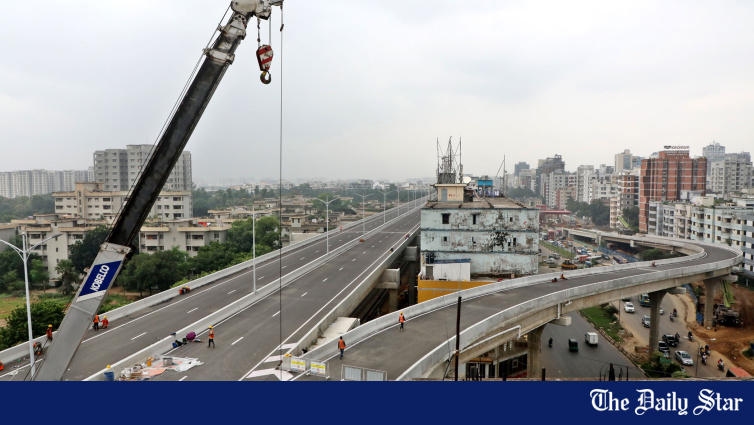
Infrastructure is critical for economic transformation. Investment in roads, bridges, electricity, ports, urban transport, and other physical infrastructure is essential to improve connectivity, facilitate trade, and support economic activity. Over the years, Bangladesh has undertaken large, technically complex infrastructure projects. While the country certainly needs more infrastructure, whether public investment is converted efficiently, cost-effectively, and on time remains a question, as many projects exceed their deadlines, undergo revisions, face cost increases, or fail to deliver benefits on schedule. This question has gained importance amid fiscal space constraints. Bangladesh faces competing demands and insufficient revenue. Extra spending arising from project delays has opportunity costs. Therefore, improving project delivery is not just administrative reform but also better fiscal management.
Project implementation difficulties and delivery problems have been perennial. In recent years, implementation of Annual Development Programmes (ADP) has declined, with implementation at only 67.52 percent in FY2025-26. In the first two months of the current fiscal year, it was only 1.85 percent.
Bangladesh is not starting from the beginning. Several policies, guidelines, and institutional reforms already address these problems. The finance ministry’s Public Financial Management Reform Strategy 2025-2030 notes that many projects enter the budget without rigorous feasibility studies, cost-benefit analysis, socioeconomic impact assessment, or adequate stakeholder consultation, while poor project preparation and weak oversight contribute to cost overruns and delays. The Planning Commission has developed important instruments for public investment management, cost-benefit analysis and preparation of Development Project Proposals (DPP). Several public investment management resources, including the Public Investment Management Reform Programme 2024-2028, provide useful guidelines. However, these guidelines and procedures need to be implemented properly.
For this, a credible project readiness test is essential. Typically, a major infrastructure project should not proceed to the ADP phase until its technical design, land needs, environmental concerns, procurement strategy, and financing plan are well-developed. Beginning construction before these issues are settled might seem like quick progress, but it often simply moves unresolved problems into the implementation stage.
Besides, selecting from numerous projects vying for limited development funds requires more discipline. When resources are spread too thinly, some projects may lack the funding to be completed efficiently, leading to delays, higher costs, and unfinished projects that continue to draw on future budgets.
The goal should not be to maximise the number of projects in the ADP. Instead, projects with significant economic and social benefits deserve proper funding, while less urgent or poorly prepared proposals should be deferred. Finishing a critical ongoing project can often provide more value than starting a new one that lacks sufficient funding.
Financing has been a key constraint in recent years, with significant exchange rate fluctuations, inflation, and shifts in international commodity and equipment prices increasing project costs even with efficient implementation.
Therefore, cost escalations should not be viewed uniformly. Increases caused by exchange-rate depreciation or sudden global input price hikes differ from those due to incomplete designs, land acquisition delays, administrative decisions, or poor coordination. A reliable evaluation system must distinguish external shocks from avoidable implementation issues.
Another important aspect is handling complex projects. Large infrastructure investments now demand expertise beyond engineering, involving procurement, finance, contract management, environmental and social safeguards, legal considerations, risk assessment, and dispute resolution. Project directors must possess experience suitable to their project’s size and technical needs. Also, frequent personnel changes can erode institutional memory and delay decisions, and should be avoided. Large projects require multidisciplinary teams instead of over-reliance on a single official. The DPP handbook of the Planning Commission emphasises assessing whether an agency has the managerial and skilled workforce to implement and operate a project after completion.
Infrastructure projects often involve multiple agencies, such as land acquisition, utility relocation, and environmental clearances, calling for better coordination among the agencies so that the whole schedule is not affected.
When that happens, contractors may keep equipment and workers idle, perhaps even triggering additional claims. For major projects, agencies should establish responsibilities before implementation and build mechanisms to resolve bottlenecks quickly.
Bangladesh has introduced procurement reforms, including the Public Procurement Rules, 2025, which strengthen electronic government procurement (e-GP), beneficial-ownership disclosure, and procurement strategies. The Bangladesh Public Procurement Authority oversees these crucial improvements. However, transparent tendering by itself is not enough to guarantee successful infrastructure development.
The post-award phase of a contract warrants effective management such as monitoring milestones, variations, payments, construction quality, and delays. Additionally, maintaining systematic records of contractors’ and consultants’ performance history is crucial for informing future procurement decisions, because the lowest bid does not always mean the lowest final cost. Poor performance can lead to higher expenses from delays, variations, supervision, or corrections. Procurement should prioritise value for money over the entire contract, ensuring transparency and competition.
Similarly, accountability must look beyond existing project approval, monitoring, and auditing mechanisms to understand why results vary from initial approvals. Major projects should disclose a limited set of comparable information, such as original and revised costs, original and revised completion dates, physical and financial progress, significant contract variations, and reasons for major changes, to help policymakers and oversight institutions recognise recurring issues instead of viewing each delay as an isolated incident.
Poor infrastructure delivery also harms businesses and households, causing delays that reduce transportation efficiency, logistics, industrial output, investments, and postpone economic gains.
Besides, cost overruns compete with other public expenses, as additional funds for a delayed project cannot be used for education, healthcare, social protection, or climate adaptation. This is especially critical for Bangladesh at present, given limited fiscal resources and substantial development needs.
Attention should go beyond project completion, since poorly operated infrastructure can quickly depreciate. Project appraisal must account for realistic life-cycle costs and ongoing maintenance, not just initial construction expenses. The reform agenda for project implementation in Bangladesh must ensure project readiness before approval, eliminate poorly prepared projects, safeguard financing for key investments, professionalise management, improve agency coordination, enhance contract oversight, and boost transparency of performance data.
Accountability should reinforce these measures. Independent evaluation should examine why major projects deviate from budgets and schedules. If failures were avoidable, findings should influence future responsibilities, appointments, and procurement. Also, existing institutional policies and guidelines should be consistently applied and decision-making properly linked, instead of creating new rules.
Once Bangladesh graduates from the Least Developed Country (LDC) category, careful infrastructure planning and efficient project delivery will become even more critical. Although graduation will not immediately cut off concessional finance, the country will have to gradually shift towards more non-concessional and market-based borrowing as its income grows. This shift involves higher interest rates and shorter repayment and grace periods, underscoring the need for strategic project selection.
Infrastructure projects must deliver strong economic and social benefits, with minimal delays and cost overruns. Therefore, enhanced governance, implementation capacity, and accountability are crucial to preserving access to favourable development financing terms.
Dr Fahmida Khatun is an economist and distinguished fellow at the Centre for Policy Dialogue (CPD). Views expressed in this article are the author’s own.
Views expressed in this article are the author’s own.
Follow The Daily Star Opinion on Facebook for the latest opinions, commentaries, and analyses by experts and professionals. To contribute your article or letter to The Daily Star Opinion, see our guidelines for submission.