
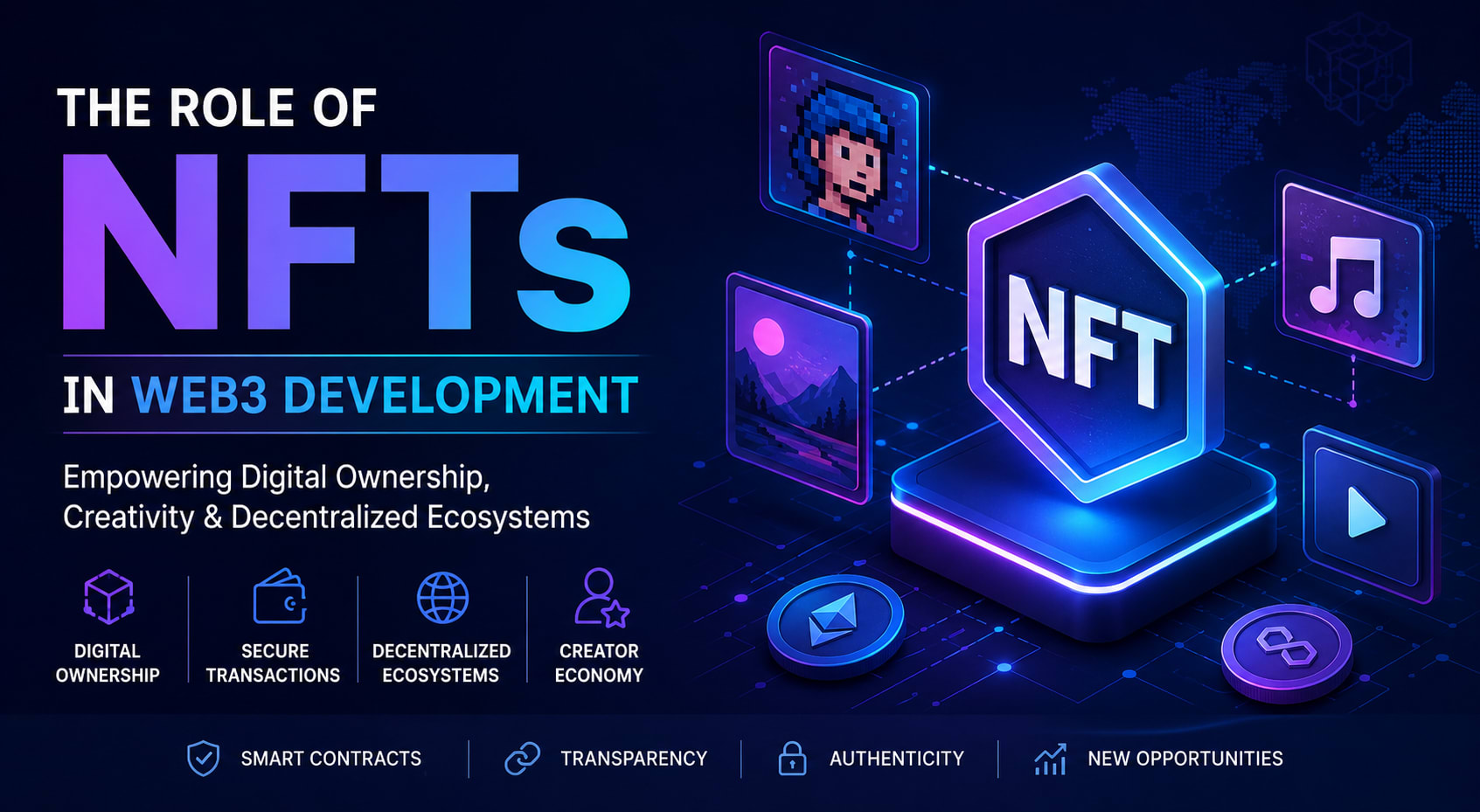
As blockchain technology continues to evolve, Non-Fungible Tokens (NFTs) have emerged as one of the most innovative applications within the Web3 ecosystem. Initially popularized through digital art and collectibles, NFTs have expanded far beyond their early use cases. Today, they play a significant role in gaming, digital identity, memberships, ticketing, creator economies, and real-world asset tokenization.
For businesses, developers, and blockchain innovators, understanding how NFTs fit into broader Crypto token development strategies is becoming increasingly important. NFTs are not simply digital collectibles; they are programmable blockchain assets that enable ownership verification, transparency, and decentralized interaction.
This article explores the growing importance of NFTs in Web3, how they work, their key use cases, benefits, challenges, and how modern Token Development practices are helping organizations build utility-driven NFT ecosystems.
Understanding NFTs in the Web3 Landscape
A Non-Fungible Token (NFT) is a unique digital asset stored on a blockchain. Unlike cryptocurrencies such as Bitcoin or Ethereum, where each unit is interchangeable, every NFT possesses a unique identifier that distinguishes it from other tokens.
This uniqueness makes NFTs ideal for representing ownership of digital and physical assets. Through smart contracts, NFTs can store ownership information, transfer history, metadata, and usage rights, making them valuable components in modern decentralized applications.
NFTs can represent:
- Digital artwork
- Gaming assets
- Event tickets
- Membership passes
- Intellectual property
- Virtual land
- Educational certificates
- Identity credentials
- Real-world assets
As Web3 adoption grows, NFTs are becoming an essential part of Crypto token development projects focused on ownership and digital asset management.
Why NFTs Matter in Crypto Token Development
The core philosophy of Web3 revolves around decentralization and ownership. Traditional digital platforms often control user assets, content, and access rights. NFTs change this dynamic by giving users verifiable ownership of blockchain-based assets.
For developers, NFTs unlock entirely new possibilities for application design. They enable businesses to create ecosystems where users can own, trade, and interact with assets without relying on centralized authorities.
Some major applications include:
- NFT marketplaces
- Play-to-earn gaming ecosystems
- Loyalty and rewards programs
- Creator monetization platforms
- Token-gated communities
- Decentralized identity systems
- Asset tokenization solutions
As a result, many organizations now incorporate NFTs into broader Token Development initiatives to enhance engagement and create sustainable digital economies.
How NFTs Work
NFTs operate through blockchain smart contracts. These contracts define the rules governing ownership, transfers, royalties, and metadata.
A typical NFT lifecycle includes:
- Asset creation
- Smart contract deployment
- NFT minting
- Metadata assignment
- Ownership allocation
- Marketplace listing
- Transfer or sale
The blockchain records every transaction, creating a transparent and immutable ownership history.
Many organizations leverage advanced Token development solutions to build secure NFT ecosystems with custom features such as royalty automation, utility integration, and cross-platform compatibility.
NFT Standards and Their Importance
NFT standards ensure compatibility between wallets, marketplaces, and decentralized applications.
ERC-721
ERC-721 is the most widely used NFT standard on Ethereum. Each token is unique and has its own ownership record.
Common use cases include:
- Digital art
- Collectibles
- Membership tokens
- Virtual real estate
ERC-1155
ERC-1155 supports both fungible and non-fungible assets within a single smart contract.
It is commonly used for:
- Gaming ecosystems
- Metaverse platforms
- Digital collectibles
- Asset management systems
Other NFT Standards
Different blockchain networks support their own NFT standards, including:
- BEP-721
- BEP-1155
- Solana NFT standards
- Polygon NFT frameworks
Selecting the right standard is an important aspect of successful Token Development because it directly impacts scalability, interoperability, and user experience.
NFTs and Digital Ownership
One of the most transformative aspects of NFTs is their ability to establish verifiable digital ownership.
In traditional digital environments, ownership often depends on centralized databases controlled by platforms. NFTs replace this model with blockchain-based verification.
Ownership records can reveal:
- Original creator
- Current owner
- Transaction history
- Asset authenticity
- Collection details
This capability is driving adoption across industries that require transparent ownership tracking.
For businesses pursuing Crypto token development strategies, NFTs provide a powerful foundation for trust and asset verification.
NFTs in Gaming and Metaverse Development
Gaming remains one of the fastest-growing NFT sectors.
Traditional games typically keep assets locked within their ecosystems. NFTs enable players to truly own in-game assets and trade them independently.
NFT gaming assets may include:
- Characters
- Weapons
- Skins
- Land parcels
- Achievement badges
- Collectibles
Similarly, metaverse platforms utilize NFTs to represent:
- Virtual properties
- Wearables
- Digital identities
- Event access passes
- Virtual storefronts
Many blockchain gaming projects now integrate NFT functionality directly into their Token Development architecture to create sustainable player-driven economies.
Memberships and Access Control
NFTs are increasingly being used as digital membership credentials.
Instead of traditional subscription models, NFT holders can gain access to exclusive content, communities, and experiences.
Examples include:
- Premium communities
- Educational platforms
- Exclusive events
- VIP memberships
- Creator subscriptions
- Loyalty programs
Because ownership is verified through blockchain wallets, NFTs offer a secure and transparent alternative to conventional membership systems.
Organizations exploring innovative Token development solutions frequently use NFTs to build stronger user engagement and retention strategies.
Creator Economy and Royalty Systems
NFTs have transformed how creators monetize their work.
Artists, musicians, writers, and content creators can sell digital assets directly to audiences without relying entirely on intermediaries.
Smart contracts can automate royalty payments whenever NFTs are resold, creating recurring revenue opportunities for creators.
Popular creator-focused NFT applications include:
- Digital artwork
- Music releases
- Exclusive content
- Fan memberships
- Digital collectibles
As Crypto token development continues to evolve, creator-focused NFT ecosystems are becoming an increasingly important segment of the blockchain industry.
Real-World Asset Tokenization
NFTs are no longer limited to digital assets. They are increasingly being used to represent ownership or proof of rights for physical assets.
Examples include:
- Real estate
- Luxury goods
- Fine art
- Collectibles
- Carbon credits
- Supply chain assets
Real-world asset tokenization offers several benefits:
- Increased transparency
- Improved liquidity
- Faster ownership transfers
- Better record management
Businesses often partner with blockchain experts and providers such as Menten KD to design secure NFT frameworks that support real-world asset management while maintaining regulatory compliance.
NFTs and Digital Identity
Digital identity represents one of the most promising NFT use cases.
NFTs can store credentials such as:
- Academic certificates
- Professional licenses
- Attendance records
- Community achievements
- Verification badges
Unlike traditional identity systems, blockchain-based credentials can be verified without relying on centralized authorities.
As Web3 adoption expands, NFT-powered identity solutions are expected to play a larger role in future Token Development ecosystems.
Benefits of NFTs in Web3 Applications
NFTs offer several advantages that contribute to their growing adoption.
Verifiable Ownership
Blockchain technology creates transparent ownership records that cannot easily be altered.
Digital Scarcity
Developers can create limited-edition assets with provable rarity.
Creator Monetization
NFTs enable direct sales and royalty opportunities.
Interoperability
NFTs can often move between compatible platforms and wallets.
Enhanced User Engagement
Ownership creates stronger emotional connections between users and digital products.
New Revenue Models
NFTs support innovative business models that were previously difficult to implement.
These benefits explain why NFTs have become an integral component of many modern Crypto token development projects.
Challenges and Risks
Despite their advantages, NFTs also present challenges that businesses must address.
Smart Contract Vulnerabilities
Poorly written smart contracts can lead to security breaches and asset loss.
Market Volatility
NFT values can fluctuate significantly based on demand.
Copyright Issues
NFT ownership does not automatically grant intellectual property rights.
Metadata Storage Risks
Improper storage solutions can result in inaccessible assets.
Regulatory Uncertainty
NFT regulations continue to evolve across jurisdictions.
To minimize these risks, organizations should prioritize security audits, legal review, and robust development practices.
The Future of NFTs
The NFT industry is moving beyond speculative collectibles and focusing on utility-driven applications.
Emerging trends include:
- Dynamic NFTs
- Cross-chain interoperability
- NFT memberships
- Decentralized identity systems
- Real-world asset tokenization
- AI-powered NFT experiences
- Enterprise certification platforms
As blockchain adoption accelerates, NFTs will increasingly serve as infrastructure for ownership, verification, and access management.
Companies investing in Token development solutions today are positioning themselves to capitalize on these future opportunities.
Final Thoughts
NFTs have become a foundational technology within Web3 and modern Crypto token development ecosystems. Their ability to establish ownership, facilitate asset transfers, automate royalties, and support decentralized applications makes them far more than digital collectibles.
From gaming and creator economies to identity verification and real-world asset tokenization, NFTs continue to unlock new possibilities across industries.
Successful NFT implementation requires thoughtful planning, secure smart contract architecture, and a clear utility-driven approach. Businesses working with experienced blockchain partners such as Menten KD can build scalable NFT ecosystems that deliver long-term value while supporting broader Token Development goals.
As Web3 matures, NFTs are expected to play an increasingly important role in shaping the future of digital ownership, decentralized interaction, and blockchain innovation.