
Don’t forget the context: Decades of China’s state-directed, market-distorting economic policies are the cause of bilateral trade friction.
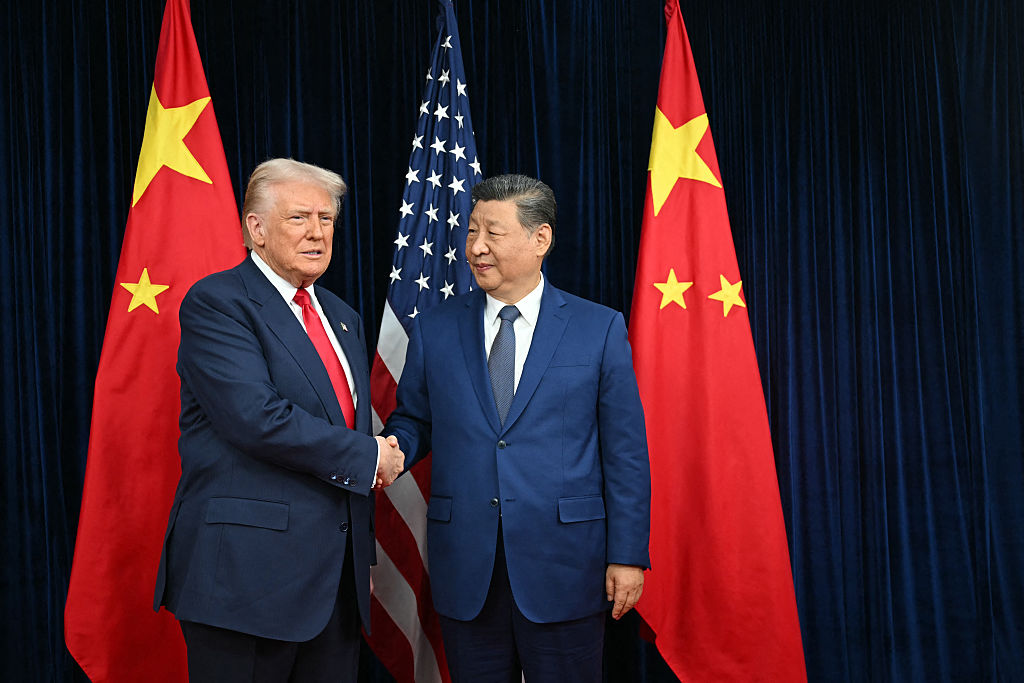
One of the outcomes of President Trump’s recent summit with Chinese President Xi Jinping was a proposed “board of trade,” meant to manage bilateral trade between the United States and China in “non-sensitive” goods.
But what does “non-sensitive” mean? What effects will it have on existing U.S. efforts at trade enforcement? And, once set up, how will its success as an institution be measured?
These are some of the questions the Alliance for American Manufacturing (AAM) is asking in on our comments to the U.S. Trade Representative, as the board proposal takes shape.
“The proposal to establish a U.S.-China Board of Trade should be informed by more than two decades of unsuccessful efforts to change China’s economic behavior through dialogue and engagement. The central challenge in the U.S.-China economic relationship has never been a lack of communication,” we write in our comments. “It has been China’s continued reliance on state-directed economic policies that distort markets, fuel industrial overcapacity, undermine competition, and burden U.S. workers and manufacturers. These practices have persisted despite extensive negotiations, WTO commitments, strategic dialogues, working groups, and other engagement mechanisms.”
Its skepticism learned from experience that’s informing our approach to this new forum. Here are a few of the specific observations made in our comments:
The Board of Trade Must Not Undermine Trade Enforcement
AAM strongly supports the continued use of Section 232, Section 301, the Uyghur Forced Labor Prevention Act, and related trade and enforcement authorities. These tools remain necessary because past dialogue-based approaches have failed to address China’s systemic market distortions. The administration should reject any consultation requirements, waiting periods, procedural hurdles, or other mechanisms that could interfere with its ability to respond to unfair trade practices or national security concerns. Participation in the Board must not provide a basis for seeking relief from existing or future trade actions. Nor should the Board be permitted to displace, delay, or weaken ongoing enforcement initiatives, including unresolved Section 232 investigations, semiconductor-related trade and national security actions, maritime and shipbuilding enforcement efforts, or other measures intended to address structural distortions and strategic vulnerabilities in the U.S.-China economic relationship.
China Remains a Non-Market Economy and Strategic Competitor
Any evaluation of the proposed Board of Trade must begin with a realistic understanding of China’s conduct within the global trading system. China remains a non-market economy characterized by extensive state intervention, industrial subsidies, state-owned enterprises, market access barriers, export-driven industrial planning, and other policies that distort competition and undermine reciprocity. These practices have not meaningfully changed despite decades of international engagement. Nor are those distortions limited to traditional trade concerns. China continues to rely on forced labor supply chains, maintain dominant positions in strategically important industries through state support, and create economic and national security vulnerabilities through excessive dependence on Chinese-controlled production networks, critical inputs, and emerging technologies.
Transparency, Accountability, and Measurable Outcomes
The proposed Board of Trade should be structured around transparency and measurable outcomes. Public reporting should assess trade balances, overcapacity trends, exchange rate developments, compliance with commitments, and other relevant metrics. Success should be measured by tangible results, not by the number of meetings, statements, or working groups generated by the process. The United States has already accumulated considerable experience with dialogue-based mechanisms, and the administration should continue to focus on whether specific distortions are reduced and whether U.S. workers and manufacturers experience measurable improvements in market conditions.
Our Takeaway
AAM therefore urges the administration to approach the proposed Board of Trade with caution and to ground its design in the lessons learned from previous U.S.-China engagement efforts. The Board must complement existing trade enforcement tools, not weaken them. Most importantly, it should not become a venue for endless discussions while China continues to pursue the same state-directed policies that have fueled chronic overcapacity, growing trade imbalances, and the hollowing out of manufacturing capacity in market-based economies around the world.
These are just snippets of are full comments. You can find them in full here.