


Varun Krishna thinks the industry “is not working” as it should — which is why he’s pushing for modernization, inventory fixes and a better consumer experience.
ORLANDO — Nearly three years into his role as CEO of Rocket Companies, Varun Krishna says he is only “getting more addicted” to the residential real estate space.
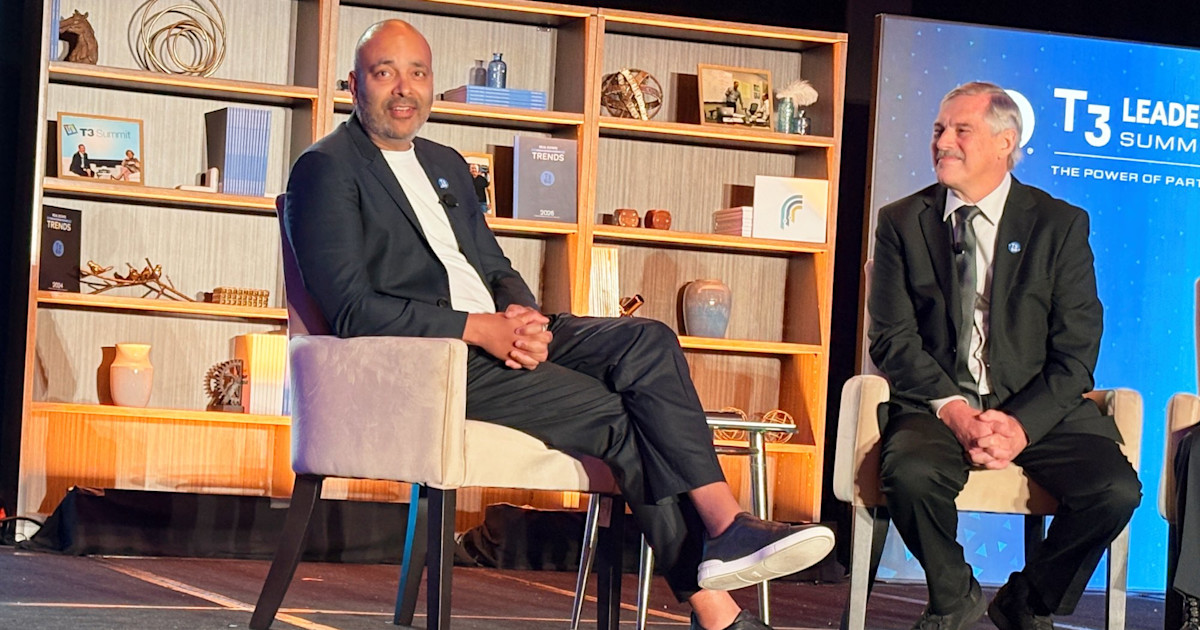
“I love the business; I love the culture,” Krishna said during an April 22 panel at the 2026 T3 Sixty Leadership Summit. But that doesn’t mean he thinks it’s perfect: “There’s so much opportunity to modernize, to evolve.”
One of his top priorities at Rocket? “To become more of an ecosystem and to be more friendly to the industry,” he explained — a goal he’s striving to reach in part through M&As, like the acquisitions of Redfin and Mr. Cooper last year.
Fixing a ‘broken’ system: The state of housing in the U.S. “sucks,” Krishna said. The current way the industry operates “is kind of broken” he added — “it’s antiquated, it’s inefficient, it’s manual, it’s expensive and people are just not buying and selling homes in this country. We’re stuck.”
But Krishna, who describes himself as “a very principle-driven leader,” doesn’t believe in waiting for change — he believes in making it. To start, he wants to address the national housing supply crisis. “If you don’t fix the inventory problem in some way, shape or form, the rest of it is irrelevant,” he said.
“How do you equalize that dynamic, and how can you lower the barrier to entry and just allow more sellers to participate in an easy way?”
Enter the Rocket-Compass partnership: Rocket’s recent deal allowing Compass to display “Coming Soon” and “Private Exclusive” listings on Redfin added fuel to the industry-wide debate about private and pre-market listings — but Krishna argues that the industry needs to start trying new things.
“We just have so many barriers,” he said. “Our position is not a function of one partnership — it’s more of a bigger-picture view that a marketplace should be fairly open. And we’re using somewhat rigid terminology to describe what I think should be a much more flexible construct.”
Redfin, he says, is where “higher intent, more serious homebuyers” are searching for their next home — so “there’s nothing restrictive about what we want to do.”
“We just want to reduce the barrier of entry,” he said.
Rethinking the way we talk about listings: People can get too deep in the weeds when they focus on the metrics — like days on market and price drop history — that are often used to compare homes. Krishna wants to “experiment” with new ways of thinking about listings, especially in an era of AI-driven innovation.
“If every home was theoretically for sale, the concept of days on market and price drop history makes no sense,” he said. “What era are we in, and what concept are we actually holding onto?”
Rocket’s broader goals: Krishna’s “vision” for Rocket “is to be an open platform and an open ecosystem that allows the MLSs, that allows real estate professionals, that allows brokerages to not just survive — but thrive.”
And consumers are part of that equation. Rocket is “obsessive about the client experience,” Krishna said, adding that he reviews every client issue that pops up — a habit he acknowledges “may not be the most efficient thing,” but “our whole culture is built around that kind of obsession.”
But “when you think about housing in general, the consumer’s journey is ridiculous,” Krishna said, pointing to the initial home search, mortgage financing and closing. “These are three completely different industries, but every consumer that wants to experience homeownership has to traverse all three. Why can’t those things just be interconnected?”
Krishna’s thesis? It’s “very simple,” he explained. “It’s just combining the pieces a little bit more, eliminating some of the inefficiency that exists, creating more economics that allow participants in that ecosystem to get good business value and make money — and then ultimately give the client a better experience.”